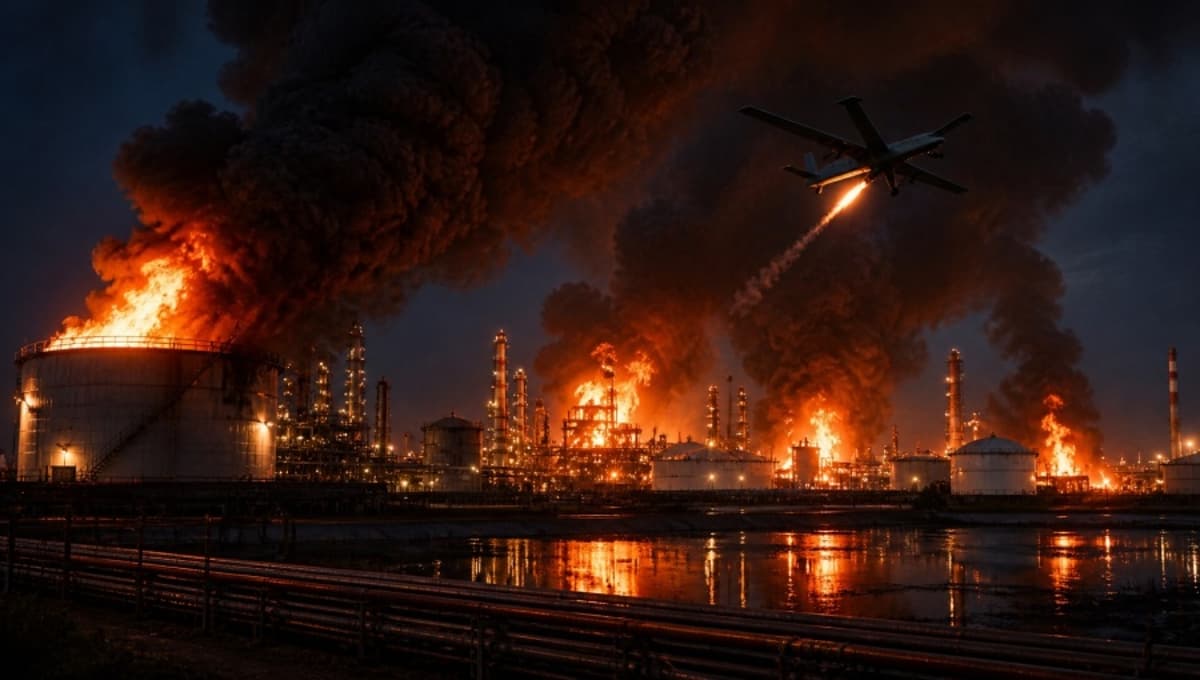
Ukraine Steps up Attacks on Russian Oil Infrastructure to Record Monthly High in April
Companies Mentioned

Reuters

Bloomberg
Why It Matters
By curbing Russia’s refining capacity, Ukraine is eroding a key source of Kremlin revenue and tightening global refined‑product supplies, which could reshape oil price dynamics and influence future sanctions policy.
Key Takeaways
- •Ukraine launched 21 missile strikes on Russian oil assets in April.
- •Refinery throughput fell to 4.69 million barrels per day, lowest since 2009.
- •Attacks may have cut Russian oil exports by roughly 20 %.
- •Urals crude now trades $20 premium to Brent, reversing historic discount.
- •Reduced refining pressures global diesel supply amid Middle East disruptions.
Pulse Analysis
Ukraine’s April surge in long‑range missile strikes marks a strategic escalation in its effort to weaponize energy markets against Moscow. After Western allies hesitated to deepen sanctions, Kyiv has leveraged its growing stockpile of domestically produced and supplied missiles to target high‑value nodes in Russia’s oil value chain. The campaign, now tallying 21 attacks in a single month, reflects both improved Ukrainian strike capabilities and a calculated response to the broader geopolitical shock of the Iran war, which has already tightened global oil supplies.
The immediate impact on Russia is stark: daily refinery throughput has slipped to 4.69 million barrels, a level not seen since 2009, and export terminals in the Baltic have reportedly lost about one‑fifth of their flow. This reduction hampers Moscow’s ability to meet its OPEC+ quota ceiling and squeezes domestic fuel markets just as summer demand climbs. The Urals blend, traditionally sold at a discount to Brent, now commands a $20 premium, signaling that reduced refining capacity is reshaping price differentials and boosting Russia’s crude‑sale revenues even as refined‑product margins shrink.
Globally, the knock‑on effects are equally significant. With Middle‑East production already under strain, the dip in Russian refined output tightens diesel supplies, pushing spot prices higher and prompting refiners to reassess feedstock strategies. Energy traders are watching for further Ukrainian actions, which could force additional market volatility and influence the pace of future sanctions. For policymakers, the episode underscores how kinetic actions on infrastructure can become a lever in broader economic warfare, reshaping both regional and worldwide energy dynamics.
Ukraine steps up attacks on Russian oil infrastructure to record monthly high in April
Comments
Want to join the conversation?
Loading comments...