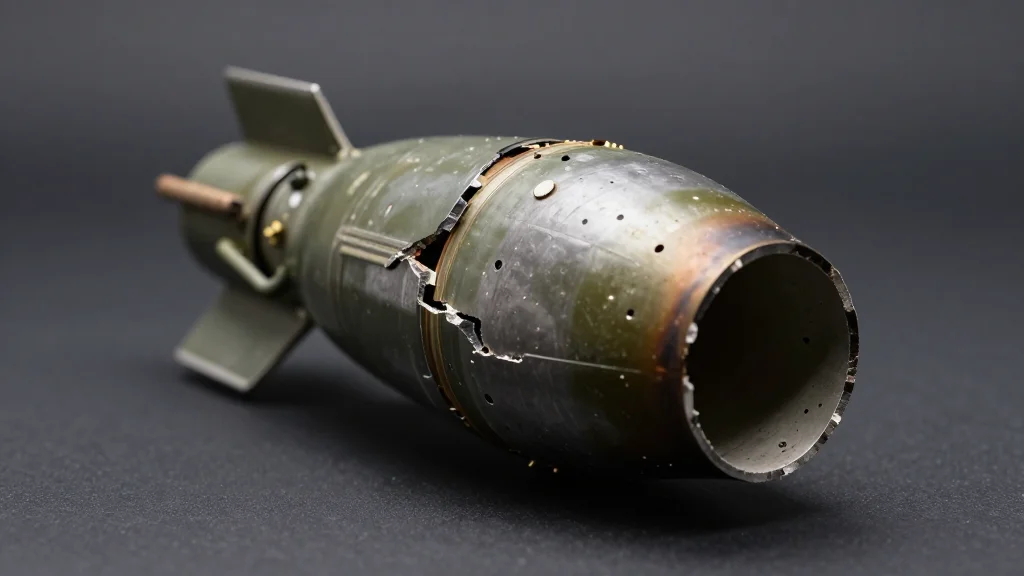
Ukraine’s Investigators Published What They Found in Oreshnik Wreckage
Why It Matters
The findings prove Russia is using the Oreshnik as a political signaling tool, deploying dummy warheads to demonstrate range without causing mass casualties, and expose supply‑chain links that can be targeted by sanctions.
Key Takeaways
- •Oreshnik missiles carried inert warhead simulators, no explosives
- •Debris showed six main warheads, each splitting into six submunitions
- •Electronic parts traced to Russian and Belarusian makers: 57 Russia, 5 Belarus
- •Ukraine shared findings for sanctions; a second Oreshnik may have been launched
- •Strike package included 690 aerial weapons; 44 cruise missiles intercepted
Pulse Analysis
The RS‑26 "Oreshnik"—branded by Moscow as a nuclear‑capable ballistic system—has now been used in three combat strikes, each targeting a different Ukrainian region. While the missile’s range and MIRV (multiple independently targetable reentry vehicle) architecture are technically impressive, the deployment of inert concrete simulators underscores a strategic calculus: showcase deterrent capability without crossing the threshold that would trigger a full nuclear response. This pattern mirrors earlier Russian displays of hypersonic weapons, where the show of force is calibrated to extract political concessions while limiting civilian casualties.
The recent debris analysis offers unprecedented insight into the missile’s internal design. Investigators recovered a warhead deployment unit capable of separating six primary warheads, each further dividing into six submunitions, creating the distinctive 36‑point impact pattern captured on video. Crucially, the electronic components were overwhelmingly sourced from Russian and Belarusian factories—57 parts from Russia and five from Belarus—signaling a shift away from earlier missiles that incorporated more Western‑origin hardware. By publishing these specifics, Ukraine equips allies with concrete evidence for targeted sanctions, aiming to choke the supply chain that sustains Russia’s advanced weapons programs.
Strategically, the Bila Tserkva strike marks a deliberate geographic escalation, moving the Oreshnik’s demonstrated reach within 80 kilometers of Kyiv, the nation’s political heartland. Coupled with a massive strike package of 690 aerial weapons—including hypersonic Kinzhal and Zircon missiles, Iskander‑M rockets, and hundreds of Shahed drones—the operation tests both Ukrainian air defenses and Western resolve. The possible second Oreshnik launch, hinted at by OSINT analysts, adds uncertainty to the battlefield calculus and may prompt NATO to reassess escalation thresholds, reinforcing the importance of transparent intelligence sharing and coordinated sanctions enforcement.
Ukraine’s investigators published what they found in Oreshnik wreckage
Comments
Want to join the conversation?
Loading comments...