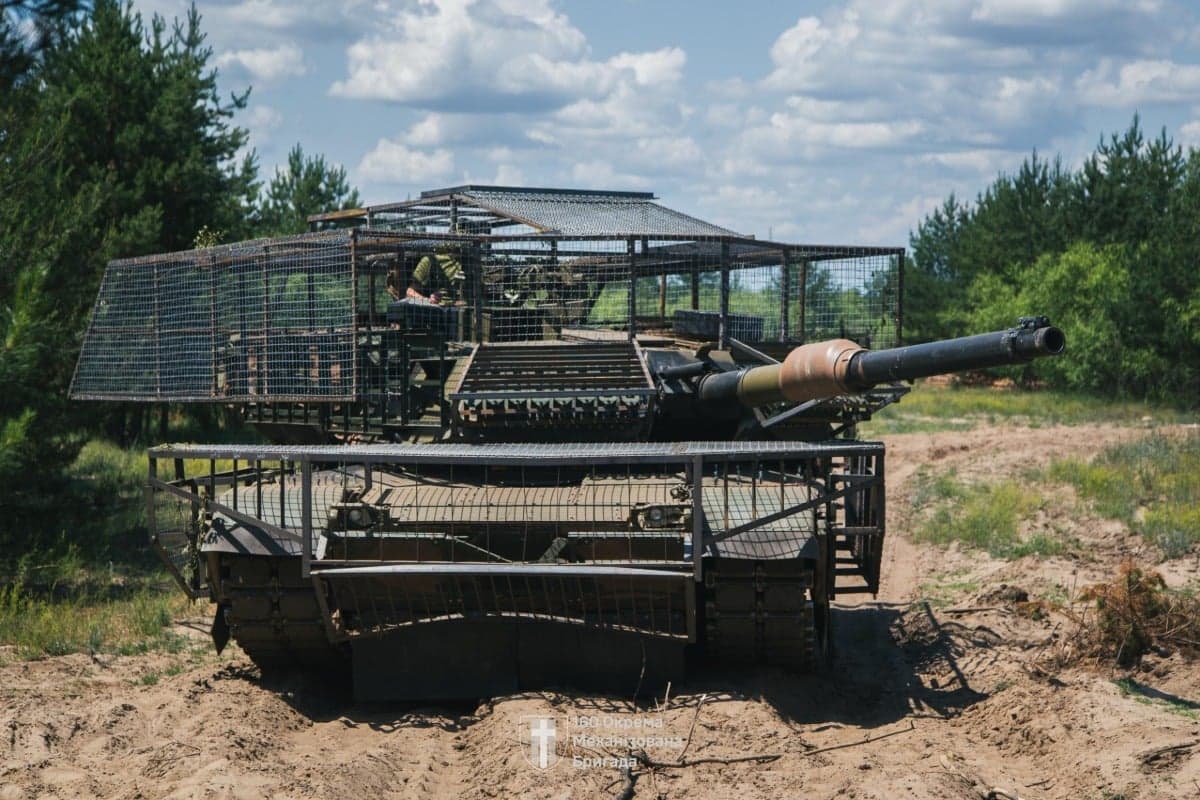
Ukrainian Crews Are Rebuilding Abrams Tank to Fight Today’s War
Why It Matters
The adaptation extends the combat viability of one of the world’s most advanced MBTs against low‑cost drone threats, enhancing Ukraine’s armored capability and informing future armor upgrades globally.
Key Takeaways
- •Australian‑donated Abrams converted to diesel for Ukrainian logistics
- •Modular cage protects turret while preserving full rotation
- •Side and rear panels shield against common drone attack angles
- •Design offers a repeatable blueprint for other Ukrainian units
- •Improvised armor addresses a threat not anticipated in 1970s tank design
Pulse Analysis
The arrival of Australian‑supplied M1A1 AIM Abrams has bolstered Ukraine’s heavy‑armor inventory, but the tanks arrived with a legacy powerplant tuned for JP‑8 jet fuel. Ukrainian logisticians quickly re‑engineered the turbines to accept diesel, aligning the Abrams with the nation’s existing fuel supply chain and reducing resupply complexity on the front lines. This pragmatic conversion underscores how allies’ equipment can be adapted to local conditions, a critical factor as the conflict evolves.
Beyond fuel, the most pressing vulnerability of the Abrams in today’s battlefield is its relatively thin roof and rear armor, which cheap first‑person‑view drones can exploit with pinpoint strikes. The “Lucifer” tank’s modular anti‑drone cage solves this by installing separate protective frames around the turret, hull sides and rear, all while allowing the turret to rotate freely. Unlike earlier static cages that immobilized the gun, this architecture maintains the tank’s primary firepower and maneuverability, demonstrating a sophisticated field‑engineered response to a modern, asymmetric threat.
The broader implication is a new paradigm for armored vehicle survivability. By standardizing a modular cage system, Ukrainian crews can mass‑produce the solution across their growing Abrams fleet, accelerating the diffusion of battlefield innovations. NATO partners and defense manufacturers are watching closely, as the design could inform retrofits for legacy platforms worldwide. In an era where low‑cost drones challenge even the most advanced armor, such adaptive engineering may become a staple of future tank modernization programs.
Ukrainian crews are rebuilding Abrams tank to fight today’s war
Comments
Want to join the conversation?
Loading comments...