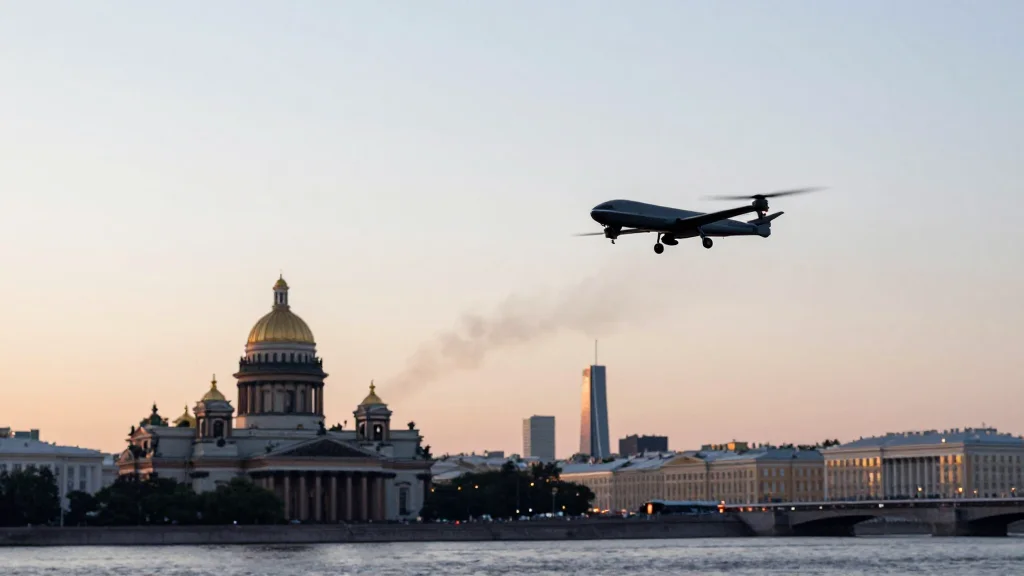
Ukrainian Drone Strikes Hit St. Petersburg as Putin Rejects Zelensky’s Peace Offer

Why It Matters
The drone strike on St. Petersburg demonstrates Kyiv’s expanding long‑range strike capability, forcing Russia to defend its interior cities and divert resources from the front lines. By linking the attack to a diplomatic overture, Zelensky aimed to leverage military pressure into political concessions, a tactic that could reshape future negotiation dynamics. Putin’s categorical rejection underscores Moscow’s resolve to maintain its war aims, signaling that any peace process will require substantial shifts in the battlefield balance. For NATO and its members, the incident raises questions about the escalation of UAV warfare and the need for robust air‑defence coverage even in regions previously considered secure. It also highlights the importance of coordinated Western support to sustain Ukraine’s ability to project force while managing the risk of broader regional destabilisation.
Key Takeaways
- •Ukrainian drones hit St. Petersburg on June 7, creating a visible plume of smoke over SPIEF.
- •President Vladimir Putin publicly dismissed President Volodymyr Zelenskyy's open letter proposing direct talks.
- •Zelensky’s letter combined a personal jab at Putin’s age with a demand for a ceasefire and negotiations.
- •The attack marks the deepest Ukrainian UAV penetration into Russian territory to date.
- •European allies met in London the same day to coordinate further military aid for Kyiv.
Pulse Analysis
Ukraine’s recent drone incursion into St. Petersburg signals a strategic evolution from battlefield support to strategic targeting of Russian political and economic symbols. By striking at the heart of Russia’s premier economic forum, Kyiv not only inflicts material damage but also seeks to erode the narrative of Russian invulnerability that the Kremlin relies on domestically. This approach mirrors the broader shift toward asymmetric warfare, where precision strikes serve both tactical and psychological objectives.
From Moscow’s perspective, Putin’s blunt refusal to engage in direct talks reflects a calculated gamble: maintaining a hardline stance preserves internal political capital and deters perceived concessions that could embolden Kyiv. However, the visible smoke over SPIEF and the international media coverage amplify the cost of that gamble, potentially straining Russia’s diplomatic outreach and its ability to attract foreign investment amid sanctions.
Looking ahead, the interplay between Ukraine’s expanding UAV capabilities and Russia’s defensive posture will likely dictate the tempo of future engagements. NATO’s forthcoming summit will be a litmus test for the alliance’s willingness to deepen air‑defence commitments, while Kyiv may continue to leverage high‑profile strikes to extract diplomatic leverage. The stalemate underscores a classic security dilemma: each side’s attempts to increase its security—through strikes or refusals—only heighten the other’s sense of threat, perpetuating a cycle that makes a negotiated settlement increasingly elusive.
Ukrainian Drone Strikes Hit St. Petersburg as Putin Rejects Zelensky’s Peace Offer
Comments
Want to join the conversation?
Loading comments...