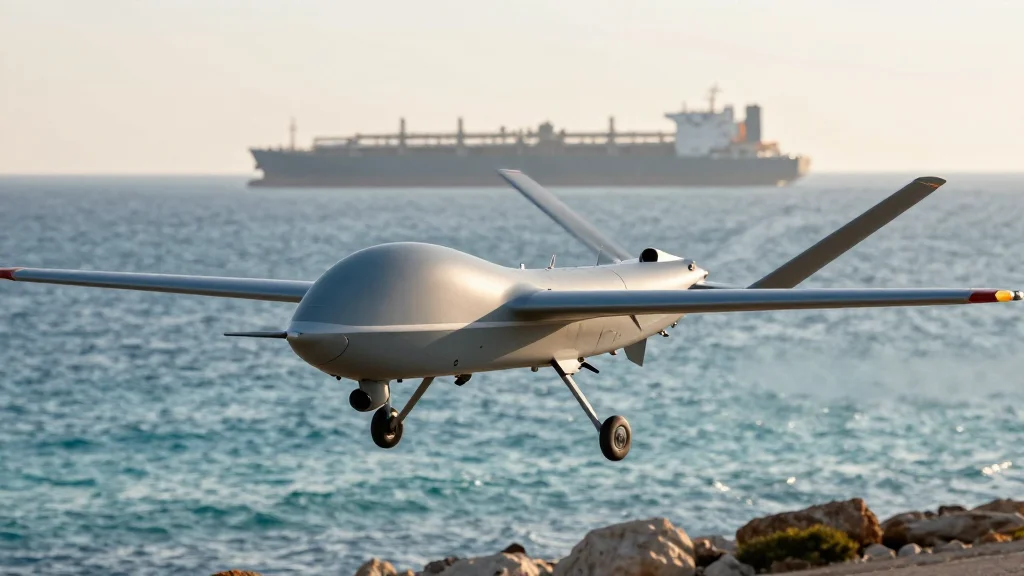
Ukrainian Drone Unit Strikes Russian Gas Tanker From Libyan Base, Expanding War’s Reach

Why It Matters
The strike on the Arctic Metagaz illustrates how Ukraine is turning the war into a global, multi‑theater conflict, using covert overseas bases to undermine Russia’s revenue streams. By targeting a vessel that is part of the shadow fleet, Kyiv attacks a critical node in Moscow’s ability to finance its military operations, potentially weakening Russia’s war effort and influencing global energy markets. The involvement of Libya, a nation already split between rival governments and foreign backers, adds a new layer of geopolitical risk. Western endorsement of the covert deal signals a willingness to expand the conflict’s footprint, but it also raises the specter of retaliation against Libyan infrastructure and the possibility of broader destabilization in the Mediterranean. The episode forces policymakers to reassess the effectiveness of sanctions regimes and the security of maritime routes that are vital to global energy supplies.
Key Takeaways
- •Ukrainian drone operators launched a sea‑drone attack on the Russian‑flagged Arctic Metagaz on March 3, damaging a 61,000‑ton LNG carrier.
- •All 30 crew members were rescued and transferred to a vessel heading for Benghazi, Libya.
- •The strike originated from a military facility in Tripoli under a covert deal between Kyiv and Libya’s Tripoli government, backed by the United States.
- •Arctic Metagaz is part of Russia’s shadow fleet, operating despite a temporary U.S. waiver on sanctions aimed at easing energy shortages.
- •France proposes to double penalties for vessels sailing under false flags, reflecting heightened concern over sanction evasion.
Pulse Analysis
Ukraine’s decision to embed drone specialists in Libya represents a calculated escalation that leverages geographic distance to sidestep Russian air defenses. Historically, Kyiv’s drone campaign has been confined to the Black Sea, where it has forced Russia to adapt its naval tactics. By moving operations to the Mediterranean, Ukraine not only diversifies its attack vectors but also forces Russia to defend a far broader maritime perimeter, stretching its already strained naval resources.
The covert nature of the Libyan deployment also highlights a growing trend of proxy‑type engagements, where states use third‑party territories to conduct deniable operations. This mirrors Cold‑War‑era practices and raises the stakes for regional actors who may be drawn into the conflict unintentionally. Libya’s fractured political landscape makes it a fertile ground for such arrangements, but it also risks turning the country into a battleground for external powers, potentially reigniting internal hostilities.
From a sanctions perspective, the incident underscores the limitations of current enforcement mechanisms. The shadow fleet’s ability to re‑flag vessels and exploit legal loopholes means that even a temporary U.S. waiver can have outsized effects on the flow of Russian energy revenues. France’s proposed legal tightening signals a coordinated European response, yet without robust international cooperation, drones like those used in Libya will continue to erode the efficacy of sanctions. The broader implication is a possible recalibration of how the West targets revenue streams that fund conflicts, shifting from purely economic levers to more kinetic, albeit covert, measures.
Ukrainian Drone Unit Strikes Russian Gas Tanker from Libyan Base, Expanding War’s Reach
Comments
Want to join the conversation?
Loading comments...