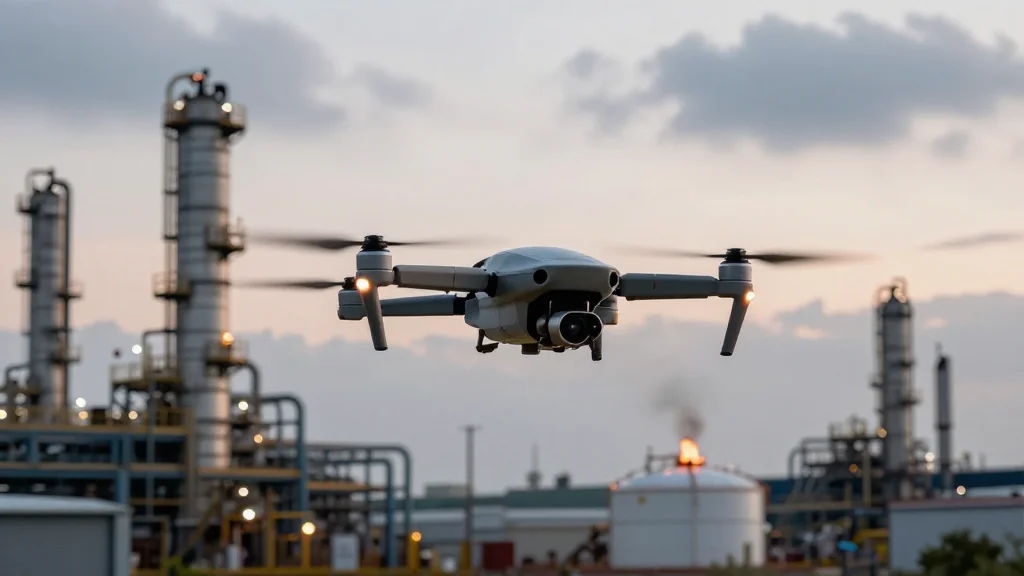
Ukrainian Drones Hit Russia's Syzran Refinery, Sparking Massive Fire

Why It Matters
The strike on the Syzran refinery demonstrates Ukraine’s ability to project power far beyond its borders, directly threatening the revenue streams that sustain Russia’s war machine. By disrupting oil processing, Kyiv not only inflicts economic pain but also forces Moscow to divert resources to air defense and infrastructure repair, weakening its frontline capabilities. The attacks also showcase the maturation of Ukraine’s indigenous drone programs, signaling a shift from reliance on foreign aid to self‑sufficient, high‑precision strike options that could reshape the balance of power in the conflict. Beyond the immediate battlefield, the growing reliance on drones and satellite denial tactics highlights a broader trend in modern warfare: the convergence of unmanned systems and cyber‑space denial to achieve strategic effects. As other nations observe Ukraine’s success, the market for exportable drone technology and anti‑satellite solutions is likely to expand, influencing defense procurement and doctrine worldwide.
Key Takeaways
- •Ukrainian drones hit the Rosneft‑owned Syzran refinery >500 miles inside Russia, causing a large fire and two civilian deaths.
- •President Zelenskyy said the attack is part of a May long‑range plan targeting Russian oil infrastructure.
- •Defense Minister Mykhailo Fedorov highlighted drones as a key advantage and noted Russia’s inability to replace Starlink services.
- •Russia’s Defense Ministry claimed 121 Ukrainian drones were shot down, while Ukraine reported a 109‑out‑of‑116 interception of Russian drones.
- •Analysts link the refinery strikes to reduced Russian war‑finance and recent Ukrainian frontline gains.
Pulse Analysis
Ukraine’s recent deep‑strike operations mark a decisive evolution in its warfighting toolkit. Early in the conflict, Kyiv depended heavily on Western-supplied air‑defense systems and long‑range missiles. Today, home‑grown drones are delivering precision hits deep within Russian territory, a capability that forces Moscow to allocate scarce air‑defense assets to protect rear‑area assets. This shift reduces the strategic value of Russia’s traditional air superiority and stretches its defensive perimeter.
The synergy between drone strikes and satellite denial is particularly noteworthy. By curtailing Russia’s access to Starlink, Ukraine not only hampers Moscow’s ability to guide its own drones but also creates a feedback loop where Ukrainian drones can operate with less electronic interference. This dual‑pronged approach mirrors the broader trend of integrating kinetic and non‑kinetic tools to achieve strategic effects, a model that other near‑peer competitors are likely to emulate.
Looking forward, the sustainability of Ukraine’s drone campaign will hinge on production capacity, supply chain resilience, and the ability to counter Russian electronic warfare. If Kyiv can maintain or increase sortie rates while mitigating attrition, the pressure on Russian oil revenues could translate into tangible reductions in war‑fighting capability, potentially accelerating diplomatic overtures. Conversely, a robust Russian counter‑measure—whether through advanced air defenses, electronic jamming, or retaliatory strikes on Ukrainian drone production sites—could blunt this advantage. The coming months will be a litmus test for the durability of Ukraine’s emerging aerial strategy.
Ukrainian Drones Hit Russia's Syzran Refinery, Sparking Massive Fire
Comments
Want to join the conversation?
Loading comments...