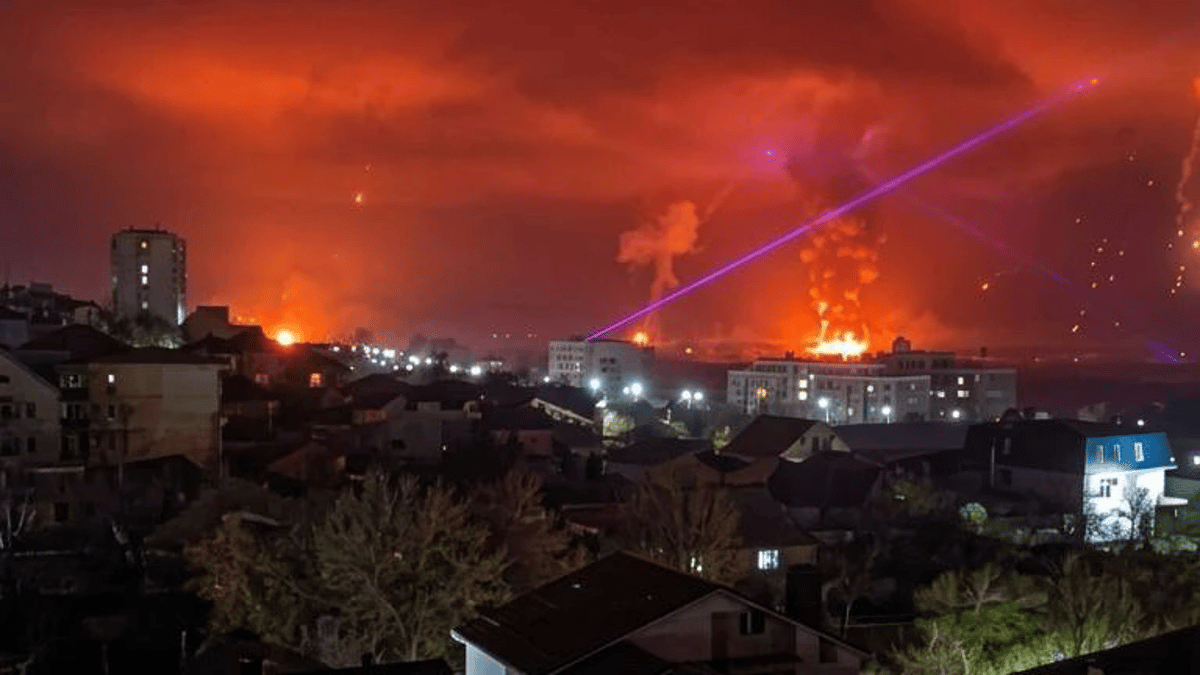
Ukrainians Hit Oil Facility in Third Russian Port, Also Damaged a Frigate (Ukraine Battlefield Update, Day 1,503)
Why It Matters
The strikes erode a key source of hard‑currency for Moscow and degrade naval strike capacity, while demonstrating Ukraine’s growing ability to project power deep inside Russian territory, influencing both the economic and military calculus of the conflict.
Key Takeaways
- •Ukraine hit Novorossiysk berths, halting oil loading.
- •Grigorovich‑class frigate damaged, reducing Kalibr missile capability.
- •Russia lost roughly $1 billion in oil revenue this week.
- •Ukraine launched 283 long‑range drones in single night attack.
- •Russian territorial gains in March 2026 limited to 25 km².
Pulse Analysis
Russia’s oil export infrastructure has become a high‑value target for Kyiv’s expanding drone arsenal. The three major Black Sea and Baltic ports—Novorossiysk, Primorsk and Ust‑Luga—handle roughly 40% of Russia’s export capacity, moving about 700,000 barrels per day through Novorossiysk alone. A week‑long series of strikes has reportedly shaved close to $1 billion (approximately €0.9 billion) from Moscow’s oil earnings, a noticeable dent in a sector that generated about $160 billion in 2025. By disrupting loading operations and damaging storage tanks, Ukraine is not only cutting revenue but also forcing Russia to divert air‑defence assets across a wider front, weakening its ability to protect other strategic assets.
The damage to a Grigorovich‑class frigate adds a naval dimension to Kyiv’s campaign. These frigates serve as launch platforms for Kalibr cruise missiles, which have been used to strike Ukrainian cities. Satellite imagery showing smoke over the vessel confirms a successful hit, potentially limiting Russia’s long‑range strike capability from the Black Sea Fleet. Analysts attribute the drones’ reach to the use of Starlink communications, which Ukrainian operators appear to be extending beyond the usual coverage area, allowing real‑time control of weapons deep inside Russian territory. This technological edge underscores a broader shift toward network‑centric warfare, where commercial satellite constellations can be repurposed for military effect.
On the ground, the impact of the drone offensive is reflected in Russia’s stagnant territorial gains. Independent Finnish analysts reported that Russian forces advanced only 25 square kilometers in March 2026, a negligible increase compared with prior months. The limited progress, combined with the economic strain from oil losses, strengthens Ukraine’s diplomatic position, giving President Zelensky a tangible bargaining chip in negotiations over energy attacks. As Ukraine continues to out‑produce Russia in long‑range drone sorties—7,000 versus a few thousand Russian Shahed launches—the conflict is increasingly being fought on a remote, high‑tech battlefield where economic and military pressures converge.
Ukrainians hit oil facility in third Russian port, also damaged a frigate (Ukraine Battlefield update, Day 1,503)
Comments
Want to join the conversation?
Loading comments...