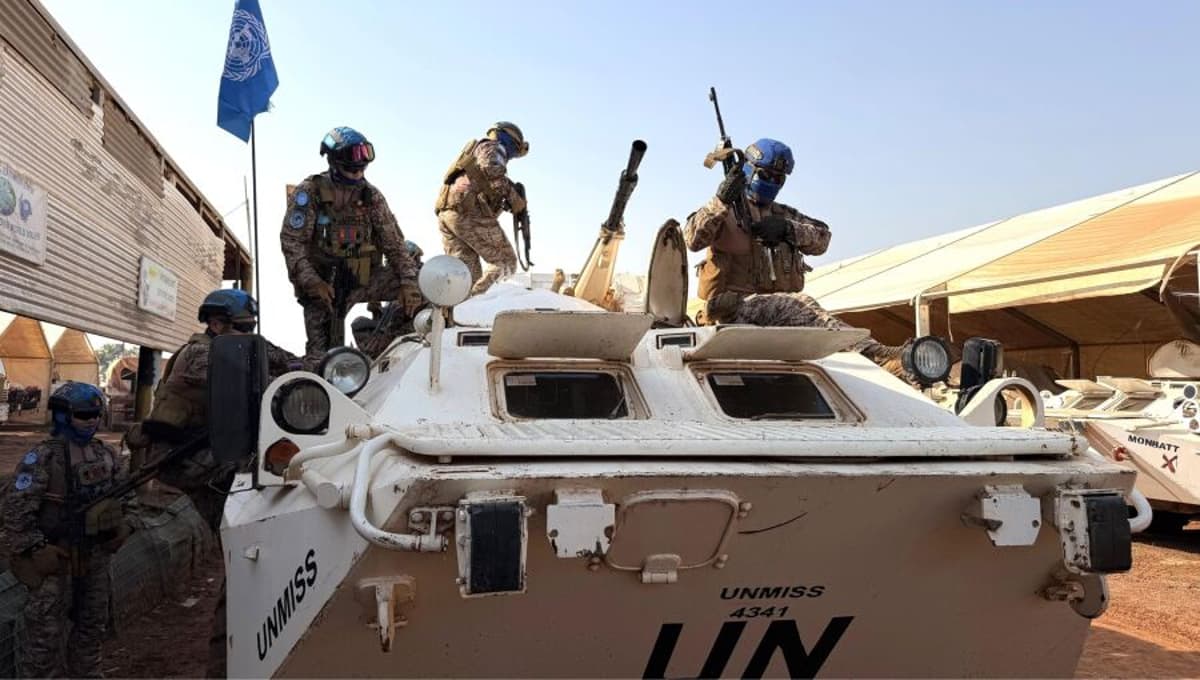
UN Security Council Extends South Sudan Peacekeeping Mission
Why It Matters
A reduced UNMISS footprint may limit its ability to safeguard civilians and support South Sudan's fragile political transition, while signaling a shift toward tighter fiscal control of UN peacekeeping operations worldwide.
Key Takeaways
- •UN Security Council extends UNMISS to April 2027.
- •Troop ceiling cut to 12,500 from 17,000.
- •Bangladesh contributes largest contingent with 8,278 peacekeepers.
- •Russia and China abstain, highlighting geopolitical split.
- •Reduction aligns with U.S.-driven UN peacekeeping budget cuts.
Pulse Analysis
The Security Council’s decision to prolong UNMISS underscores the international community’s continued commitment to South Sudan’s peace process, even as the mission’s size shrinks. Established in 2011 after the country’s independence, UNMISS has been one of the UN’s largest peacekeeping operations, peaking at nearly 20,000 personnel. By capping troops at 12,500, the Council acknowledges both fiscal pressures and the reality that the mission’s deployed force had already fallen below the previous limit due to earlier budget cuts. The retained police component of roughly 2,100 officers aims to preserve essential law‑enforcement support while the overall drawdown reflects a strategic recalibration.
For South Sudan, the troop reduction raises concerns about the mission’s capacity to protect civilians amid persistent inter‑communal clashes and delayed elections. While the current force level already operates below the former ceiling, the formal cap may constrain future scaling if violence escalates. The extension maintains UNMISS’s core mandate—civilian protection, human‑rights monitoring, and political‑transition assistance—yet the narrowed troop ceiling could strain logistical and rapid‑response capabilities, especially in remote, conflict‑prone regions. Stakeholders, including the government and humanitarian agencies, will need to adapt planning to a leaner peacekeeping footprint.
The vote also reflects a broader trend of tightening UN peacekeeping budgets, driven largely by the United States, which has advocated for cost reductions across multiple missions. Russia and China’s abstentions highlight divergent views on the pace and direction of UN reforms. As funding gaps widen, the UN faces a delicate balance between maintaining effective on‑the‑ground presence and meeting fiscal realities. The South Sudan extension serves as a bellwether for how future peacekeeping mandates may be structured—favoring streamlined forces, heightened efficiency, and increased reliance on host‑nation capacities and regional partners.
UN Security Council extends South Sudan peacekeeping mission
Comments
Want to join the conversation?
Loading comments...