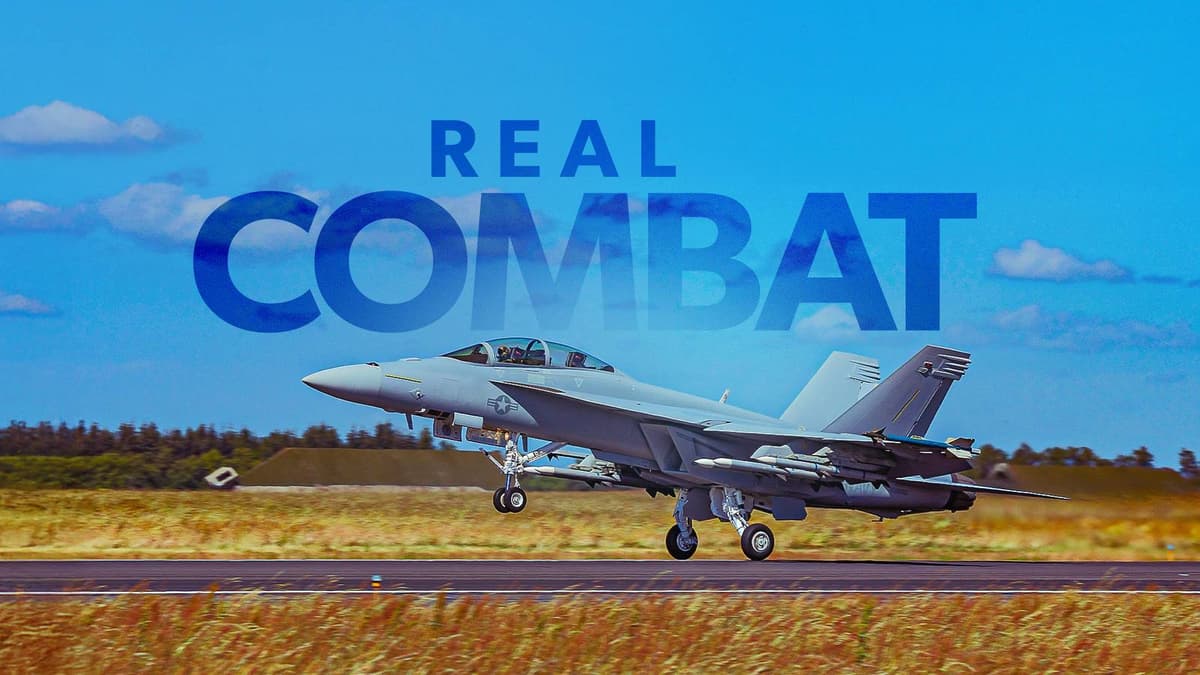
Under Fire: The Military Aircraft Seeing Real Combat & Why They Were Chosen
Companies Mentioned
Why It Matters
Defense planners must balance cutting‑edge capability with affordability, and the proven performance of legacy aircraft drives procurement and force‑structure decisions worldwide.
Key Takeaways
- •Super Hornets, A‑10s, and F‑16s dominate low‑cost combat missions
- •MQ‑9 Reaper provides persistent ISR and target designation
- •B‑52 offers similar cost with larger payload than B‑2
- •F‑22 and F‑35 have high cost per hour and lower availability
- •Upgraded B‑52J aims for 100‑year service life
Pulse Analysis
Cost and mission flexibility are the twin pillars that keep older airframes on the front lines. A Super Hornet can ferry a full bomb load externally, while an A‑10 or F‑16 can linger over a battlefield for hours, delivering precision strikes without the premium price tag of internal‑weapon stealth jets. The MQ‑9 Reaper adds a persistent eyes‑in‑the‑sky capability, scouting targets and cueing manned fighters, effectively multiplying the combat power of a carrier air wing or forward operating base. When operating from the Arabian Sea or Red Sea, carrier‑based aircraft reach Iranian targets in minutes, a stark contrast to the strategic‑range B‑2 whose $70,000‑$85,000 hourly cost limits sortie rates.
Operational data reinforce the economics of legacy platforms. The table in the article shows the F‑22 and F‑35 burning $85,000 and $39,000 per flight hour respectively, yet both hover around a 50% mission‑capable rate. In comparison, the F‑16, A‑10 and Super Hornet sit near $20,000‑$30,000 per hour with a 75% availability, delivering more bang for the buck. The B‑52, a 1950s design, now costs roughly $75,000 per hour—only marginally higher than the B‑2—but can haul a vastly larger payload, making it the preferred “missile truck” once air superiority is secured.
Looking ahead, budget constraints will shape the next generation of air power. The U.S. Air Force’s B‑52J modernization program seeks to stretch the bomber’s service life toward a century, integrating new engines, avionics and hypersonic standoff weapons. Meanwhile, the forthcoming B‑21 Raider will handle high‑risk penetration missions, leaving the upgraded B‑52 to provide massive, low‑cost strike capacity. This tiered approach—high‑tech penetrators supported by affordable, high‑availability workhorses—ensures that the United States can sustain global operations without inflating defense spending beyond political limits.
Under Fire: The Military Aircraft Seeing Real Combat & Why They Were Chosen
Comments
Want to join the conversation?
Loading comments...