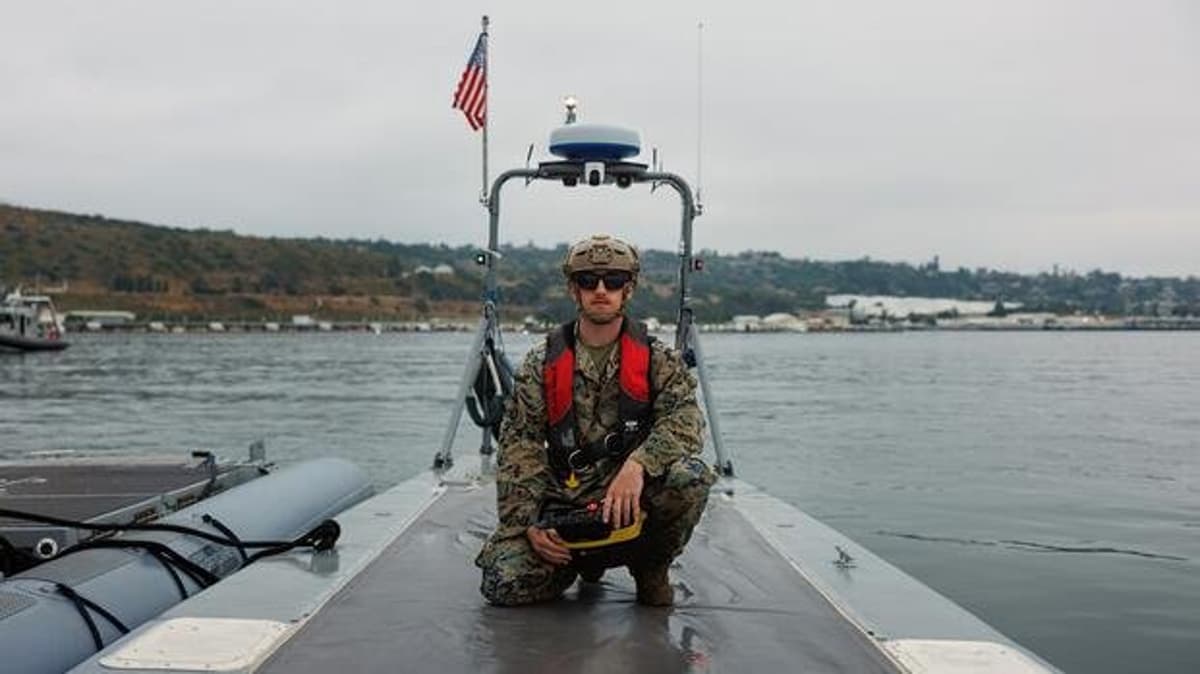
Unmanned Naval Fleet Bolsters Marine Corps Force Design in Pacific
•March 9, 2026
0
Why It Matters
Unmanned resupply removes crews from high‑risk corridors, enabling persistent Marine presence and reducing reliance on traditional amphibious ships, a critical advantage against Chinese anti‑access strategies.
Key Takeaways
- •Liberty Class carries 150‑ton payloads.
- •Autonomy level 4 handles navigation, collision avoidance.
- •Range exceeds 10,000 nautical miles, 25‑knot speed.
- •Production target 10‑20 vessels annually.
- •Enables continuous logistics for dispersed Pacific bases.
Pulse Analysis
The Marine Corps’ shift toward Expeditionary Advanced Base Operations reflects a broader doctrinal pivot to counter China’s anti‑access/area‑denial network in the first island chain. Small, low‑signature units stationed on atolls must maintain a steady flow of fuel, ammunition and spare parts, yet traditional supply convoys are vulnerable to long‑range missiles and require escort ships. Blue Water Autonomy’s Liberty Class autonomous surface vessels directly address this logistics bottleneck by offering crew‑less, long‑range transport that can slip into austere ports under cover of darkness, preserving the tempo of dispersed operations.
At 187 feet and built on a proven patrol‑vessel hull, the Liberty Class delivers a 150‑ton payload, more than 10,000 nautical miles of range and speeds above 25 knots, all while operating under Level 4 autonomy that manages navigation and collision avoidance in sea state 7. Modular bays allow rapid reconfiguration for fuel bladders, ammunition, medical kits or sensor suites, and the design targets two‑to‑three months of unattended operation. By leveraging commercial shipyard practices and software‑centric architecture, Blue Water projects a unit cost roughly one‑tenth that of a conventional frigate, enabling a production cadence of 10‑20 hulls per year and revitalizing the U.S. shipbuilding base.
Strategically, unmanned logistics give commanders the freedom to disperse forces without over‑taxing amphibious lift, a decisive edge in a contested Pacific where Chinese missile batteries threaten traditional supply lines. The same platforms can double as ISR relays or, in future variants, carry vertical‑launch cells, turning a cargo ship into a low‑cost strike node. As the Navy‑Marine team integrates these vessels into joint exercises, they could reshape force projection, forcing adversaries to allocate more resources to counter a numerically superior, attritable fleet that operates just beyond the horizon.
Unmanned Naval Fleet Bolsters Marine Corps Force Design in Pacific
0
Comments
Want to join the conversation?
Loading comments...