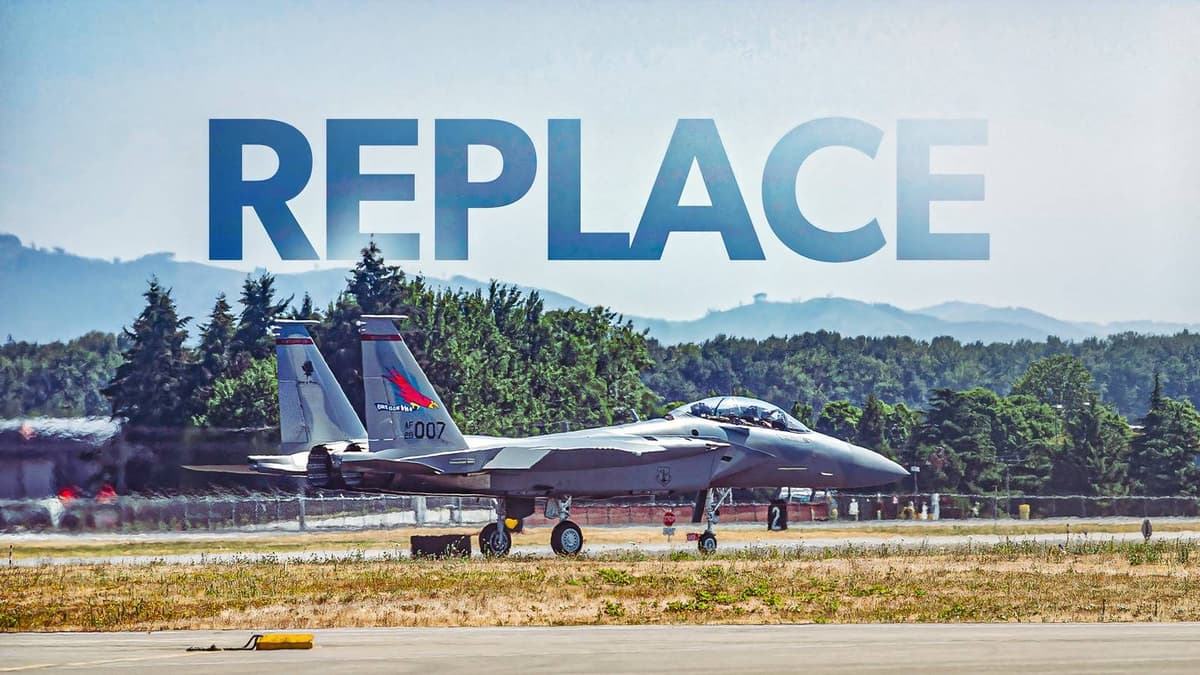
Upgrade Or Replace? Why The US Air Force Is Reconsidering The F-15EX Over A New 5th-Gen Fighter
Companies Mentioned

Why It Matters
Expanding the F‑15EX fleet gives the Air Force a cost‑effective, high‑capacity layer that can sustain large‑scale sorties while preserving the F‑35 for contested, low‑observable missions. This three‑tier architecture reshapes U.S. air‑power strategy amid budget constraints and multi‑theater demands.
Key Takeaways
- •F‑15EX unit cost peaks at $97 million, rivaling F‑35 price
- •Advanced ADCP II processor gives Eagle II 87 billion ops/sec
- •Eagle II positioned for homeland defense, Indo‑Pacific, high‑payload missions
- •Air Force adopts three‑tier fighter stack: F‑15EX, F‑35, future F‑47
- •DOT&E validates F‑15EX effectiveness against surrogate fifth‑gen threats
Pulse Analysis
The Air Force’s decision to more than double the F‑15EX Eagle II fleet reflects a pragmatic shift in procurement strategy. By earmarking $3 billion for 48 additional aircraft, the service secures a ready‑to‑fly platform that can replace the aging F‑15E fleet without waiting for the next generation of stealth fighters. The expansion also signals confidence in the Eagle II’s modernized avionics, including the ADCP II processor and the AN/APG‑82(V)1 AESA radar, which together deliver sensor‑fusion and network‑centric capabilities previously reserved for fifth‑generation jets.
Cost considerations are central to the debate. While the F‑15EX’s flyaway price has risen to $94‑$97 million per aircraft—occasionally exceeding the F‑35’s $82.5 million—the platform offers a lower cost per flight hour and a dramatically longer airframe life of 20,000 hours versus the F‑35’s 8,000. Its payload capacity of nearly 30,000 lb and $29,000 per hour operating cost make it an economical choice for high‑tempo, high‑payload missions such as air‑defense and long‑range strike, especially in theaters where stealth is less critical.
Strategically, the Air Force is building a three‑tier fighter architecture: the F‑15EX for volume and firepower, the F‑35 for stealth and sensor dominance, and the upcoming F‑47 sixth‑generation platform for deep‑penetration missions. This layered approach allows the service to allocate the right tool to each operational problem, preserving budget while maintaining readiness across multiple regions. As the F‑15EX moves into forward deployments in Japan and integrates advanced weapons like the AIM‑260 JATM, it underscores a broader trend—fourth‑generation fighters are being revitalized, not retired, to meet the complex demands of modern air warfare.
Upgrade Or Replace? Why The US Air Force Is Reconsidering The F-15EX Over A New 5th-Gen Fighter
Comments
Want to join the conversation?
Loading comments...