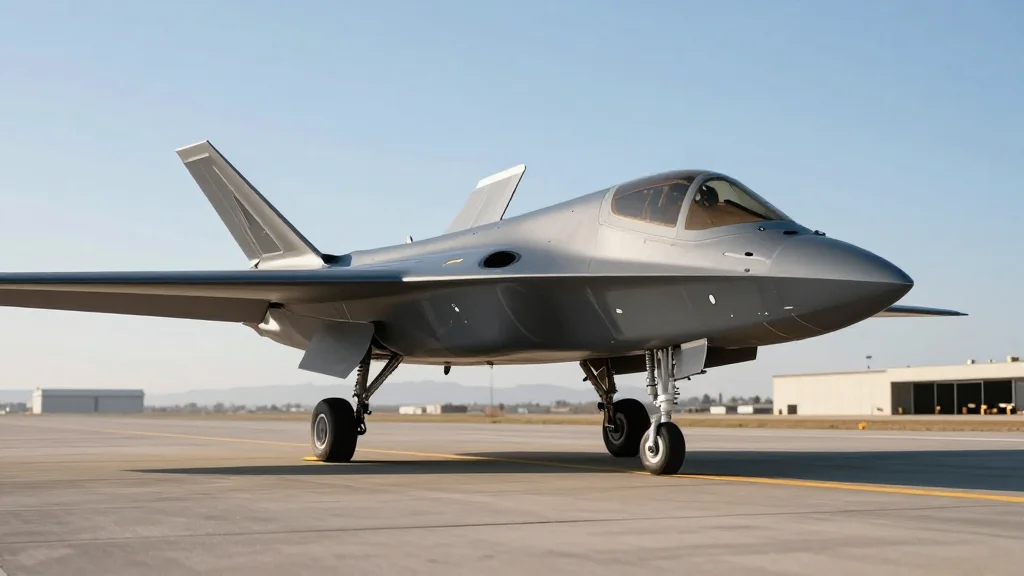
US Air Force Experimental Unit Tests Anduril’s YFQ‑44A Autonomous Combat Drone

Companies Mentioned
Why It Matters
The YFQ‑44A test demonstrates that autonomous combat aircraft can move from laboratory prototypes to field‑ready systems within a compressed timeline, challenging traditional acquisition cycles. By proving that warfighters can directly shape tactics and logistics, the Air Force reduces the risk of capability gaps as peer competitors advance their own unmanned combat programs. The CCA’s ability to operate from austere forward bases with minimal equipment could expand the reach of U.S. air power, especially in contested or denied environments. If the program meets its 2030 fielding target, it will be the first fully autonomous fighter‑sized platform to enter service, potentially redefining air combat doctrine, force structure, and the balance of manned‑unmanned teaming. The success—or failure—of this early experimentation will influence budget allocations, future AI‑driven weapons development, and the broader defense industrial base’s approach to rapid prototyping.
Key Takeaways
- •EOU conducted daily YFQ‑44A sorties at Edwards AFB during the week of April 5
- •Menace‑T laptop system enabled autonomous taxi, take‑off, in‑flight tasking and data management
- •Prototype contract awarded less than two years ago; first flight occurred six months prior
- •Lt. Col. Matthew Jensen confirmed all flights were executed by warfighters, not engineers
- •Col. Timothy Helfrich highlighted the acquisition model that trades operational risk for acquisition risk
Pulse Analysis
Anduril’s YFQ‑44A represents a watershed in the convergence of AI, autonomous flight and rapid acquisition. Historically, fighter development cycles have spanned a decade or more, with extensive ground testing before any operational exposure. By inserting the EOU—a unit of active warfighters—into the earliest flight phases, the Air Force is effectively compressing that timeline and creating a feedback loop that can correct design and doctrinal issues in near real‑time. This approach mirrors the broader Warfighting Acquisition System’s emphasis on early operator input, but it also raises questions about how risk is being managed. The Air Force’s senior leadership appears comfortable with a higher operational risk envelope, betting that the AI‑driven autonomy will mitigate human error and survivability concerns.
From an industry perspective, Anduril’s success could accelerate the market for modular, laptop‑based command suites like Menace‑T, positioning the company as a key supplier for future unmanned platforms across services. Competitors such as General Atomics and Boeing will likely respond with their own rapid‑prototype initiatives, intensifying a race to field the first truly autonomous fighter. The strategic payoff is significant: a platform that can be deployed from forward operating bases with minimal logistical footprint could enable the U.S. to project power in regions where traditional basing is contested.
Looking ahead, the YFQ‑44A’s path to operational status will hinge on the upcoming OT&E phase and the ability to integrate seamlessly with legacy manned aircraft. If the Air Force can demonstrate reliable manned‑unmanned teaming, it may set a precedent for other services—such as the Navy’s unmanned carrier‑based fighters—to adopt similar development models. The broader implication is a shift toward a more distributed, AI‑centric combat force that can adapt faster than adversaries, preserving U.S. air superiority in an increasingly contested domain.
US Air Force Experimental Unit Tests Anduril’s YFQ‑44A Autonomous Combat Drone
Comments
Want to join the conversation?
Loading comments...