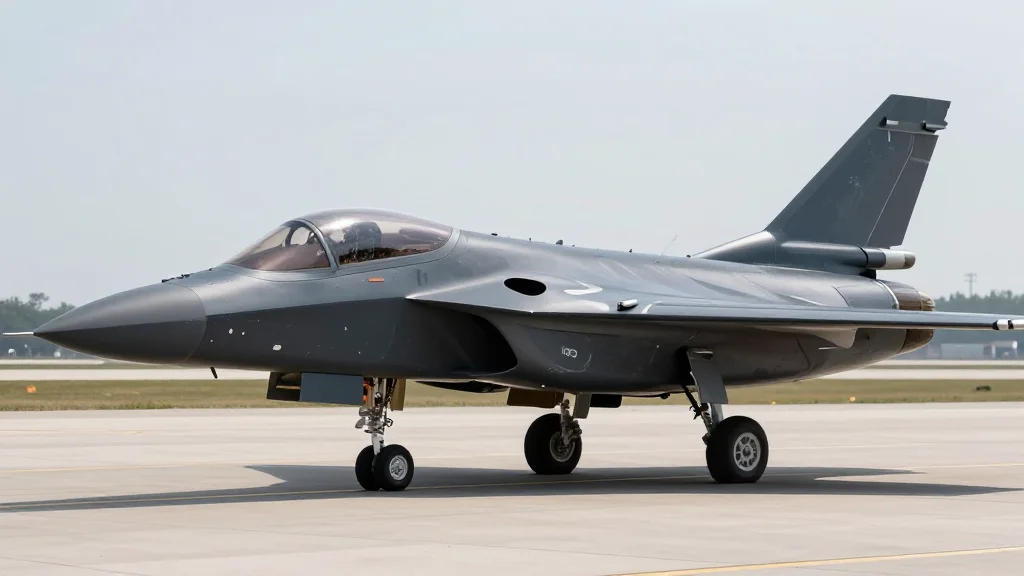
U.S. Air Force Greenlights $219 Million Low‑Rate Production of Boeing T‑7A Red Hawk Trainer

Why It Matters
The approval of low‑rate production for the T‑7A Red Hawk directly addresses a critical capability gap in the Air Force’s pilot training pipeline. By replacing the aging T‑38 Talon, the service will provide cadets with a trainer that mirrors the performance, avionics and data‑link environments of modern combat aircraft, thereby shortening the learning curve for fifth‑generation fighters. For the defense industrial base, the contract restores confidence in Boeing’s ability to deliver large‑scale aerospace programs after a costly development phase, while also reinforcing the strategic partnership with Saab, which could influence future joint projects in Europe and the United States. The program’s success will also have budgetary ripple effects. A smoother transition to the Red Hawk could free up funds earmarked for T‑38 sustainment, allowing the Air Force to reallocate resources toward emerging priorities such as hypersonic weapons, autonomous systems, and next‑generation air dominance platforms. Conversely, any setbacks in the low‑rate production lots could delay the T‑38 retirement, prolonging reliance on an aircraft that is increasingly costly to maintain and less representative of modern combat environments.
Key Takeaways
- •Air Force authorizes $219 million low‑rate production contract for 14 T‑7A Red Hawk trainers
- •Milestone C approval moves the program from development to manufacturing
- •Full program calls for 351 aircraft and 46 simulators across five AETC bases
- •Initial operational capability targeted for 2027, with three low‑rate lots to be green‑lighted sequentially
- •Boeing’s program losses have exceeded $1.8 billion; original development contract was $9.2 billion with Saab
Pulse Analysis
The T‑7A Red Hawk’s transition to low‑rate production marks a turning point for both the Air Force’s training architecture and Boeing’s commercial aerospace outlook. Historically, trainer replacements have been protracted; the T‑38’s 60‑year tenure is an outlier that has strained maintenance budgets and limited training realism. By committing to a modern, digitally‑designed platform, the Air Force is aligning its pilot pipeline with the data‑intensive nature of contemporary combat aircraft, a move that should reduce attrition rates and accelerate readiness.
From an industry perspective, Boeing’s ability to secure the low‑rate contract after a troubled development phase demonstrates the resilience of the defense acquisition system when coupled with strong political backing. The $1.8 billion in program losses underscores the financial risk inherent in cutting‑edge aerospace development, but the $219 million contract provides a cash flow bridge that can stabilize the supply chain and retain critical talent. Saab’s role in the aft fuselage not only diversifies the industrial base but also positions the partnership for future collaborative bids, especially as NATO members seek interoperable training solutions.
Looking ahead, the Air Force’s incremental lot approach serves as a risk‑mitigation template for other large‑scale acquisition programs. By evaluating each lot before scaling up, the service can incorporate real‑world performance data, adjust training curricula, and fine‑tune logistics support. If the Red Hawk meets its 2027 IOC, the Air Force could accelerate the T‑38 retirement, freeing up billions in sustainment savings that could be redirected to emerging domains such as artificial‑intelligence‑driven decision aids and hypersonic weapon integration. Conversely, any production hiccups could reverberate through the defense budget, prompting a reassessment of trainer modernization timelines.
U.S. Air Force Greenlights $219 Million Low‑Rate Production of Boeing T‑7A Red Hawk Trainer
Comments
Want to join the conversation?
Loading comments...