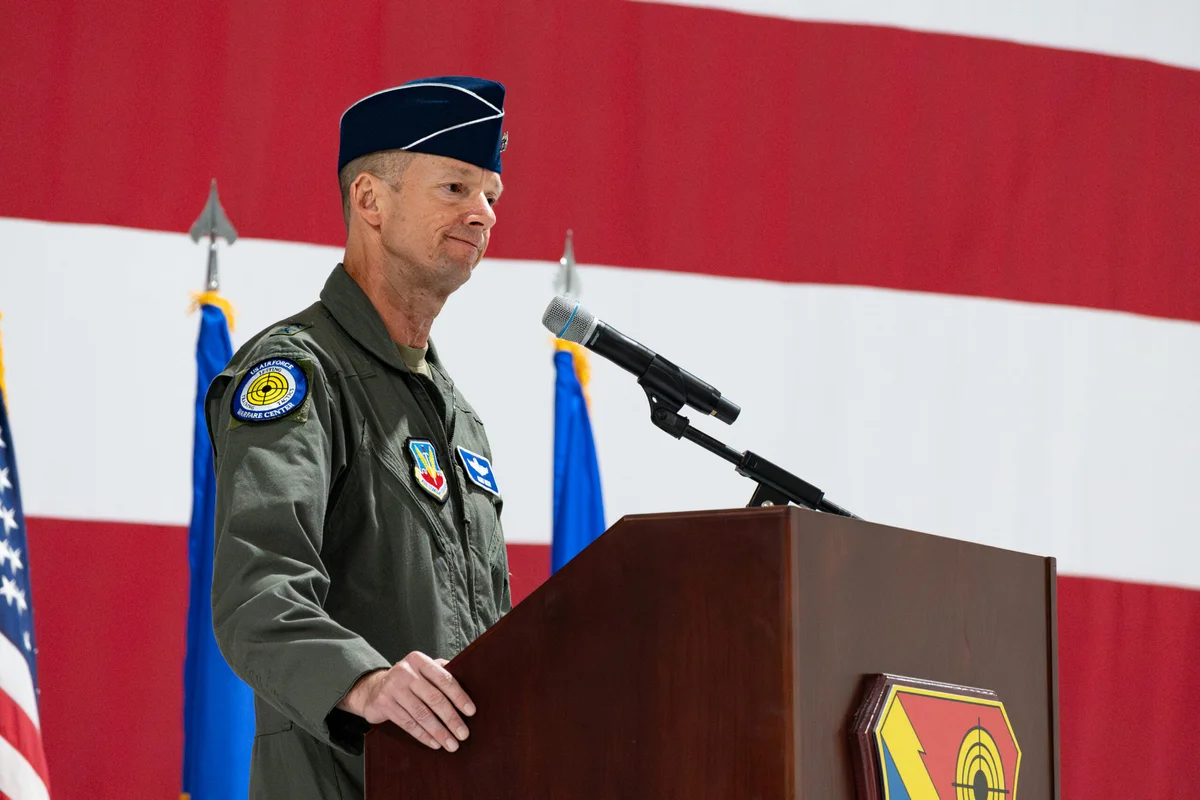
U.S. Air Force’s First Chief Modernization Officer Talks CCAs, Mass Production
Why It Matters
The push for AI‑driven drones and rapid, large‑scale production could reshape U.S. air superiority and force‑structure decisions, forcing competitors to accelerate their own autonomous capabilities.
Key Takeaways
- •Lt Gen Christopher Niemi appointed first Air Force chief modernization officer
- •He champions Collaborative Combat Aircraft, semi‑autonomous AI drones
- •Emphasizes rapid, mass‑production of affordable munitions for allies
- •Balances fixed requirements with evolving threat environment for faster fielding
- •Predicts robot fighters could surpass manned jets, urging US leadership
Pulse Analysis
The Air Force’s creation of a chief modernization officer signals a strategic shift toward a unified, technology‑first acquisition mindset. By centralizing oversight of emerging platforms, the service hopes to cut bureaucratic red tape and align budget priorities with future warfighting gaps. Lt. Gen. Niemi’s Senate testimony underscored this intent, positioning the new office as the nexus for identifying priority capabilities—especially those that leverage artificial intelligence—to keep pace with accelerating global threats.
At the heart of the modernization push is the Collaborative Combat Aircraft program, a suite of semi‑autonomous drones designed to operate in concert with piloted fighters. These AI‑enabled platforms promise to extend sensor reach, execute high‑risk missions, and eventually challenge the performance envelope of manned aircraft. While Niemi acknowledges technical setbacks are inevitable, he argues that early fielding will generate critical data and operational concepts, ensuring the United States does not fall behind adversaries that are already fielding autonomous combat systems.
Equally critical is the emphasis on mass‑produced, low‑cost munitions. The Family of Affordable Mass Munitions initiative aims to shift from limited, high‑price ordnance to weapons that can be manufactured at scale, even by allied partners or crowdsourced networks. This approach reduces dependency on single‑source suppliers and enables rapid surge capacity—from thousands per year to thousands per week—if a conflict escalates. By streamlining acquisition and embracing scalable production, the Air Force seeks to maintain a resilient, adaptable arsenal that can meet both peacetime training needs and wartime surge demands.
U.S. Air Force’s first chief modernization officer talks CCAs, mass production
Comments
Want to join the conversation?
Loading comments...