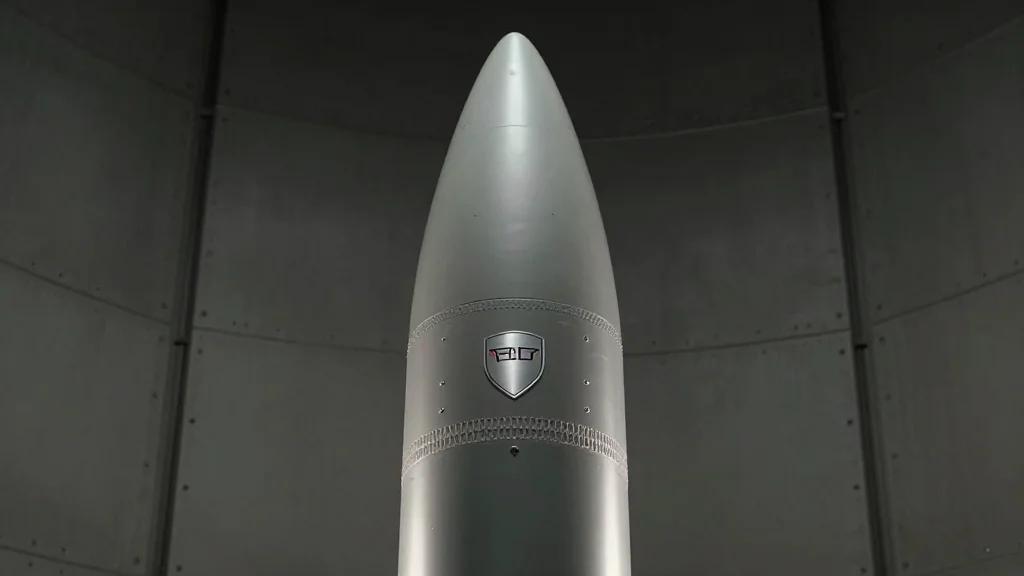
U.S. Allocates $4.6 Billion to Sentinel ICBM Program, Aiming to Replace Minuteman III

Companies Mentioned
Why It Matters
Modernizing the land‑based leg of the nuclear triad is central to maintaining credible deterrence in an era of rapid strategic change. The Sentinel ICBM will replace aging hardware that is increasingly vulnerable to cyber intrusion and physical degradation, thereby safeguarding the United States’ second‑strike assurance. By investing in hardened silos and resilient communications, the program also addresses emerging threats from anti‑access/area‑denial technologies that could compromise legacy launch sites. Beyond deterrence, the Sentinel program reshapes the defense industrial base. Northrop Grumman’s involvement secures a multi‑billion‑dollar contract that sustains high‑skill jobs in aerospace manufacturing and engineering. The program’s infrastructure component will drive construction and technology upgrades in rural western states, influencing local economies and federal‑state partnerships. The allocation also sends a clear signal to peer competitors that the United States will not tolerate a gradual erosion of its nuclear posture. By committing resources now, Washington aims to stay ahead of Russia’s new RS‑28 Sarmat deployments, China’s DF‑41 advancements, and North Korea’s expanding ICBM capabilities, thereby preserving strategic stability.
Key Takeaways
- •$4.6 billion FY2027 budget allocation for the Sentinel ICBM program
- •Sentinel (LGM‑35A) will replace the Minuteman III fleet of ~400 missiles in 450 silos
- •Northrop Grumman conducts first‑stage solid‑rocket static fire test in Utah, March 2025
- •Program includes construction of new hardened silos and upgraded command‑and‑control networks
- •Initial operational capability targeted for early 2030s, full deployment later in the decade
Pulse Analysis
The Sentinel funding marks a decisive pivot from incremental upgrades to a clean‑sheet replacement of the United States’ land‑based nuclear deterrent. Historically, the Minuteman series has been the workhorse of the triad, but its aging propulsion and analog electronics have become liabilities in a digital battlespace. By allocating $4.6 billion now, the Pentagon is front‑loading the cost curve to avoid larger overruns later, a lesson learned from the costly life‑extension programs of the 1990s and 2000s.
From a market perspective, the contract solidifies Northrop Grumman’s position as the primary supplier for strategic missile systems, potentially crowding out competitors such as Lockheed Martin and Raytheon in future ICBM work. The emphasis on new silo construction also creates a secondary market for civil engineering firms and specialized infrastructure providers, expanding the defense supply chain beyond traditional aerospace vendors.
Strategically, the Sentinel’s hardened cyber and electronic defenses address a gap that has grown as adversaries develop sophisticated electronic warfare capabilities. The integration of encrypted, redundant command links reduces the risk of a single point of failure, a scenario that could undermine deterrence credibility. As Russia fields hypersonic glide vehicles and China expands its DF‑41 ICBM inventory, the United States’ ability to assure a survivable second‑strike becomes a linchpin of global strategic stability. The Sentinel program, therefore, is not just a hardware upgrade; it is a reaffirmation of the United States’ commitment to a credible, resilient nuclear posture in the 21st century.
U.S. Allocates $4.6 Billion to Sentinel ICBM Program, Aiming to Replace Minuteman III
Comments
Want to join the conversation?
Loading comments...