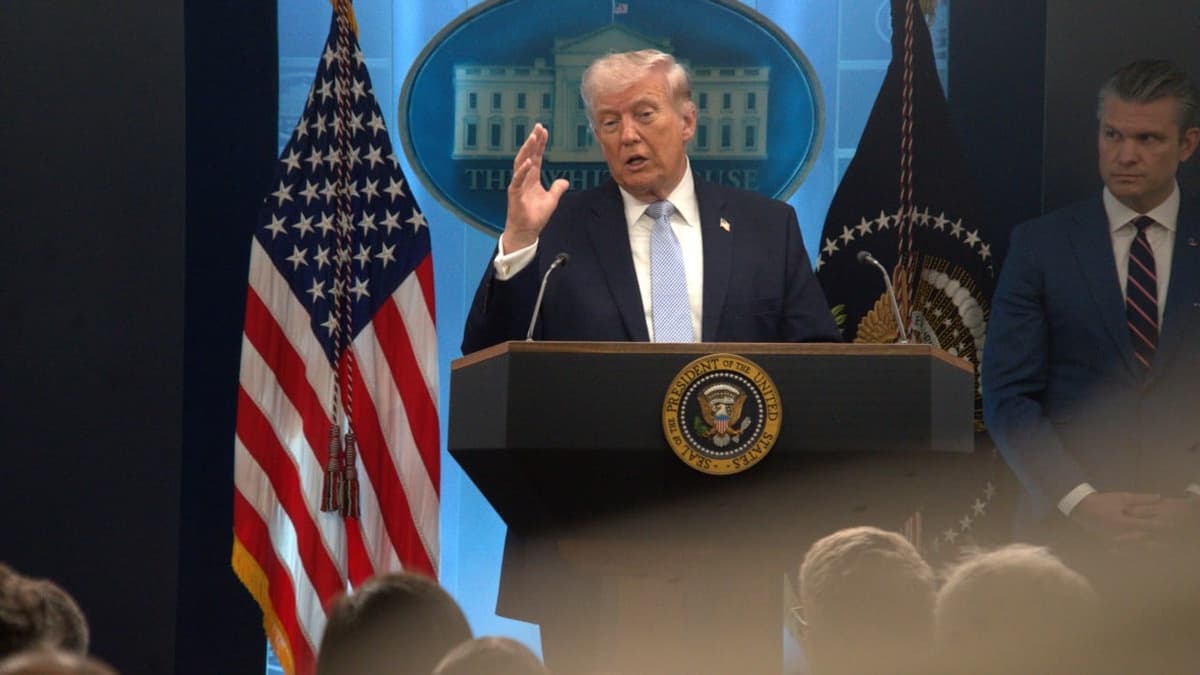
US and Iran Near Brink of Escalation as Trump Deadline for Deal Looms
Why It Matters
The standoff threatens to expand into a broader regional conflict that could disrupt global oil supplies and destabilise the Gulf’s security architecture.
Key Takeaways
- •Trump gives Iran 48‑hour ultimatum
- •US threatens to target Iranian infrastructure
- •Iran mobilizes civilians, closes diplomatic channels
- •China and Russia veto UN resolution on Strait of Hormuz
- •Regional tensions risk broader escalation
Pulse Analysis
The latest escalation between Washington and Tehran marks a sharp departure from traditional diplomatic engagement, as President Trump leveraged social media to issue a stark 48‑hour deadline. By threatening the annihilation of an entire civilization and backing rhetoric with strikes on strategic oil facilities, the United States signalled a willingness to employ both coercive diplomacy and kinetic force. This approach underscores a broader shift toward high‑stakes brinkmanship, where political messaging and military pressure are intertwined to extract concessions on contentious issues such as the reopening of the Strait of Hormuz.
Beyond the bilateral clash, the crisis reverberates across the Gulf, where the Strait of Hormuz remains a chokepoint for roughly a third of global oil shipments. Disruptions could trigger sharp price spikes, prompting market volatility and forcing energy‑dependent economies to reassess supply chains. Regional actors, including Israel, Saudi Arabia, Qatar and the United Arab Emirates, have already engaged in retaliatory strikes, raising the spectre of a multi‑front confrontation. The heightened risk to maritime navigation amplifies concerns among shipping firms and investors, who monitor any escalation for its potential to reshape global energy logistics.
Diplomatically, the episode exposes fractures within the international system. Pakistan’s renewed mediation underscores the search for a neutral broker, yet the United Nations’ effort to pass a resolution was stymied by China and Russia’s veto, reflecting divergent geopolitical interests. Beijing and Moscow framed the conflict as a consequence of unlawful U.S. and Israeli actions, positioning themselves as potential peace facilitators while protecting their strategic ties to Tehran. The stalemate suggests that any durable resolution will require a multilateral framework that balances security guarantees with economic incentives, lest the Gulf descend further into instability.
US and Iran near brink of escalation as Trump deadline for deal looms
Comments
Want to join the conversation?
Loading comments...