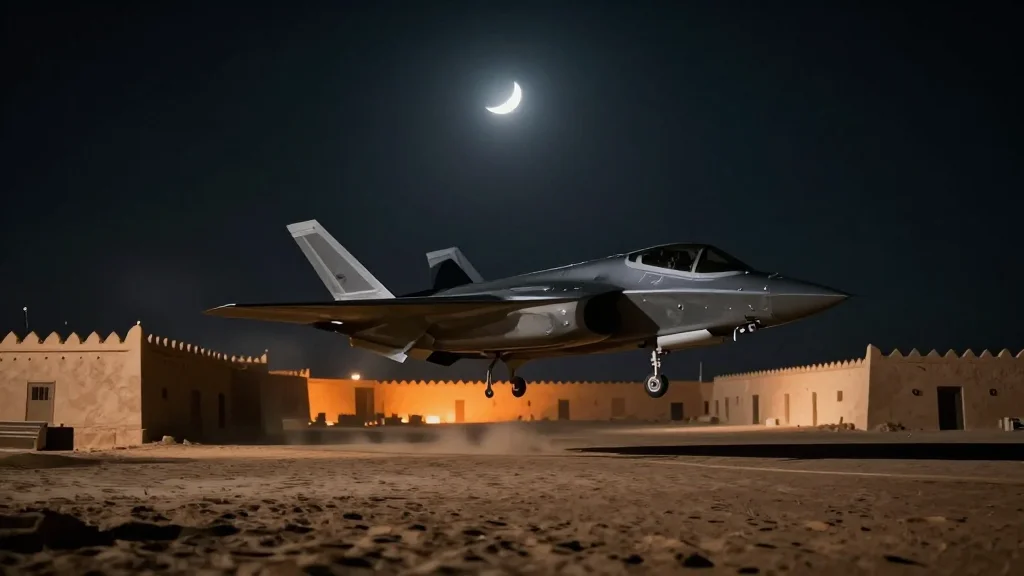
U.S. and Nigerian Forces Eliminate IS Deputy Leader Abu‑Bilal Al‑Minuki in Lake Chad Strike

Why It Matters
The elimination of Abu‑Bilal al‑Minuki marks a rare high‑value target kill for the U.S. in Africa, underscoring a shift toward more aggressive counter‑terrorism postures on the continent. By removing a senior strategist who coordinated weapon production and financial flows, the strike could degrade the operational capacity of IS affiliates, potentially lowering the frequency of attacks in the Lake Chad region. However, the vacuum left by his death may also trigger internal power struggles within IS, risking a short‑term spike in violence as factions vie for control. For Nigeria, the success bolsters President Bola Tinubu’s security narrative, offering a tangible victory against a group that has plagued the nation for years. It also validates the partnership with the United States, which may translate into increased military aid, advanced surveillance assets, and joint training programs. The broader implication for the defense industry includes heightened demand for intelligence‑, surveillance‑, and reconnaissance (ISR) platforms, counter‑drone technologies, and precision‑strike capabilities tailored to the Sahel’s challenging terrain.
Key Takeaways
- •U.S. and Nigerian forces killed IS deputy leader Abu‑Bilal al‑Minuki in a midnight raid on a fortified enclave in the Lake Chad Basin.
- •Al‑Minuki, under U.S. sanctions since 2023, directed IS media, finance, and weapons‑development operations across Africa.
- •IS activity in Africa rose to 86% of global attacks in Q1 2026, up from 49% in all of 2024 (ACLED report).
- •President Bola Tinubu and President Donald Trump publicly praised the joint operation.
- •AFRICOM described al‑Minuki as “the most active terrorist in the world,” highlighting his strategic importance.
Pulse Analysis
The joint kill of al‑Minuki illustrates how the United States is recalibrating its counter‑terrorism footprint to address the geographic diffusion of jihadist threats. Historically, U.S. focus has been anchored in the Middle East, but the surge in African‑based IS attacks forces a doctrinal pivot. AFRICOM’s ability to synchronize air power with Nigerian ground forces demonstrates a maturing partnership that could serve as a template for future operations against decentralized insurgent networks.
From a market perspective, the operation is likely to accelerate procurement cycles for ISR and precision‑strike systems suited to the Sahel’s vast, low‑infrastructure environment. Companies offering satellite‑linked targeting, portable radar, and counter‑UAS solutions may see heightened interest from both U.S. and African defense ministries. Moreover, the success may embolden NATO allies to contribute resources, potentially opening new funding streams for regional security initiatives.
Strategically, the removal of a senior IS planner could fragment the group’s command hierarchy, but history warns that leadership decapitation alone rarely eradicates insurgent movements. The next phase will hinge on Nigeria’s capacity to sustain pressure on ISWAP and Boko Haram while delivering governance and development to vulnerable communities. If the partnership can translate kinetic victories into lasting stability, it may reshape the security calculus for West Africa and reaffirm the value of joint operations in a multipolar threat landscape.
U.S. and Nigerian Forces Eliminate IS Deputy Leader Abu‑Bilal al‑Minuki in Lake Chad Strike
Comments
Want to join the conversation?
Loading comments...