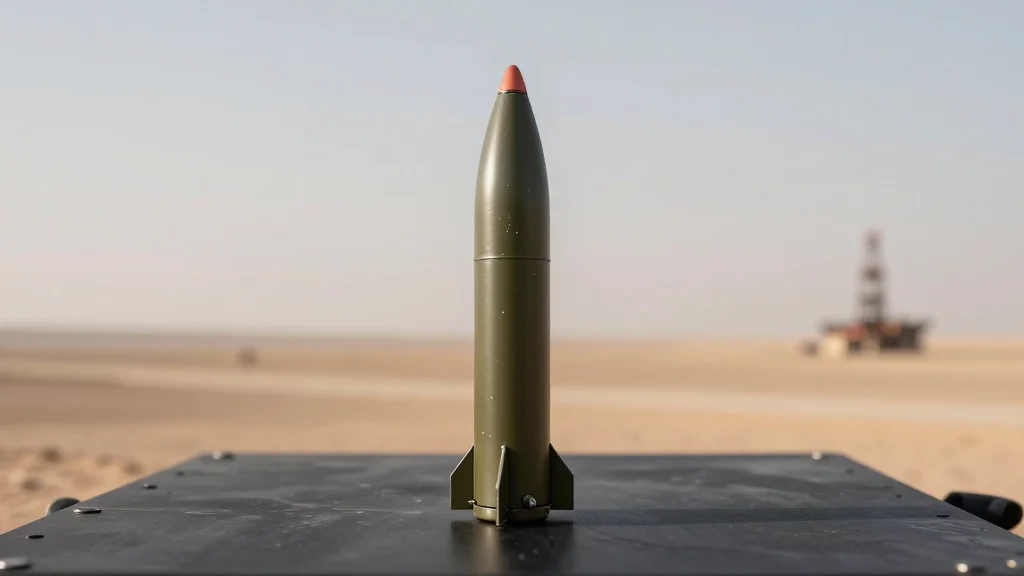
U.S. Approves $8.6 Billion Emergency Arms Sales to Qatar, Kuwait, UAE, Israel

Why It Matters
The $8.6 billion package reshapes the security calculus of the Gulf, giving allies advanced air‑defence and precision‑strike capabilities that could deter further Iranian aggression. At the same time, the bypass of congressional oversight raises questions about the balance of power between the executive and legislative branches in foreign‑policy decisions, especially when large sums and sensitive technology are involved. Beyond the immediate theater, the rapid drawdown of U.S. munitions to meet Middle‑East demand may erode readiness for other high‑end contingencies, notably a potential conflict with China over Taiwan. If U.S. stockpiles are stretched thin, policymakers could be forced to prioritize one theater over another, influencing diplomatic signaling and alliance management worldwide.
Key Takeaways
- •$8.6 billion emergency arms package approved for Qatar, Kuwait, UAE and Israel
- •Patriot missile interceptors for Qatar exceed $4 billion
- •APKWS precision‑kill system valued at $992.4 million for three allies
- •Kuwait receives $2.5 billion battle‑command radar system
- •Approval bypassed standard congressional review under a special emergency provision
Pulse Analysis
The emergency sale marks a decisive shift in how Washington leverages its defence industrial base to address acute regional crises. By invoking a fast‑track authority, the State Department signaled that the perceived Iranian threat outweighs the usual checks and balances designed to prevent unchecked arms proliferation. This approach mirrors the Trump administration’s broader pattern of using executive discretion to accelerate foreign‑policy tools, a practice that may become a template for future administrations facing rapid‑escalation scenarios.
However, the strategic cost of such expediency is evident. The depletion of Patriot interceptors and other high‑value munitions underscores a supply‑chain vulnerability that could limit U.S. response options elsewhere. As the Center for Strategic and International Studies warns, current inventory levels are already below pre‑war baselines, suggesting that a simultaneous conflict with China could force the United States into difficult allocation decisions. This tension between regional stabilization and global power projection may prompt a reassessment of the Arms Export Control Act’s emergency provisions, potentially leading to tighter legislative oversight.
In the longer term, the sales could cement deeper defence ties with Gulf states, creating a more integrated coalition capable of collective air‑defence. Yet the political backlash at home—particularly from Democrats concerned about executive overreach—could translate into tighter budgetary controls or stricter export‑license requirements. The outcome will shape not only the immediate balance of power in the Persian Gulf but also the architecture of U.S. defence export policy for years to come.
U.S. Approves $8.6 Billion Emergency Arms Sales to Qatar, Kuwait, UAE, Israel
Comments
Want to join the conversation?
Loading comments...