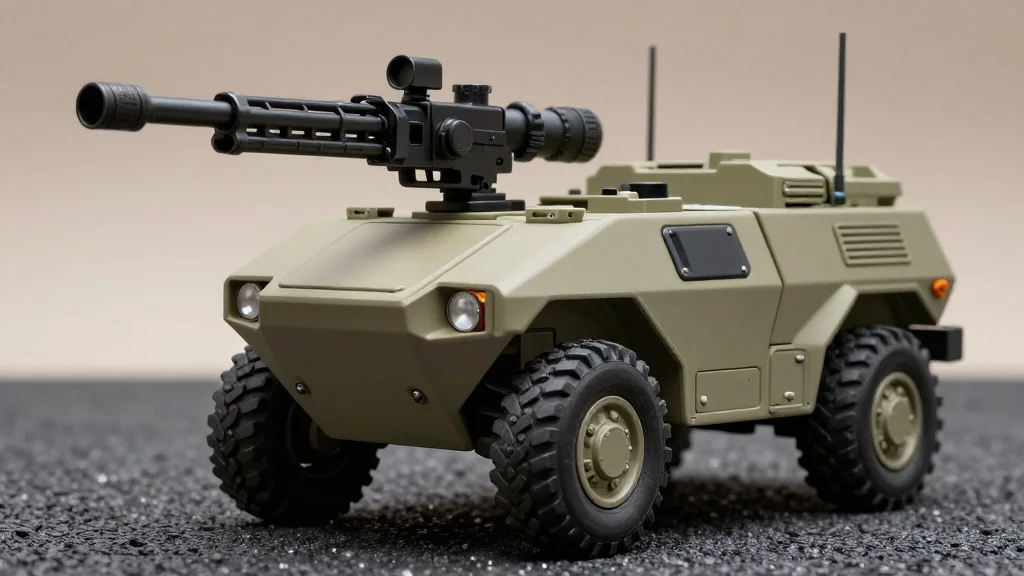
U.S. Army Arms Hunter Wolf UGV with .50‑Caliber Machine Gun, Expanding Combat Role

Companies Mentioned
Why It Matters
The Hunter Wolf upgrade marks a tangible step toward autonomous combat systems that can relieve soldiers from direct fire roles, potentially reshaping how ground forces conduct logistics and security missions. By proving that a logistics UGV can safely carry a .50‑caliber weapon, the Army validates a modular approach that could streamline procurement and reduce the logistical footprint of separate combat and support vehicles. If the system scales, it could influence defense budgeting and industrial competition, prompting manufacturers to develop interchangeable weapon kits and AI‑driven targeting solutions for a range of unmanned platforms. The move also raises policy considerations around the use of lethal autonomy, prompting the Army to refine rules of engagement and ensure robust human oversight.
Key Takeaways
- •Hunter Wolf UGV equipped with a .50‑caliber machine gun during a 101st Airborne Division exercise.
- •Platform shifts from pure logistics to a dual‑role combat and security configuration.
- •Demonstrated autonomous navigation and remote weapon operation at the Joint Robotics Training Center.
- •Part of the Army’s broader Unmanned Ground Systems strategy targeting 200 UGVs across brigades.
- •Extended field trials slated through 2026 with a production decision expected in early 2027.
Pulse Analysis
The Army’s decision to arm the Hunter Wolf reflects a pragmatic response to the growing threat environment where supply lines are increasingly targeted. Historically, the U.S. military has kept logistics and firepower separate, but the convergence of AI, robust communications, and modular weapon stations now makes a combined approach feasible. By leveraging an existing logistics platform, the service avoids the cost and time of developing a brand‑new combat UGV from scratch, instead retrofitting proven hardware with lethal capability.
From a market perspective, the move could catalyze a wave of contracts for weapon integration kits, sensor suites, and secure command‑and‑control software. Companies that have traditionally supplied manned vehicle weapons—such as General Dynamics, Raytheon, and BAE Systems—may find new opportunities to adapt their products for unmanned use. Conversely, pure‑play robotics firms could see increased demand for autonomy packages that can be slotted onto existing platforms.
Looking ahead, the key challenge will be balancing autonomy with accountability. While the Hunter Wolf remains under human supervision, future iterations may incorporate higher levels of AI‑driven target discrimination. The Army will need to establish clear thresholds for when the system can engage autonomously versus when a human operator must approve fire. Successful navigation of these technical and doctrinal hurdles could set a precedent for the next generation of armed UGVs, potentially redefining the composition of infantry battalions and the nature of ground combat in the 2030s.
U.S. Army Arms Hunter Wolf UGV with .50‑Caliber Machine Gun, Expanding Combat Role
Comments
Want to join the conversation?
Loading comments...