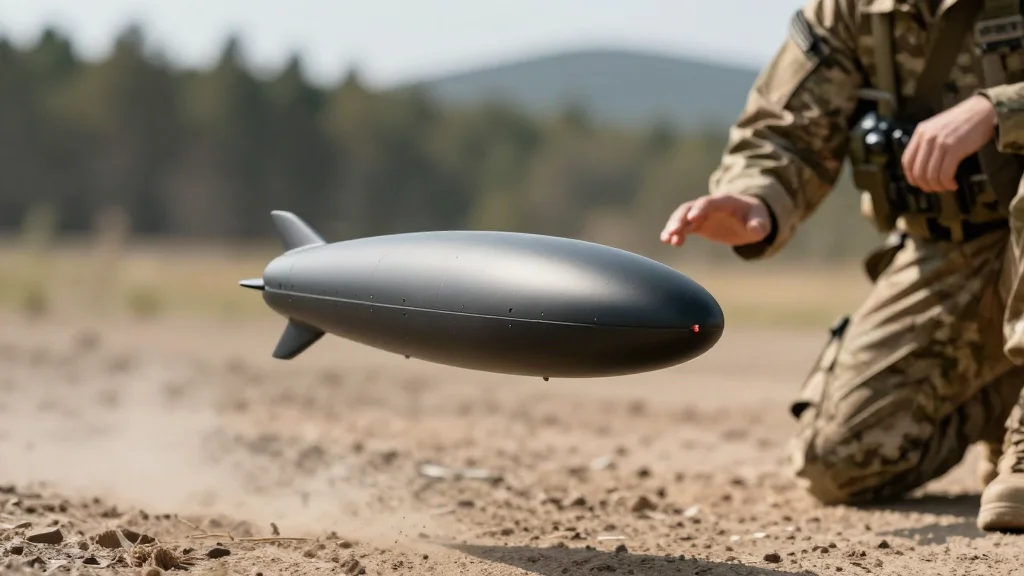
U.S. Army Awards AeroVironment $110 M Prototype Contract for Switchblade 400 LASSO

Why It Matters
The Switchblade 400 award marks the Army’s first step toward fielding a portable, anti‑armor loitering munition that can be operated by a single soldier, reshaping how ground forces engage armored threats without calling in indirect fire or air support. By embedding autonomous target‑recognition and modular open‑systems design, the system promises rapid upgrades and resilience against evolving electronic‑warfare environments, a critical need highlighted by recent conflicts where GPS and communications are contested. The $110 million LASSO investment also underscores the Pentagon’s broader pivot to loitering‑munition platforms as a cost‑effective, high‑precision complement to traditional artillery and missile systems. Beyond the immediate tactical benefits, the contract intensifies competition among niche players—AeroVironment, Uvision, and Textron—each vying for a share of the Army’s future loitering‑munition budget. The outcome will influence supply‑chain decisions, future R&D funding, and the pace at which the Army can field next‑generation autonomous weapons across its brigade combat teams, potentially setting a standard for other services and allied forces.
Key Takeaways
- •AeroVironment wins prototype contract for Switchblade 400 under the Army’s LASSO program
- •LASSO budget targets $110 million for FY 2027 to acquire 95 systems
- •Switchblade 400 weighs 39 lb, loiters 35 min, and reaches 65 km (40 mi) range
- •Competing entrants include Uvision’s Hero 90 and Textron’s Damocles loitering munitions
- •System integrates AV_Halo C2, hybrid aided target recognition, and MOSA design for future upgrades
Pulse Analysis
AeroVironment’s win reflects a strategic bet by the Army on scaling proven loitering‑munition technology rather than pursuing a brand‑new platform. The Switchblade family has already seen extensive combat use, giving the service a low‑risk path to field a medium‑range, anti‑armor capability that fits within existing logistics and training pipelines. By leveraging the OTA framework, the Army can bypass some of the traditional acquisition bottlenecks, but it also places pressure on AeroVironment to deliver rapid, measurable performance gains that justify the $110 million spend.
The competition highlights divergent design philosophies: Uvision’s Hero 90 emphasizes AI‑driven target tracking and multiple warhead options, while Textron’s Damocles bets on a VTOL launch platform that eliminates ground launch equipment. AeroVironment’s approach leans on incremental evolution—building on the Switchblade 300/600 lineage and embedding its AV_Halo ecosystem—to offer a familiar, interoperable solution. If the Switchblade 400 can demonstrate reliable autonomous operation in GPS‑denied environments, it could set a benchmark for future loitering‑munition designs, pushing rivals to prioritize edge‑computing and modularity.
Looking ahead, the LASSO program could become a template for other services seeking organic, precision‑strike tools at the squad level. Success may spur additional funding for follow‑on increments that expand range, payload diversity, and networked capabilities, potentially spawning a new class of multi‑role loitering munitions. Conversely, any shortfall in testing or integration could force the Army to reconsider its reliance on a single vendor, opening the door for a more diversified procurement strategy. The next six months will be decisive in shaping the Army’s loitering‑munition roadmap and, by extension, the broader defense industry’s focus on autonomous, man‑portable strike systems.
U.S. Army Awards AeroVironment $110 M Prototype Contract for Switchblade 400 LASSO
Comments
Want to join the conversation?
Loading comments...