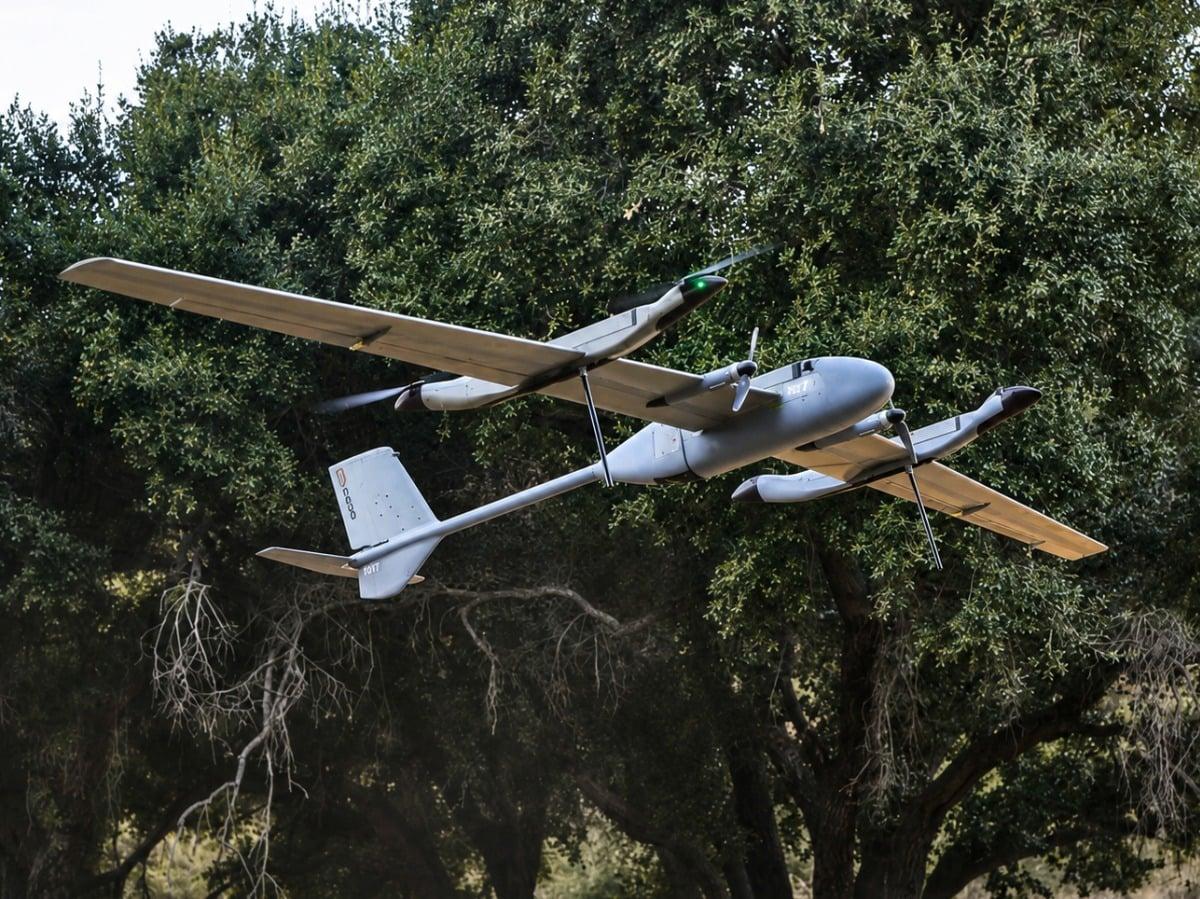
U.S. Army Buys 82 P550 Drones in $117 Million Deal
Companies Mentioned
Why It Matters
The deal gives ground units persistent, runway‑free surveillance, enhancing situational awareness in contested environments and reducing logistical burdens.
Key Takeaways
- •$117 M contract for 82 P550 drones, delivery by July 2026.
- •VTOL design enables launch without runways or launch crews.
- •Five‑hour endurance supports continuous battalion‑level surveillance.
- •Open‑systems architecture allows rapid sensor swaps and upgrades.
- •AI autonomy reduces operator workload and resists GPS jamming.
Pulse Analysis
The Army’s recent procurement of AeroVironment’s P550 reflects a broader transformation in tactical aviation, where electric vertical‑takeoff platforms are replacing legacy launch methods. By allocating $117 million for 82 units, the service signals confidence in a drone that can be fielded by a single squad without additional infrastructure. The P550’s five‑hour battery life and 15‑pound payload capacity place it between handheld scouts like the Raven and larger tactical UAVs, filling a capability gap that has long constrained battalion‑level commanders.
Operational flexibility is the P550’s most compelling attribute. Its VTOL capability lets soldiers launch from rooftops, forest clearings, or vehicle decks, eliminating the logistical footprint of catapults or runways. The aircraft folds into a compact 6‑by‑2‑by‑2‑foot package that fits standard transport containers, and its modular open‑systems architecture permits sensor swaps in under five minutes without tools. This rapid reconfiguration means a battalion can adapt to evolving mission sets—whether targeting moving vehicles or conducting electronic‑recon—while maintaining continuous coverage throughout a typical engagement.
Beyond hardware, the embedded AI layer gives the P550 a resilience edge in contested electromagnetic environments. Autonomous flight planning, obstacle avoidance, and onboard object classification reduce the cognitive load on operators and mitigate the impact of GPS jamming or spoofing. For AeroVironment, the contract validates its shift toward higher‑performance, software‑centric UAVs and may spur additional services contracts as the Army seeks to integrate similar autonomy across its unmanned fleet. In a market where modularity and AI are becoming procurement criteria, the P550 sets a new benchmark for future battlefield drones.
U.S. Army buys 82 P550 drones in $117 million deal
Comments
Want to join the conversation?
Loading comments...