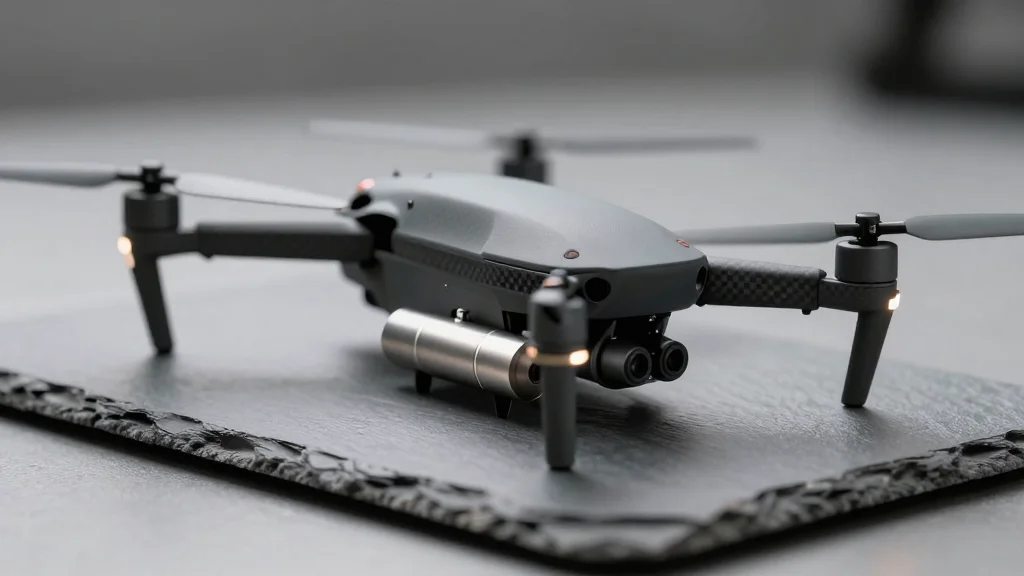
US Army Combines Bunker-Buster Warhead with Drone Delivery
Why It Matters
BRAKER gives warfighters a fast, affordable way to strike fortified targets, reshaping conventional bunker‑busting tactics. It also illustrates how additive manufacturing and modular payloads are accelerating military acquisition cycles.
Key Takeaways
- •BRAKER integrates a high‑kinetic warhead with an expendable UAV
- •3D‑printing and the Picatinny CLIK cut development to 14 days
- •Designed for off‑the‑shelf drones using a universal payload interface
- •Enables low‑cost, precision strikes on deeply buried or fortified targets
Pulse Analysis
Bunker‑busting weapons have long been a cornerstone of conventional warfare, from World War II demolition bombs to the improvised 8‑inch howitzer shells used in the 1991 Gulf War. Those legacy systems rely on heavy aircraft, large launch platforms, and extensive logistical support, limiting their flexibility in contested environments. By marrying a kinetic explosive payload with a lightweight, expendable drone, the Army’s BRAKER represents a paradigm shift: a portable, precision‑guided solution capable of delivering seismic‑level force directly onto subterranean targets without the need for manned aircraft.
The technical edge of BRAKER lies in its rapid‑development pipeline. Using additive manufacturing for the warhead housing and the Picatinny Common Lethality Integration Kit (CLIK), engineers reduced the concept‑to‑live‑fire timeline to just two weeks. The CLIK provides a standardized power and data interface, allowing the warhead to be slotted onto a variety of commercial UAVs with minimal re‑engineering. This modularity not only cuts procurement costs but also enables rapid field upgrades as drone technology evolves, positioning the system as a scalable platform for future payloads beyond bunker‑busting, such as electronic warfare or sensor packages.
Strategically, BRAKER offers commanders a low‑risk, high‑impact option for penetrating hardened enemy infrastructure, from underground command centers to fortified supply depots. The expendable nature of the delivery drone reduces the exposure of pilots and high‑value assets, while the precision strike capability minimizes collateral damage. For the defense industry, the success of BRAKER signals a growing market for 3D‑printed, plug‑and‑play munitions that can be integrated across multiple platforms, accelerating innovation cycles and fostering partnerships with commercial drone manufacturers. As adversaries invest in deeper, more resilient fortifications, systems like BRAKER will become essential tools in maintaining battlefield superiority.
US Army combines bunker-buster warhead with drone delivery
Comments
Want to join the conversation?
Loading comments...