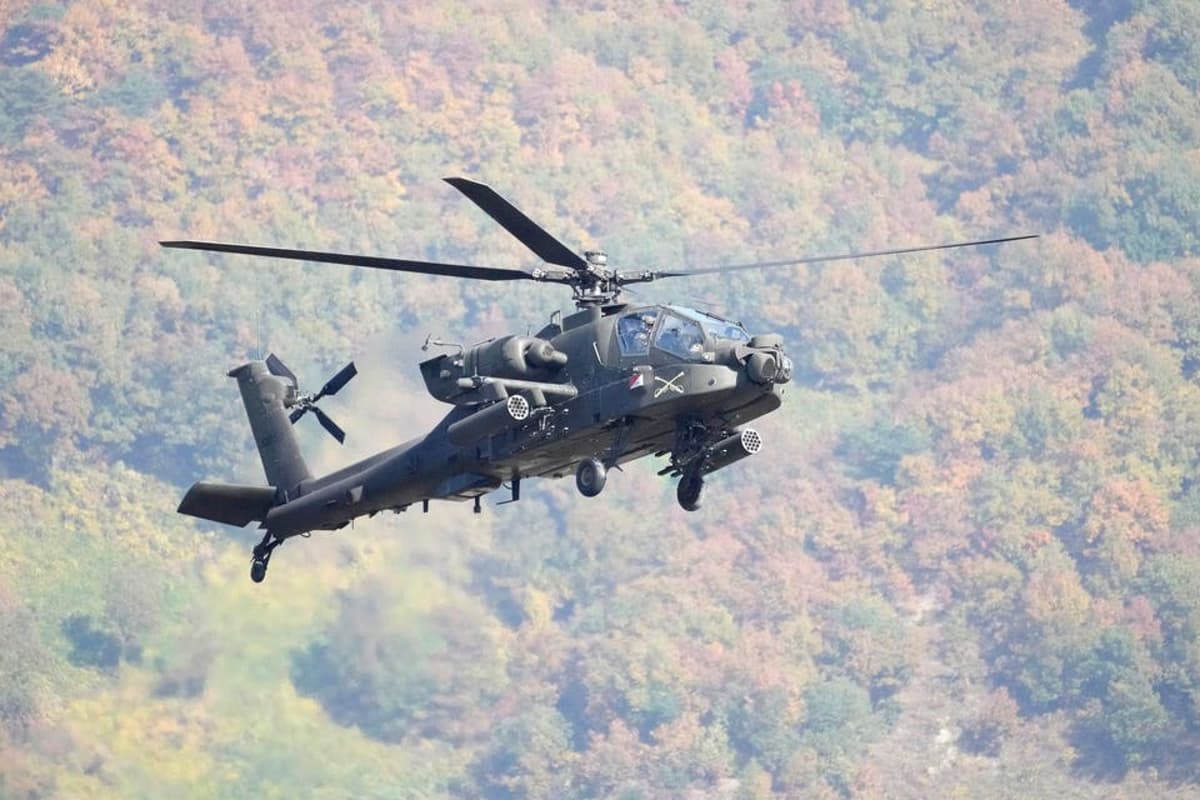
U.S. Army Helicopter Crashes Near Strait Of Hormuz—Trump Says ‘Pilots Are Fine’
Companies Mentioned

NBA
Why It Matters
The crash highlights the escalating danger to U.S. military assets in the Persian Gulf and may pressure policymakers to reassess force protection and engagement rules amid the Iran war.
Key Takeaways
- •Apache crash adds to rising U.S. aircraft losses in Iran conflict
- •Crew rescued; no injuries reported by President Trump
- •Cause remains unclear: possible Iranian fire or technical failure
- •Incident underscores heightened risk to U.S. assets in Persian Gulf
- •Pentagon yet to release official statement; report expected Tuesday
Pulse Analysis
The sudden loss of an AH‑64 Apache near the strategic chokepoint of the Strait of Hormuz underscores how quickly the Iran‑U.S. confrontation can spill over into kinetic incidents. While the crew’s safe rescue offers a rare positive note, analysts note that the Apache’s role in enforcing the naval blockade makes it a high‑value target for Iranian air defenses. Recent weeks have seen a surge in Iranian anti‑access tactics, from shooting down MQ‑1 and MQ‑9 drones to striking ground‑based aircraft, suggesting a deliberate effort to erode U.S. air superiority in the Gulf.
From an operational standpoint, the Apache’s crash raises questions about the robustness of U.S. aircraft maintenance and the adequacy of threat‑assessment protocols in contested airspace. If the helicopter was downed by hostile fire, it would signal that Iranian surface‑to‑air systems have improved their engagement envelope, potentially forcing the U.S. to adjust flight paths, increase escort assets, or invest in electronic‑warfare upgrades. Conversely, a technical failure would spotlight the strain on aging platforms operating under high‑tempo conditions, prompting calls for accelerated modernization or supplemental unmanned alternatives.
Politically, the incident arrives at a delicate moment as the administration balances domestic scrutiny with the need to project resolve abroad. A formal Pentagon report, expected Tuesday, will likely shape congressional oversight and could influence future budget allocations for the Army’s aviation fleet. Defense contractors may see heightened demand for next‑generation attack helicopters and counter‑measure systems, while markets watch for any escalation that could affect oil supply routes through the Persian Gulf, a key factor for global energy prices.
U.S. Army Helicopter Crashes Near Strait Of Hormuz—Trump Says ‘Pilots Are Fine’
Comments
Want to join the conversation?
Loading comments...