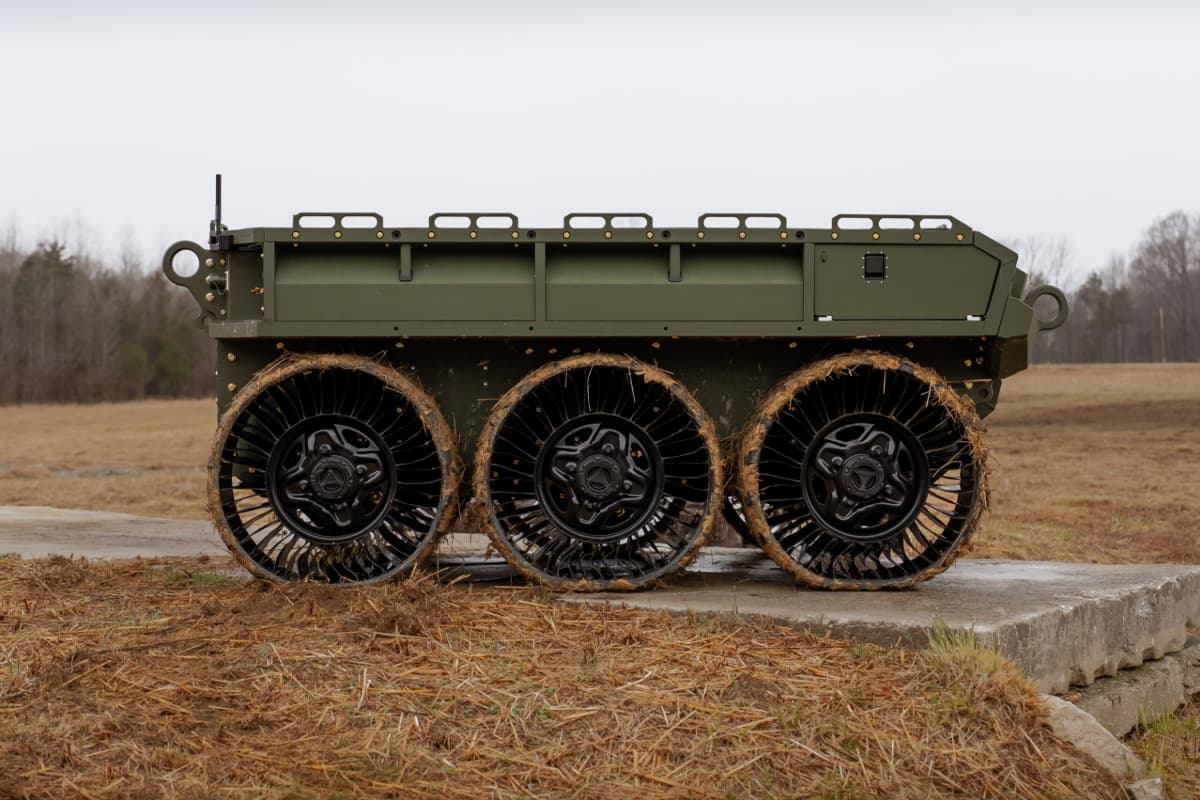
U.S. Army Receives Hunter WOLF Unmanned Ground Vehicles at Fort Polk
Why It Matters
By off‑loading up to a hundred‑plus pounds of equipment, the Hunter WOLF boosts infantry mobility, reduces injury risk, and accelerates the Army’s shift toward autonomous ground transport in combat zones.
Key Takeaways
- •Hunter WOLF delivered to 3rd Brigade, 10th Mountain Division.
- •Modular UGV supports logistics, medevac, communications, and ISR missions.
- •Commercial components simplify field maintenance in austere environments.
- •GOAT program fast‑tracks autonomous transport into operational units.
- •Reduces soldier load, mitigating injury and improving maneuverability.
Pulse Analysis
The Army’s push to integrate unmanned ground vehicles (UGVs) reflects a broader strategic shift toward reducing the logistical footprint of infantry units. Historically, light‑infantry formations have been hampered by the need to carry 100‑plus pounds of gear, limiting speed and increasing musculoskeletal injuries. Programs like GOAT aim to replace that burden with autonomous platforms that can traverse rugged terrain, thereby extending operational reach and preserving combat effectiveness. This doctrinal change is driven by lessons learned in recent conflicts where rapid resupply and casualty evacuation proved decisive.
Hunter WOLF, HDT Robotics’ flagship UGV, embodies the modularity the Army now demands. Its base chassis can be fitted with payloads ranging from supply racks to medical litters, radio relays, or sensor suites, allowing a single vehicle to fulfill multiple roles on a single mission. By leveraging commercially available components, the system reduces the need for specialized spare parts and streamlines field repairs—a critical advantage in forward operating bases where logistics chains are stretched thin. The week‑long training at Fort Polk ensures soldiers gain hands‑on experience with both manual control and autonomous navigation, accelerating the learning curve for future deployments.
The fielding of Hunter WOLF signals a maturation point for autonomous logistics in the U.S. defense ecosystem. As the platform proves its reliability, other branches are likely to adopt similar modular UGVs, spurring competition among defense contractors and fostering innovation in battery technology, AI navigation, and ruggedized communications. For the Army, the immediate benefit is a tangible reduction in soldier load, which translates to faster movement, lower injury rates, and enhanced mission tempo. In the longer term, widespread UGV adoption could reshape infantry tactics, enabling smaller, more agile units to operate in environments previously deemed too demanding for foot‑soldiers alone.
U.S. Army receives Hunter WOLF unmanned ground vehicles at Fort Polk
Comments
Want to join the conversation?
Loading comments...