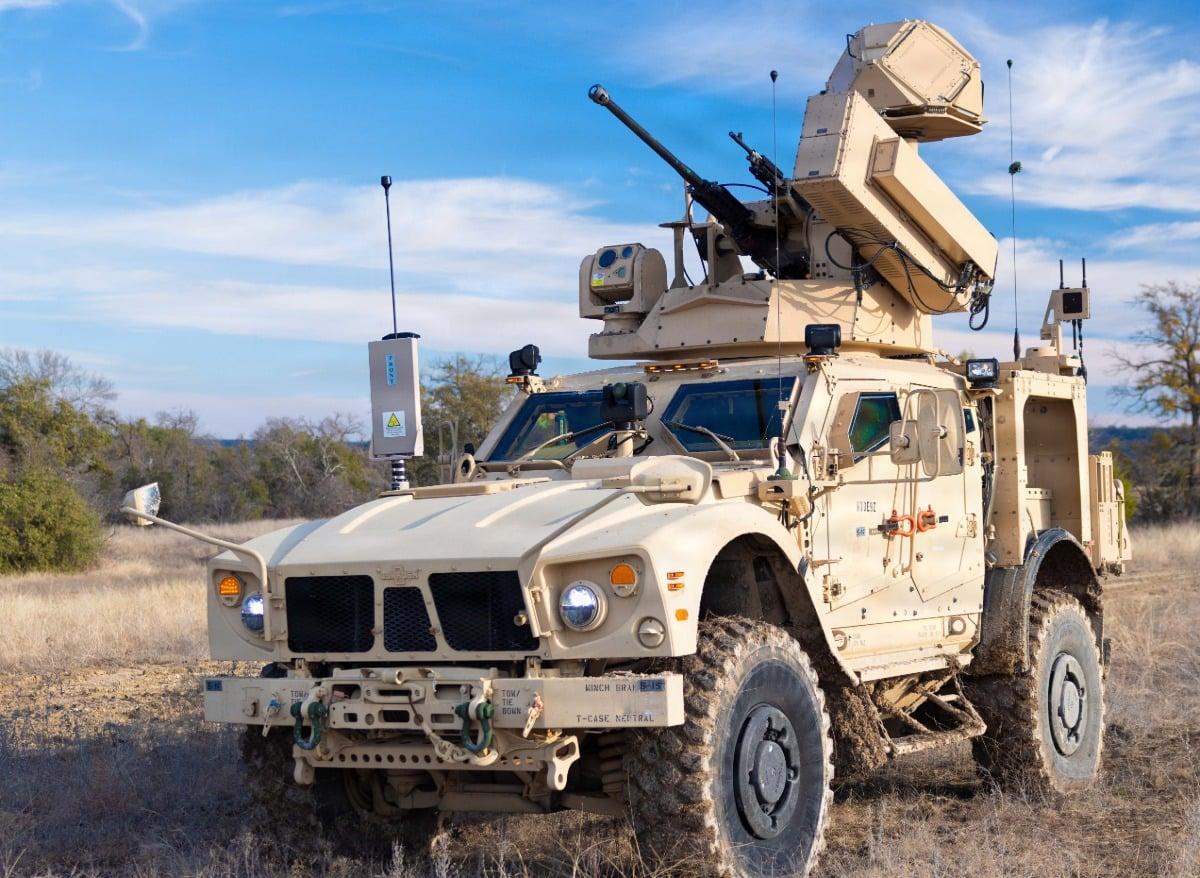
U.S. Army Requests Nearly $1 Billion to Defeat Small Drones
Why It Matters
The rapid budget escalation signals a strategic pivot toward neutralizing low‑cost drone threats that can outmaneuver traditional air‑defense assets, making counter‑UAS a top procurement priority. It also guarantees a steady market for vendors developing detection, jamming and kinetic interception technologies.
Key Takeaways
- •FY2027 request $994M, 67% jump from FY2026
- •Combined counter‑drone spend exceeds $1.3B across two appropriations
- •Portfolio includes vehicle‑mounted, base‑protect, and man‑portable systems
- •Ukraine war highlighted small drones’ lethal battlefield role
- •Air‑defense programs like M‑SHORAD receive $712M funding
Pulse Analysis
The proliferation of inexpensive quadcopters and fixed‑wing drones has forced militaries to rethink battlefield protection. Unlike legacy air‑defense systems designed for high‑altitude, high‑value aircraft, small drones exploit low‑altitude corridors, swarm tactics, and commercial availability to deliver explosives or real‑time intelligence. After Ukraine demonstrated how a handful of off‑the‑shelf drones could disrupt infantry and armor, the Pentagon accelerated research into multi‑layered detection suites that blend radar, RF sensors, electro‑optical cameras, and electronic warfare tools, creating a new class of soldier‑operable counter‑UAS solutions.
In the FY 2027 President’s Budget Exhibit P‑1, the Army requested $994 million for C‑SUAS equipment, complemented by $329 million for kinetic interceptor munitions recorded under the Missile Procurement line. This investment is not a single system purchase but a portfolio that spans vehicle‑mounted platforms, base‑defense arrays, and man‑portable kits, ensuring coverage from brigade to squad level. The request aligns with parallel air‑defense allocations—$1.626 billion for the Indirect Fire Protection Capability and $712 million for M‑SHORAD—building an integrated shield against drones, rockets, and cruise missiles across the force structure.
For defense contractors and technology firms, the budget signals a multi‑year revenue stream for sensors, jammers, and interceptor munitions. The emphasis on modular, interoperable systems encourages open‑architecture designs that can be retrofitted to existing platforms, accelerating fielding timelines. Strategically, a robust counter‑UAS capability reduces the asymmetric advantage that adversaries gain from cheap drones, preserving force survivability and maintaining operational tempo in contested environments. As Congress continues to recognize the urgency, further funding increases are likely, cementing counter‑drone technology as a cornerstone of modern U.S. ground warfare.
U.S. Army requests nearly $1 billion to defeat small drones
Comments
Want to join the conversation?
Loading comments...