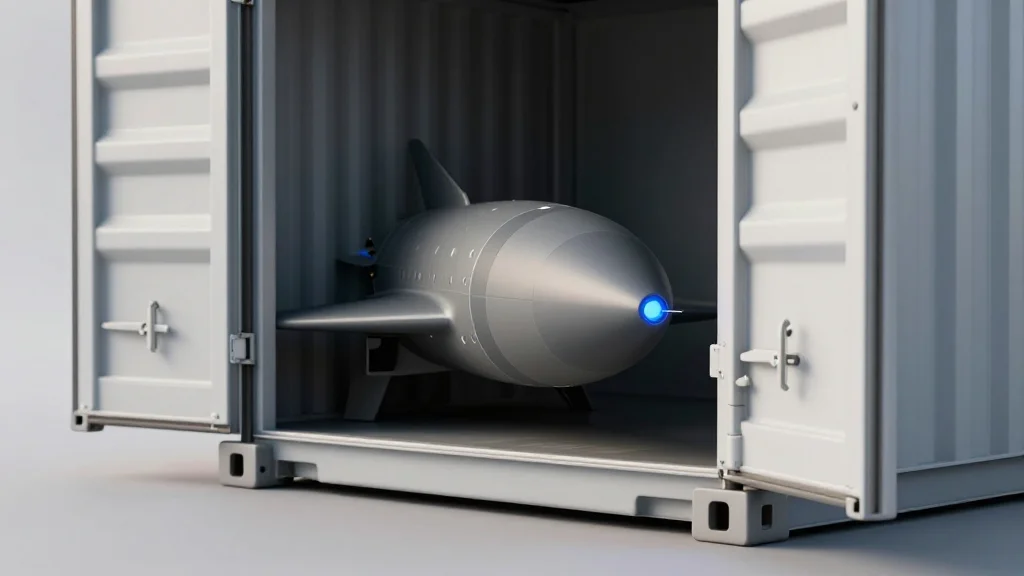
U.S. Army Secures Up to 3,000 Anduril Barracuda Cruise Missiles to Boost Long‑Range Strike

Companies Mentioned
Why It Matters
The Barracuda procurement marks a decisive move toward scaling precision strike capability through affordable, containerized munitions. By fielding thousands of sub‑500‑nm cruise missiles, the Army can allocate its limited high‑end missile inventory to the most demanding targets while still maintaining deep‑strike options across a broader set of missions. The integration of Anduril’s Lattice AI software also introduces a new level of autonomous fire‑control, potentially reducing decision cycles and enhancing survivability through dispersed launch platforms. If the Barracuda‑500M program meets performance expectations, it could set a template for future low‑cost, AI‑enabled weapons across the services, influencing how the United States balances cost, quantity, and capability in its long‑range strike portfolio. The success or failure of this single‑supplier effort will also inform the Department of Defense’s appetite for relying on commercial defense firms for critical munitions.
Key Takeaways
- •U.S. Army signs framework with Anduril for at least 3,000 Barracuda‑500M cruise missiles
- •Deliveries start in 2027 with 1,000 missiles per year and ~60 container launchers
- •Missile range exceeds 500 nautical miles (≈926 km) with a 100‑lb warhead
- •Part of LCCM initiative targeting >10,000 low‑cost cruise missiles by 2029
- •AI‑enabled Lattice software provides autonomous mission planning and coordinated attacks
Pulse Analysis
The Barracuda‑500M deal reflects a strategic pivot from the traditional high‑cost, low‑volume missile procurement model toward a high‑volume, low‑cost paradigm. Historically, the Army has relied on a handful of heavyweight cruise missiles to achieve deep strike, but budget pressures and the need for distributed lethality have driven the search for cheaper alternatives. Anduril’s entry into the missile market leverages its expertise in autonomous systems, suggesting that future munitions will increasingly blend kinetic performance with software‑driven decision making.
From a market perspective, the agreement could accelerate competition among emerging defense tech firms, especially those that can bundle AI capabilities with conventional weapons. The LCCM framework’s inclusion of three additional vendors creates a hedge against program risk and may spur rapid innovation as each company strives to demonstrate superior cost‑per‑kill metrics. However, the reliance on a single supplier for the Barracuda‑500M also raises concerns about supply chain resilience and sustainment, issues that the Army will need to monitor closely as the first units enter service.
Looking ahead, the success of the Barracuda program could influence the broader Joint Force’s approach to long‑range fires. If the AI‑enabled container launch concept proves effective, it may be adapted for naval or air‑mobile platforms, further blurring the lines between traditional service‑specific munitions. Conversely, any shortfalls in reliability or accuracy could reinforce the value of established high‑end missiles, underscoring the importance of a balanced portfolio that includes both mass‑produced and premium weapons.
U.S. Army Secures Up to 3,000 Anduril Barracuda Cruise Missiles to Boost Long‑Range Strike
Comments
Want to join the conversation?
Loading comments...