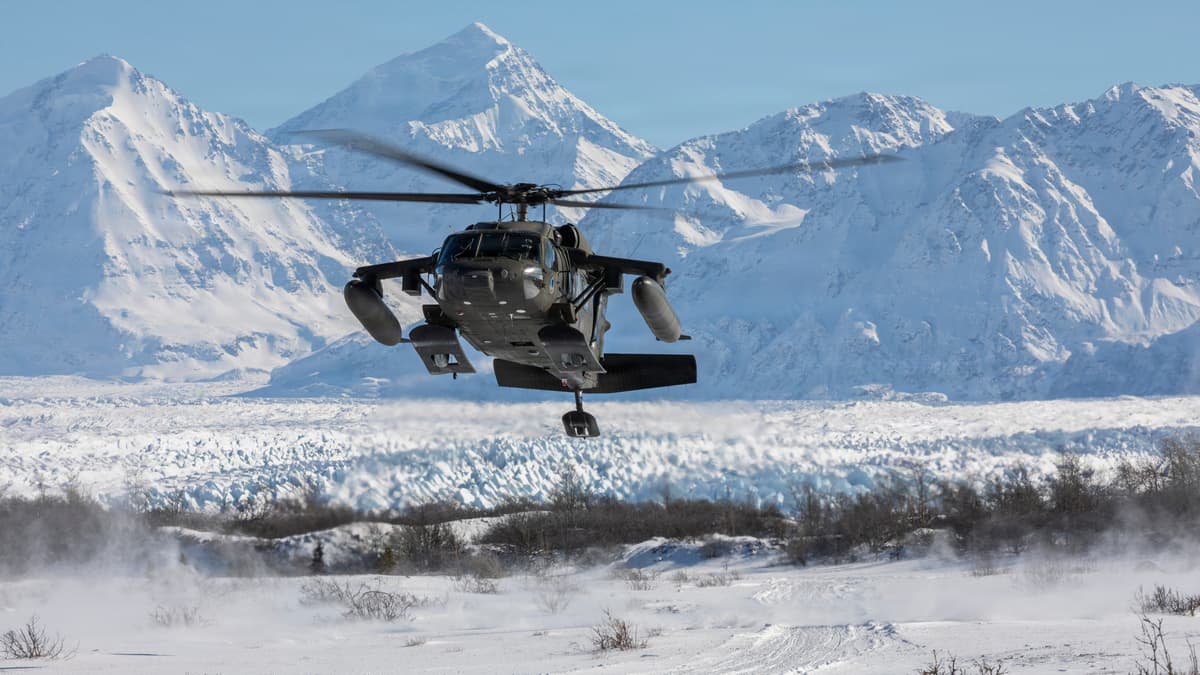
US Army Wants Doctrine for Landing Helicopters on Arctic Ice
Why It Matters
By redefining ice‑landing standards, the Army gains strategic flexibility in the Arctic and other cold regions, enhancing force projection while reducing operational constraints. The new doctrine and tools also mitigate risk to multi‑million‑dollar aircraft, preserving costly assets.
Key Takeaways
- •ERDC test landed CH‑47 on 21‑inch ice, 10 inches below old standard
- •New doctrine could add 20‑25% more viable landing zones in Arctic
- •Ice Guardian app will calculate safe ice thickness for helicopter ops
- •Findings support expanded cold‑weather missions in Alaska, Europe, and Asia
- •Research uses pressure transducers to assess ice fatigue and load limits
Pulse Analysis
The Arctic is rapidly shifting from a logistical challenge to a strategic frontier. Melting sea ice has opened new maritime routes, prompting the United States to reassess its presence in the region. As China and Russia stake claims, the U.S. Army is investing in cold‑weather capabilities to ensure rapid deployment and sustainment across northern latitudes. Updating landing doctrine is a critical piece of that puzzle, allowing forces to exploit frozen lakes and rivers that were previously deemed unsafe.
In January, the Army’s Engineering Research and Development Center (ERDC) executed a controlled CH‑47 Chinook landing on a 21‑inch ice sheet in Alaska’s Yukon Training Area. The experiment proved that modern helicopters can operate on ice considerably thinner than the 31‑inch benchmark set in the 1960s. Engineers employed pressure transducers to monitor ice deformation and fatigue, generating data that will inform safety thresholds. Parallel to the field test, the team is rolling out the "Ice Guardian" mobile app, which crunches real‑time ice thickness, temperature, and load data to advise pilots on landing viability.
The implications extend beyond Alaska. With a potential 20‑25% increase in usable landing zones, Army units can stage operations, conduct resupply, and even establish temporary bases on frozen surfaces across Europe, Asia, and the continental United States. This capability reduces reliance on traditional airfields, shortens response times, and safeguards high‑value aircraft from unnecessary risk. As other services and National Guard units explore similar cold‑weather missions, the doctrine and technology emerging from ERDC could become a cornerstone of U.S. Arctic strategy, influencing procurement, training, and joint operational planning.
US Army wants doctrine for landing helicopters on Arctic ice
Comments
Want to join the conversation?
Loading comments...