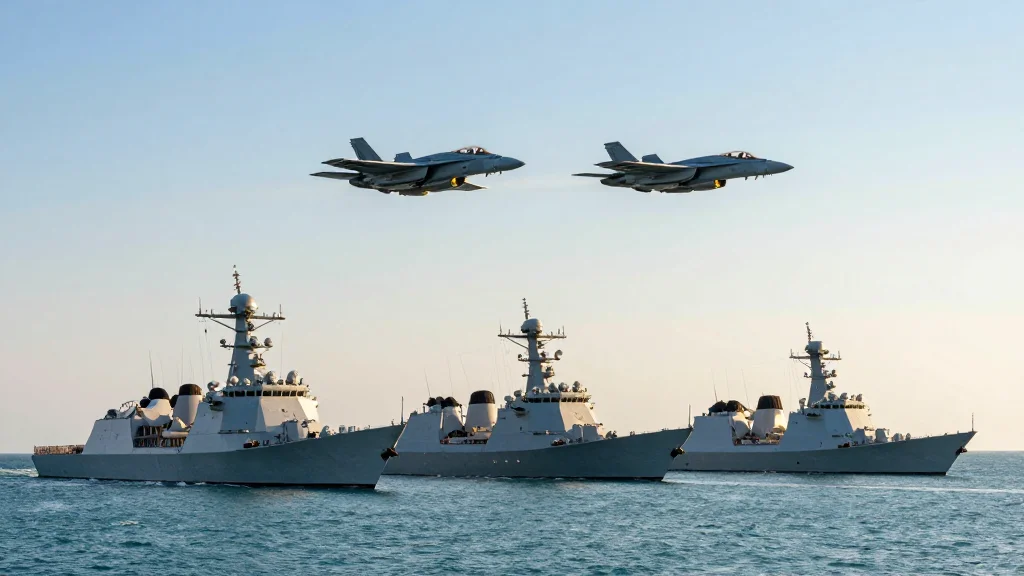
US, Australia, Philippines Hold Second Joint Drills in South China Sea This Year
Why It Matters
The exercises cement a trilateral security framework that counters China’s assertiveness and set the stage for an expanded Balikatan coalition, signaling a broader Indo‑Pacific partnership.
Key Takeaways
- •Second US‑Australia‑Philippines drill conducted April 9‑12 in South China Sea
- •Participants used FA‑50 fighters, P‑8A Poseidons, and USS Ashland
- •Balikatan 2026 will include Japan as a full participant for first time
- •China denounced the exercises, claiming they heighten regional tensions
Pulse Analysis
The South China Sea remains one of the world’s most contested maritime corridors, with overlapping claims from Beijing, Manila, and other regional actors. In recent years, the United States has deepened its engagement with Southeast Asian partners to preserve freedom of navigation and deter coercive behavior. By pairing with Australia, the U.S. signals a commitment to a rules‑based order, while the Philippines leverages its strategic location to host joint operations that showcase interoperability among allied forces.
During the four‑day drill, the three navies coordinated surface, air and surveillance missions that tested rapid response and command‑and‑control integration. The Philippine Air Force deployed its domestically‑produced FA‑50 light combat jets, Australia contributed maritime patrol P‑8A Poseidon aircraft, and the U.S. fielded the amphibious dock‑landing ship USS Ashland to simulate logistics and troop movement scenarios. These capabilities underscore a growing proficiency in joint maritime domain awareness, a critical factor as the region prepares for Balikatan 2026—a massive bilateral exercise that will now feature Japan as a full participant, expanding the coalition’s operational depth.
China’s swift denunciation of the drills reflects its broader strategy of framing allied activities as provocations. While Beijing’s rhetoric may heighten diplomatic friction, the continued conduct of such exercises reinforces deterrence by demonstrating collective resolve. Analysts expect the trilateral partnership to evolve, potentially incorporating more advanced platforms and cyber‑defence elements, as the Indo‑Pacific powers navigate a delicate balance between competition and cooperation. The trajectory suggests a more integrated security architecture that could shape the strategic calculus of all regional stakeholders.
US, Australia, Philippines hold second joint drills in South China Sea this year
Comments
Want to join the conversation?
Loading comments...