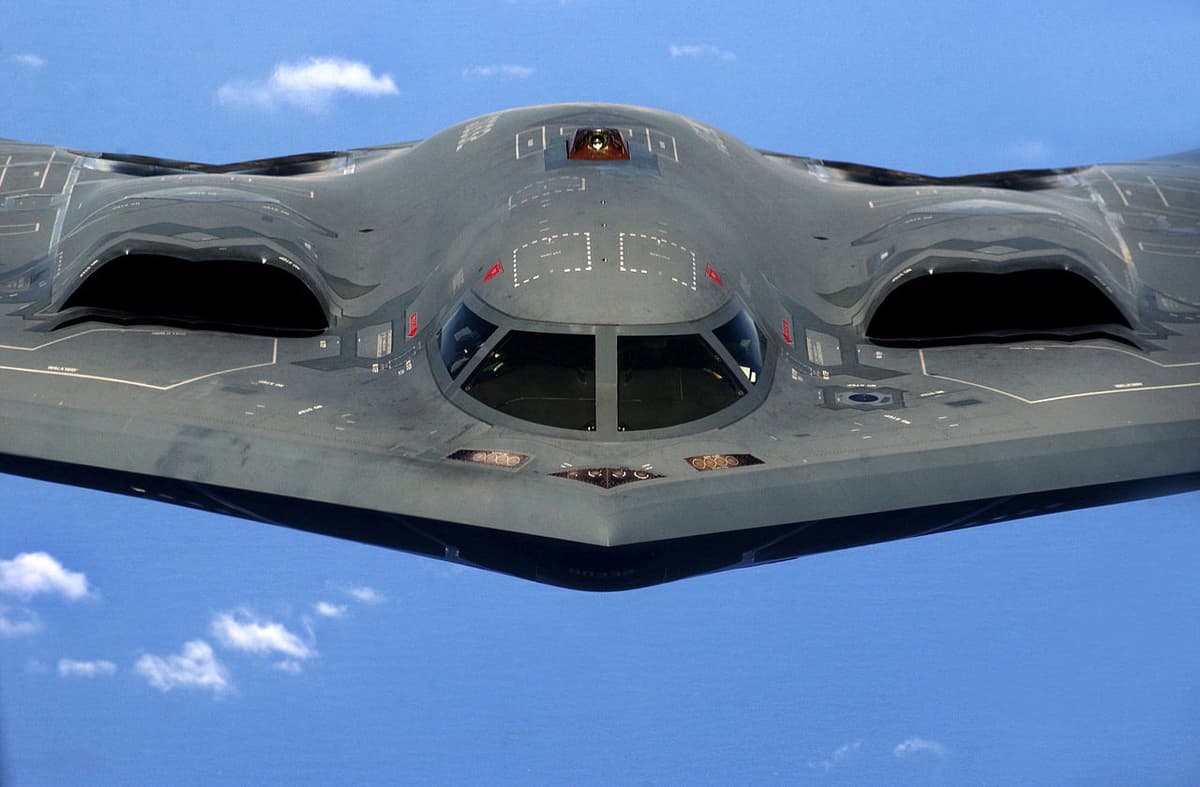
U.S. B-2 Stealth Bombers Strike Iran’s Hardened Ballistic Missile Facilities, Fly 37-Hours Nonstop: CENTCOM
•March 2, 2026
0
Why It Matters
Degrading Iran’s missile infrastructure reduces regional escalation risk and affirms U.S. long‑range strike credibility, while the UK’s base denial underscores shifting alliance logistics.
Key Takeaways
- •B-2s launched from Missouri, flew 37 hours nonstop
- •Strikes hit hardened Iranian missile production sites, using guided bombs
- •Operation Epic Fury aims to curb Iran’s ballistic missile growth
- •UK denied base access, forcing direct from Whiteman with tankers
- •Mission showcases B-2 stealth and long-range refueling capabilities
Pulse Analysis
The recent B‑2 strike on Iran’s missile facilities marks a pivotal moment in U.S. strategic airpower. By launching from the continental United States and remaining airborne for over a day, the bombers demonstrated the United States’ ability to project force across continents without relying on forward staging bases. This capability, enabled by in‑flight refueling and the B‑2’s low‑observable design, allows the U.S. to bypass diplomatic hurdles and maintain operational tempo against time‑sensitive targets, reinforcing deterrence in a volatile region.
Technologically, the B‑2’s stealth characteristics—reduced radar, infrared, acoustic, and visual signatures—combined with precision‑guided munitions such as the GBU‑31/BLU‑109, make it uniquely suited for penetrating hardened infrastructure. The aircraft’s wing‑body layout, composite materials, and specialized coatings keep it below enemy detection thresholds, while its payload capacity permits delivery of multiple large warheads in a single sortie. The successful engagement of Iran’s missile depots underscores how these attributes translate into tangible battlefield effects, validating continued investment in next‑generation bomber platforms.
Geopolitically, the operation highlights the complexities of coalition logistics. Britain’s refusal to grant access to RAF Fairford and Diego Garcia forced the U.S. to rely entirely on domestic launch points and tanker support, illustrating how allied policy decisions can shape mission planning. While the UK later offered limited “defensive” use of its bases, the episode signals a potential recalibration of U.S. reliance on European staging sites. For policymakers, the strike reinforces the message that Iran’s missile program will face persistent, high‑precision pressure, shaping future diplomatic negotiations and regional security calculations.
U.S. B-2 Stealth Bombers Strike Iran’s Hardened Ballistic Missile Facilities, Fly 37-Hours Nonstop: CENTCOM
0
Comments
Want to join the conversation?
Loading comments...