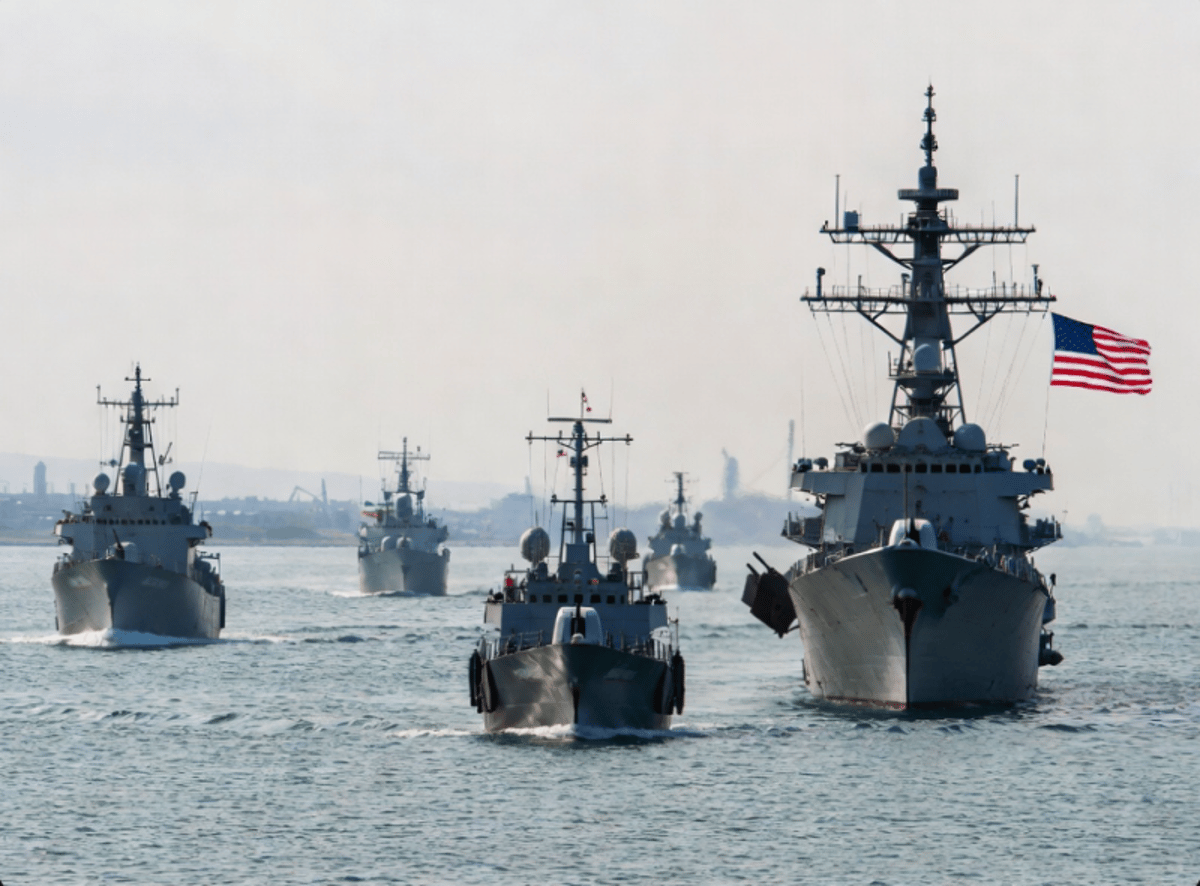
U.S. Begins “Biggest-Ever” Military Drills — Balikatan 2026 — Near China; Beijing Says All Three “Playing With Fire”
Why It Matters
Balikatan 2026 signals a deepening security pact that counters China’s assertiveness and expands U.S. forward‑logistics in the Indo‑Pacific, reshaping the strategic balance.
Key Takeaways
- •17,000 troops from US, Philippines, Japan, allies participate
- •First Japanese live‑fire drills use Type 88 anti‑ship missile
- •US plans 41 million‑gallon fuel depot in Davao, Mindanao
- •China condemns trilateral drills as dangerous ‘fire‑playing’
Pulse Analysis
Balikatan 2026 marks the most expansive iteration of the U.S.–Philippines joint exercises, reflecting a deliberate shift toward multilateral deterrence in the Indo‑Pacific. By integrating Japanese Self‑Defense Forces for the first time in live‑fire maritime strikes, the drills underscore a broader coalition that now includes Australia, Canada, New Zealand and limited French participation. The inclusion of cutting‑edge systems—NMESIS anti‑ship missiles, HIMARS rockets, and high‑power microwave weapons—demonstrates a focus on high‑intensity, multi‑domain warfare, sending a clear signal to Beijing about allied interoperability and readiness.
Beyond the tactical showcase, the United States is cementing its logistical footprint with a new Defense Fuel Support Point in Davao, Mindanao. The 41 million‑gallon facility, slated for operation by 2028, will store roughly 18 million gallons of aviation fuel and 23 million gallons of naval fuel, providing a southern hub that reduces reliance on Subic Bay and other northern sites vulnerable to Chinese pressure. This forward‑staging capability shortens transit times for carrier strike groups and enhances sustainment of air and sea operations across the first island chain, a critical factor in any potential high‑end conflict.
China’s sharp rebuke—labeling the trilateral cooperation as “playing with fire”—highlights the diplomatic stakes of the exercises. The timing aligns with the 75th anniversary of the U.S.–Philippines Mutual Defense Treaty and recent flashpoints, such as alleged Chinese flare attacks and cyanide dumping near the Spratly Islands. For regional actors, Balikatan 2026 not only reaffirms the United States’ commitment to a free and open Indo‑Pacific but also pressures Beijing to recalibrate its maritime strategy, while offering Manila a stronger security umbrella amid ongoing territorial disputes.
U.S. Begins “Biggest-Ever” Military Drills — Balikatan 2026 — Near China; Beijing Says All Three “Playing With Fire”
Comments
Want to join the conversation?
Loading comments...