US CENTCOM Report on US Blockade of Iranian Ports – April 14, 2026

Key Takeaways
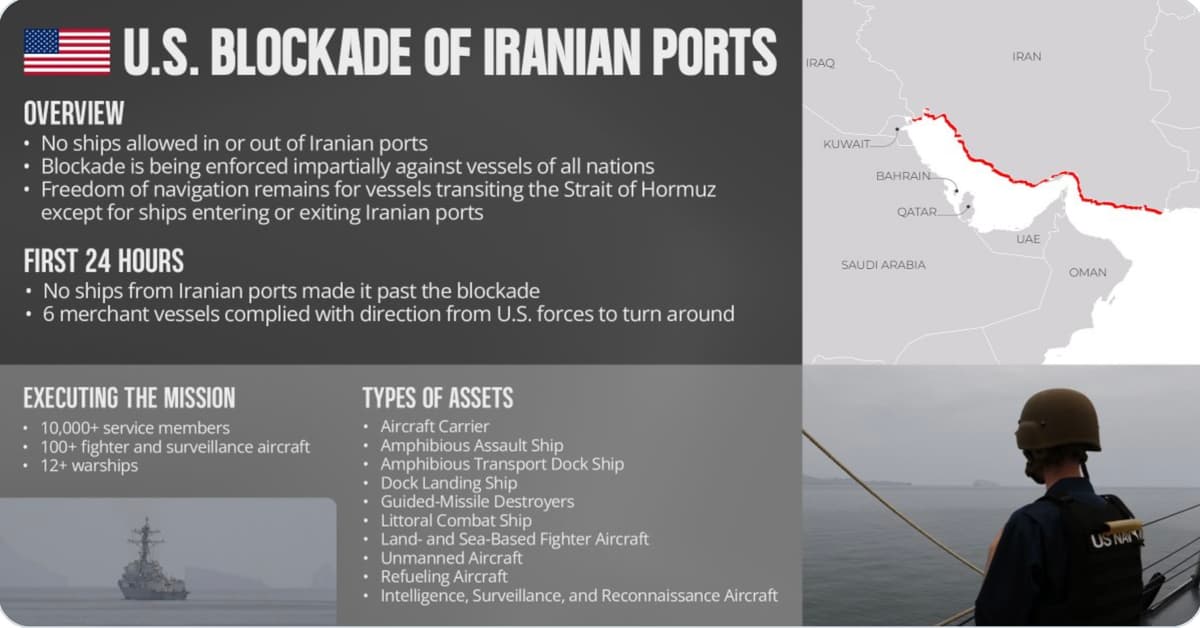
- •Over 10,000 U.S. personnel deployed to enforce Iranian port blockade
- •Dozen warships and dozens of aircraft patrol Gulf of Oman and Arabian Gulf
- •First 24 hours saw zero ships breach blockade; six vessels turned back
- •Blockade applies impartially to all nations' vessels entering Iranian ports
- •U.S. emphasizes freedom of navigation for non‑Iranian traffic through Strait of Hormuz
Pulse Analysis
The Strait of Hormuz has long been a flashpoint in U.S.–Iran relations, with roughly 20% of the world’s oil passing through its narrow channels. By instituting a naval blockade, Washington is moving beyond sanctions and diplomatic pressure to a direct maritime interdiction, echoing Cold‑War era tactics used to contain adversaries. This shift underscores the strategic calculus that controlling the waterway can leverage broader geopolitical objectives, from curbing Iran’s regional influence to signaling resolve to allies in the Gulf.
Operationally, the deployment of over 10,000 service members, a dozen warships and a fleet of aircraft represents one of the largest peacetime naval concentrations in the region in decades. Shipping companies are already rerouting vessels around the Arabian Sea, adding days and millions of dollars in fuel costs. Early market reactions showed a modest uptick in Brent crude prices, reflecting investor concerns over supply bottlenecks. The blockade’s impartial stance—targeting all nations’ ships—aims to legitimize the action under international law, but the practical effect is a heightened risk environment for commercial fleets.
Legally, the U.S. frames the operation as a protection of freedom of navigation, yet the blockade raises questions under the United Nations Convention on the Law of Sea, which generally prohibits blockades absent a declaration of war. Diplomatic fallout is likely to intensify, with European and Asian powers urging restraint while safeguarding their own trade routes. The next weeks will reveal whether the blockade becomes a temporary pressure tool or a longer‑term fixture reshaping maritime strategy in the Persian Gulf.
US CENTCOM Report on US Blockade of Iranian Ports – April 14, 2026
Comments
Want to join the conversation?