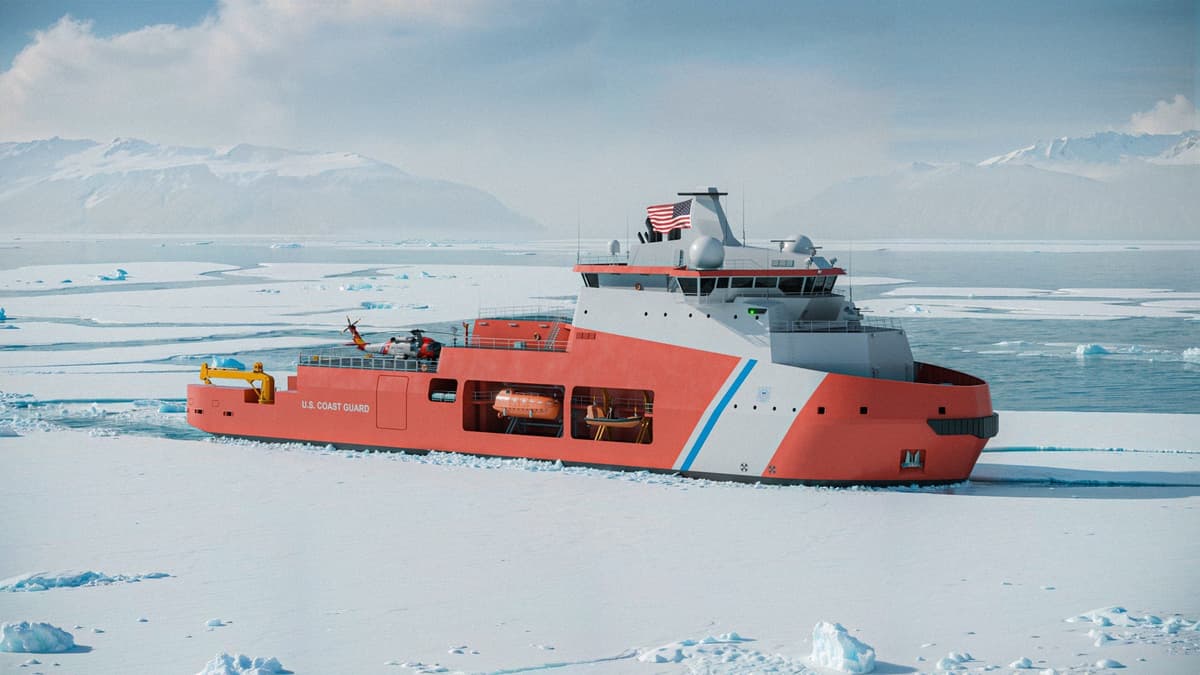
U.S. Coast Guard to Homeport First Two Arctic Security Cutters in Alaska
Why It Matters
Positioning the cutters in Alaska enhances U.S. sovereignty, deterrence, and resource protection in a geopolitically sensitive Arctic region. It also accelerates the modernization of the nation’s icebreaking fleet, addressing a critical capability gap.
Key Takeaways
- •First two Arctic Security Cutters will homeport in Alaska
- •Delivery of initial cutter expected early 2028 from Finland
- •Program includes 11 cutters built by U.S., Finnish, Canadian partners
- •New icebreakers will boost U.S. Arctic sovereignty and security
- •Existing fleet limited to three operational icebreakers
Pulse Analysis
The Arctic is rapidly evolving from a remote frontier into a contested arena for resource extraction, shipping lanes, and military posturing. In response, the U.S. Coast Guard has accelerated its icebreaker modernization, committing billions of federal dollars to replace a dwindling fleet of three operational vessels. By integrating 11 Arctic Security Cutters—designed for year‑round polar operations—the United States aims to secure its northern maritime borders, support scientific research, and provide reliable search‑and‑rescue capabilities in a region where climate change is opening new navigable waters.
Homeporting the first two cutters in Alaska reflects a strategic calculus that places assets closest to the most active Arctic hotspots. Alaska’s coastline offers direct access to the Bering Sea, the Chukchi Sea, and the Beaufort Gulf, enabling faster response times to potential incursions or emergencies. The Coast Guard is already investing in shore‑based infrastructure, housing, and support systems to accommodate the larger vessels, building on the recent stationing of the USCGC Storis in Juneau. This forward‑deployed posture signals a decisive commitment to defending the nation’s northern approaches and deterring foreign adversaries.
The procurement strategy leverages a multinational production network, with early hulls built in Finland by Rauma Marine Constructions and later units shifting to U.S. yards such as Bollinger Shipyards in Louisiana and Davie Defense in Texas. This approach balances rapid delivery with the long‑term goal of revitalizing domestic shipbuilding capacity. As the first U.S.-built cutter is slated for 2029, the program not only enhances national security but also stimulates high‑skill jobs and technological expertise across the maritime industrial base, positioning the United States to maintain a credible icebreaking presence for decades to come.
U.S. Coast Guard to Homeport First Two Arctic Security Cutters in Alaska
Comments
Want to join the conversation?
Loading comments...