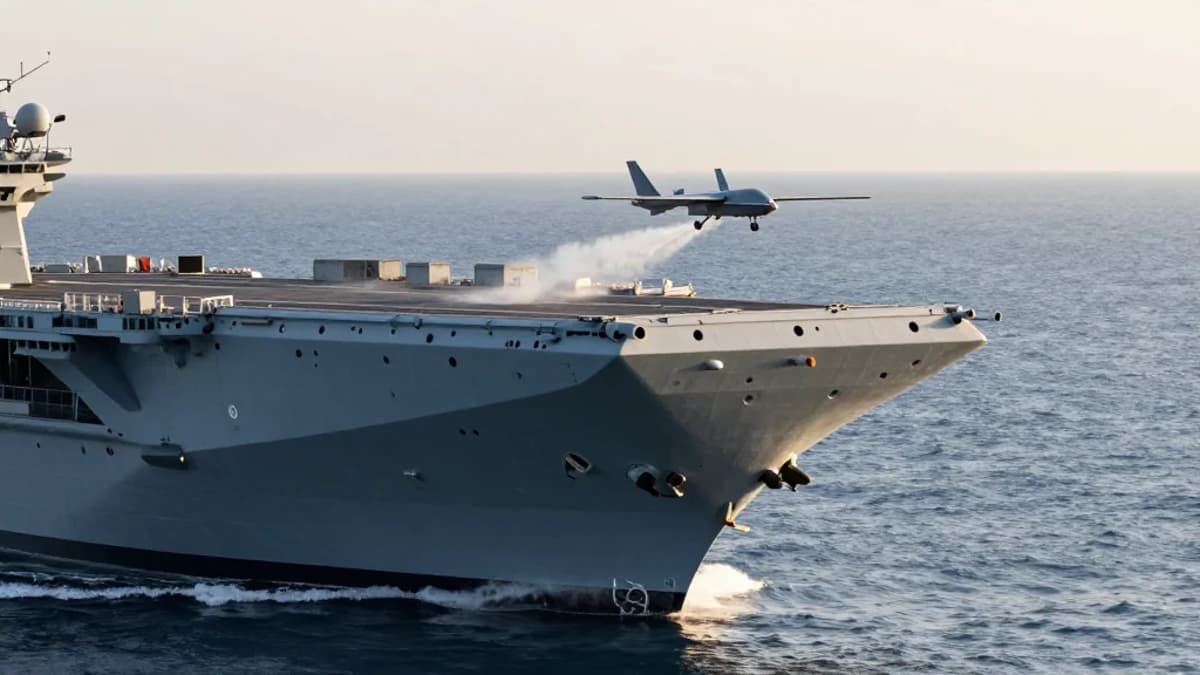
US Confirms Hitting Iran’s Drone Carrier, Denies Own Carrier Struck
•March 3, 2026
0
Why It Matters
The engagement underscores a sharp escalation in U.S.–Iran naval confrontations, validating U.S. strike capability while exposing Iranian propaganda tactics. It also raises the strategic risk to carrier operations in the Persian Gulf.
Key Takeaways
- •US struck Iran's Shahid Bagheri UAV carrier.
- •IRGC's claim of hitting USS Abraham Lincoln disproved.
- •Shahid Bagheri carries UAVs, missiles, helicopters.
- •Operation Epic Fury began Feb 28, killed six US personnel.
- •Tensions raise risks for Gulf naval navigation.
Pulse Analysis
Iran’s launch of the Shahid Bagheri marks a notable shift in its maritime doctrine, introducing a large‑displacement platform dedicated to unmanned aerial operations. Equipped with a mix of Noor, Qader and Ghadir missiles, as well as the capacity to launch helicopters and multiple UAVs, the vessel expands the IRGC Navy’s strike envelope beyond traditional fast‑attack craft. Analysts view the carrier as a testbed for integrating autonomous systems into conventional naval warfare, potentially reshaping regional power balances if replicated on a larger scale.
Operation Epic Fury, initiated on 28 February, represents the United States’ coordinated response to perceived Iranian provocations, combining air, sea and cyber assets with Israeli partners. By targeting the Shahid Bagheri, U.S. forces aimed to degrade Iran’s emerging UAV launch capability and send a deterrent signal to Tehran’s naval ambitions. CENTCOM’s swift denial of the IRGC’s claim that the USS Abraham Lincoln was struck serves a dual purpose: preserving the credibility of U.S. carrier strike groups and countering Iranian information warfare that seeks to amplify perceived victories.
The broader implications of these events reverberate through Gulf security calculations. With carrier‑grade platforms now explicitly targeted by both kinetic strikes and ballistic missile threats, navies must reassess force protection measures, including layered air defense and electronic warfare suites. Moreover, the incident highlights the growing role of unmanned systems in asymmetrical maritime strategies, prompting regional actors to invest in counter‑UAV technologies. As tensions persist, the risk of miscalculation rises, making diplomatic channels and clear rules of engagement essential to prevent an inadvertent escalation that could disrupt global energy markets and maritime trade routes.
US confirms hitting Iran’s drone carrier, denies own carrier struck
0
Comments
Want to join the conversation?
Loading comments...