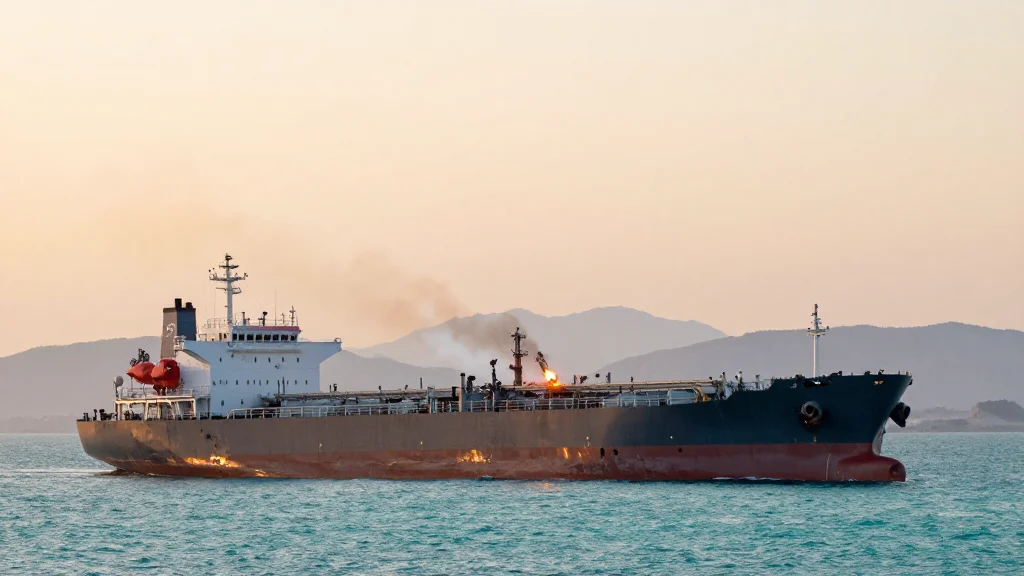
US Confirms Strike on Third Indian-Linked Tanker Off Oman
Why It Matters
The strike signals a heightened U.S. willingness to employ force against vessels tied to Iran, raising operational risk for commercial shipping and potentially tightening global oil supply chains. It also foreshadows legal and insurance challenges for carriers navigating the Gulf region.
Key Takeaways
- •US struck Jalveer with two Hellfire missiles after non‑compliance
- •Third Indian‑managed tanker hit in four days, signaling escalation
- •Attack aims to enforce Washington’s blockade of Iran’s maritime trade
- •Vessel is 6,400‑dwt, built 2008, crew ignored course‑change orders
- •Incident may raise shipping insurance costs in Gulf of Oman
Pulse Analysis
The United States has been tightening its maritime pressure campaign against Iran since the re‑imposition of sanctions earlier this year. By targeting vessels that are perceived to support Tehran’s oil exports, Washington aims to choke off revenue streams without resorting to a full‑scale conflict. The Gulf of Oman, a critical chokepoint for global energy shipments, has become a testing ground for this strategy, with U.S. forces employing precision‑guided Hellfire missiles to enforce compliance.
The recent hit on the Jalveer marks the third Indian‑linked tanker intercepted in a span of four days, suggesting a systematic pattern rather than isolated incidents. U.S. Central Command cited repeated non‑compliance with navigation orders as justification, a claim that raises questions about the threshold for lethal force under international law. Shipping companies now face heightened scrutiny, as any perceived deviation from U.S. directives could trigger similar attacks, prompting calls for clearer rules of engagement and diplomatic channels to mitigate escalation.
For the broader market, these developments inject uncertainty into oil pricing and freight logistics. Traders monitor the Strait of Hormuz closely, where any disruption can ripple through benchmark crude spreads. Meanwhile, maritime insurers are reassessing risk models, leading to premium hikes for vessels transiting the Gulf. Stakeholders—from energy producers to end‑users—must weigh the cost of rerouting cargo against the potential for further confrontations, underscoring the strategic importance of diplomatic solutions to preserve the free flow of trade.
US confirms strike on third Indian-linked tanker off Oman
Comments
Want to join the conversation?
Loading comments...