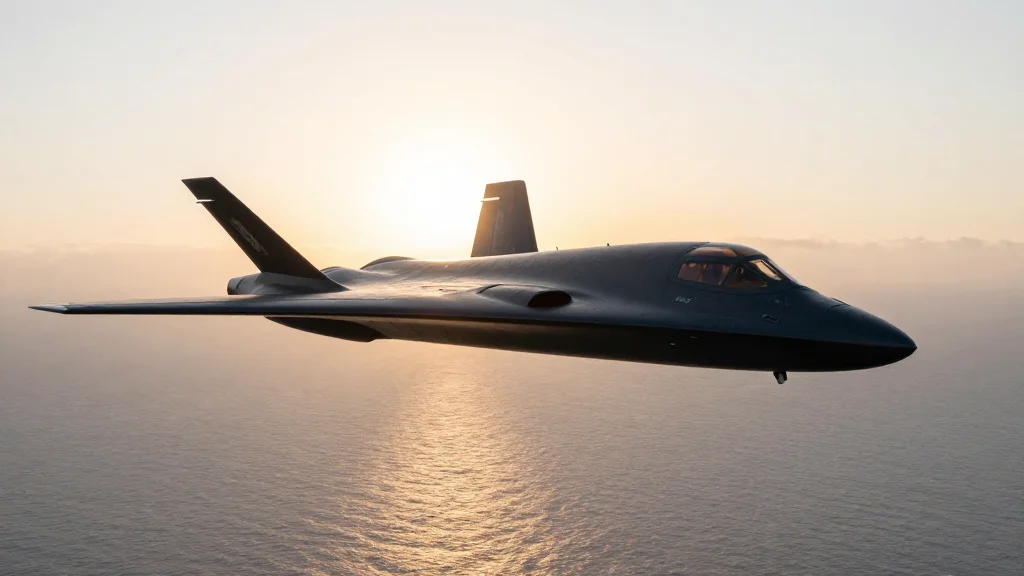
U.S. Cuts B-21 Raider Test Cycle to 73 Days, Secures $11.8 Billion Funding

Companies Mentioned
Why It Matters
Accelerating the B-21 Raider’s test cycle and locking in $11.8 billion of funding shortens the timeline for a weapon that underpins U.S. strategic deterrence. By delivering a stealth bomber capable of both conventional and nuclear missions faster, the United States can better counter the expanding anti‑access/area‑denial (A2/AD) capabilities of China and Russia. The program also demonstrates a new procurement model that blends industry and military expertise to cut red tape, a template that could be replicated across other high‑tech defense projects. The infusion of billions of dollars revitalizes the domestic defense industrial base, creating jobs and spurring innovation in stealth materials, advanced avionics, and propulsion. However, the compressed schedule raises questions about risk management, testing thoroughness, and long‑term sustainment costs, issues that will shape congressional oversight and future defense budgeting.
Key Takeaways
- •Testing timeline reduced from 180 days to 73 days under the Combined Test Force.
- •$11.8 billion additional funding secured for the B-21 program.
- •Half of the planned mission profiles already completed in accelerated schedule.
- •Air Force plans to acquire at least 100 B-21 bombers, with potential expansion.
- •Accelerated timeline aims to counter China and Russia's advanced A2/AD systems.
Pulse Analysis
The B-21 acceleration reflects a strategic pivot toward speed‑centric acquisition, a lesson learned from the protracted development of the F‑35 and the B‑2. By embedding industry engineers within the test force, the Air Force reduces decision latency, but it also transfers more risk onto contractors who must meet tighter deadlines without compromising safety or performance. If successful, this model could become a blueprint for future programs such as hypersonic weapons and autonomous systems, where rapid fielding is deemed essential.
Historically, stealth bombers have served as both a deterrent and a political lever. The B‑21’s dual‑capability ensures that the United States retains a credible nuclear option while also providing flexible conventional strike. In the context of the Indo‑Pacific, where China is fielding dense integrated air‑defense networks, the ability to deliver precision payloads from deep within contested airspace could tilt the strategic balance. Conversely, the accelerated schedule may pressure the supply chain, potentially inflating costs or exposing quality issues that could erode the platform’s long‑term reliability.
Looking forward, the key test will be whether the accelerated development translates into on‑schedule, on‑budget production. Congressional scrutiny will intensify as the $11.8 billion allocation is drawn down, and any setbacks could reignite debates over the viability of fast‑track procurement. Nonetheless, the B‑21’s progress signals that the United States is willing to gamble on speed to preserve its strategic edge, a gamble that could redefine how future high‑technology weapons are brought to market.
U.S. Cuts B-21 Raider Test Cycle to 73 Days, Secures $11.8 Billion Funding
Comments
Want to join the conversation?
Loading comments...