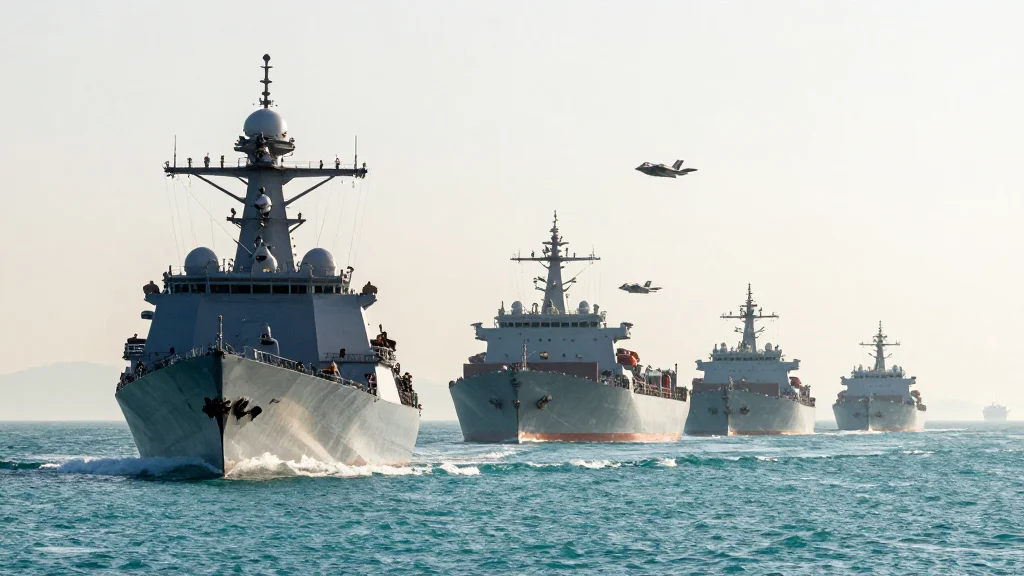
U.S. Deploys 15,000 Troops and 100+ Aircraft to Shield Strait of Hormuz

Why It Matters
The Strait of Hormuz is a linchpin of global energy markets; any disruption reverberates through oil prices, shipping costs and the broader economy. By marshaling a massive, multi‑domain force, the United States is attempting to prevent a supply shock that could destabilize markets and embolden adversaries elsewhere. The operation also serves as a live test of integrated air, sea and unmanned capabilities, offering lessons for future high‑intensity conflicts in contested maritime corridors. Beyond immediate commercial concerns, the deployment underscores the strategic contest between the U.S. and Iran for influence over the Gulf. A successful shield could reinforce U.S. credibility with regional partners, while a failure or prolonged stalemate could embolden Tehran and its proxies, potentially reshaping the security calculus across the Middle East.
Key Takeaways
- •U.S. Central Command launched “Project Freedom” to protect the Strait of Hormuz.
- •Approximately 15,000 U.S. service members are deployed across land, sea and air.
- •More than 100 aircraft, including F‑35s and EA‑18 Growlers, support the operation.
- •Two carrier strike groups, an amphibious readiness group and a Marine Expeditionary Unit are on station.
- •Iran’s recent missile, drone and small‑boat attacks have driven oil prices higher.
Pulse Analysis
Project Freedom represents the most concentrated U.S. maritime defense effort in the Gulf since the 1990‑2000s, blending legacy platforms with a growing suite of unmanned systems. The sheer scale—15,000 troops and a full carrier‑centric air wing—signals that Washington is willing to commit resources far beyond a typical escort mission. This posture not only deters immediate Iranian aggression but also sends a broader message to other regional actors about the U.S. capacity to project power in contested chokepoints.
From a market perspective, the operation is a pre‑emptive strike against a potential supply shock. Even a brief interruption in the Strait can move crude oil prices by several dollars per barrel, as seen after the February disruptions. By demonstrating a defensive umbrella, the U.S. hopes to stabilize price expectations and keep shipping firms from rerouting around the Cape of Good Hope, which would add weeks and billions of dollars to global logistics costs.
Looking forward, the success of Project Freedom will hinge on the integration of unmanned platforms with manned assets—a capability the Pentagon has been accelerating under the Joint All‑Domain Command and Control (JADC2) framework. If the operation proves effective, it could become a template for future rapid‑response maritime security missions, reinforcing the United States’ role as the guarantor of open sea lanes in an era of increasingly asymmetric threats.
U.S. Deploys 15,000 Troops and 100+ Aircraft to Shield Strait of Hormuz
Comments
Want to join the conversation?
Loading comments...