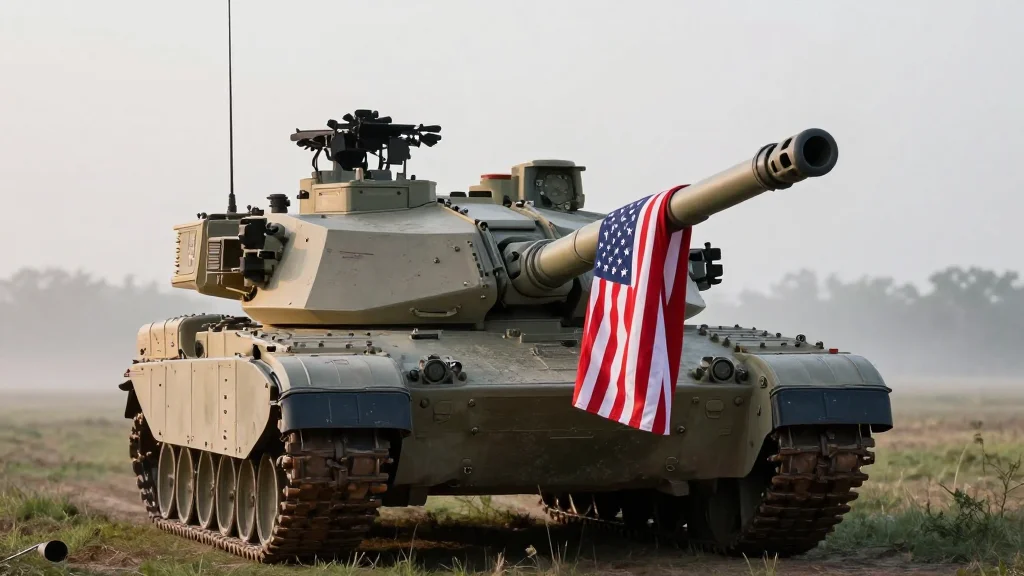
U.S. Halts Deployment of 4,000 Troops to Poland, Shaking NATO Reinforcement Plans

Why It Matters
The suspension of a 4,000‑troop rotation to Poland is more than a logistical hiccup; it reflects a fundamental re‑orientation of U.S. defense priorities. By pulling back from Europe, Washington signals that the Indo‑Pacific and Middle‑East will compete for resources, potentially leaving NATO’s eastern members to shoulder a larger share of conventional deterrence. This shift could alter the alliance’s collective defense calculus, prompting European capitals to accelerate their own force modernization and to seek alternative security guarantees. Moreover, the move tests the credibility of NATO’s Article 5 commitment. If Russia perceives a weakening of the U.S. commitment, it may recalibrate its own posture along the Baltic and Polish borders, increasing the risk of miscalculation. The decision also underscores the importance of non‑kinetic capabilities—air, missile, cyber—where the alliance may double‑down to compensate for reduced ground forces. The outcome will shape the strategic balance in Europe for years to come.
Key Takeaways
- •U.S. halted a rotation of >4,000 troops from Fort Hood to Poland, citing a strategic pause.
- •Lithuanian Defense Minister Robertas Kaunas announced the pause; Polish officials said it does not affect Poland.
- •The brigade is part of a 20,000‑soldier buildup initiated after Russia’s 2022 invasion of Ukraine.
- •Pentagon declined to comment; analysts link the move to a pivot toward the Indo‑Pacific and Middle‑East strains.
- •NATO allies fear the pause could be read by Moscow as a weakening of collective defense, prompting calls for greater European burden‑sharing.
Pulse Analysis
The decision to suspend the troop rotation is a clear indicator that the United States is recalibrating its global force posture. Historically, forward‑deployed U.S. ground units in Europe have served as the linchpin of NATO’s conventional deterrence, especially after the 2014 annexation of Crimea and the 2022 Ukrainian war. By pulling back, Washington is effectively betting that the alliance can maintain deterrence through a mix of rapid‑reaction forces, advanced air‑defense systems, and integrated cyber capabilities. This bet carries risk: European allies have long relied on the credibility of U.S. boots on the ground to reassure domestic constituencies and to deter Russian aggression.
From a market perspective, the pause could accelerate defense‑spending cycles in Europe. Countries like Poland and the Baltic states are already earmarking billions for modernizing armored brigades, air‑defense batteries, and missile‑defense shields. If the U.S. continues to scale back, we may see a surge in European procurement of indigenous platforms, potentially benefitting domestic defense firms and reshaping the supply chain away from U.S.‑centric contracts. Simultaneously, the U.S. defense industry could see a reallocation of resources toward Pacific‑theater programs, such as the F‑35, naval surface combatants, and long‑range strike assets.
Strategically, the move underscores a broader trend: great‑power competition is no longer confined to a single theater. Washington’s need to balance commitments across multiple fronts forces it to adopt a more flexible, technology‑heavy posture. For NATO, the challenge will be to translate that flexibility into a credible deterrent that satisfies both political and military expectations. The upcoming Global Force Posture Review will be a litmus test for whether the alliance can adapt without eroding the core principle of collective defense that has underpinned European security since 1949.
U.S. Halts Deployment of 4,000 Troops to Poland, Shaking NATO Reinforcement Plans
Comments
Want to join the conversation?
Loading comments...