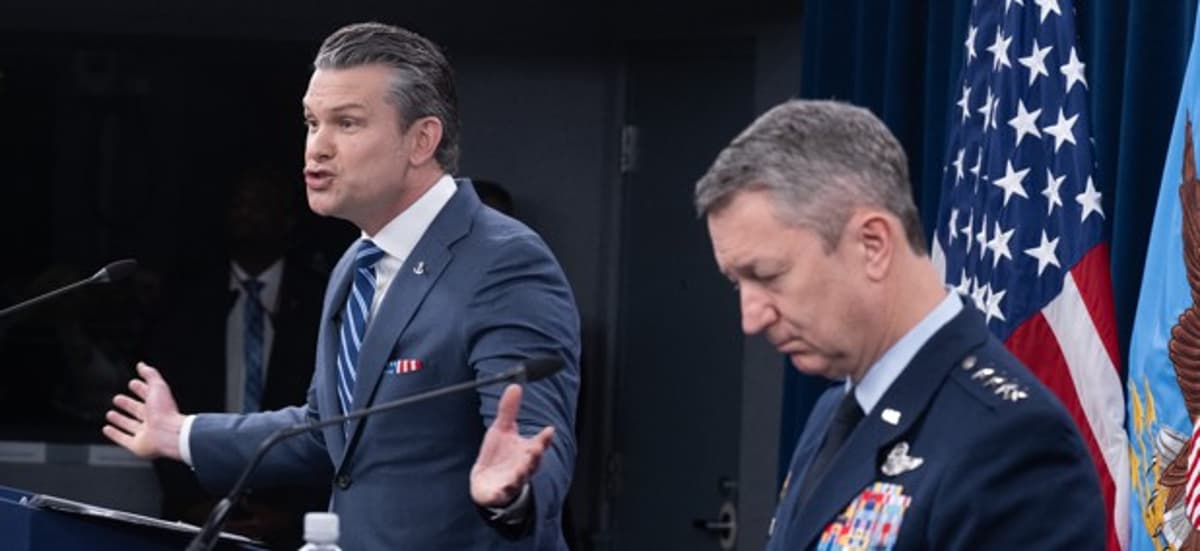
US Has Turned Back 13 Ships in Blockade of Iran, Joint Chiefs Chairman Says
Why It Matters
The blockade escalates U.S.-Iran tensions and threatens global oil flow through the Strait of Hormuz, while showcasing America’s extensive maritime and recruitment capabilities.
Key Takeaways
- •13 commercial vessels turned back since blockade began
- •Abraham Lincoln carrier strike group leads naval effort
- •US assets include fighters, intel planes, helicopters, tankers
- •Hegseth says Iran cannot rebuild its defense industry
- •Air Force and Space Force hit FY2026 recruiting goals early
Pulse Analysis
The United States’ decision to impose a naval blockade on Iran marks a significant escalation in a dispute that has long centered on the strategic Strait of Hormuz. By positioning the Abraham Lincoln carrier strike group at the forefront, Washington signals its intent to control a critical chokepoint for global oil shipments. The move follows a series of Iranian provocations, including the deployment of one‑way attack drones, and reflects a broader strategy to pressure Tehran’s regional ambitions while safeguarding commercial traffic.
Operationally, the blockade is far more than a single carrier; it comprises a layered force of fighter jets, intelligence aircraft, helicopters, and aerial refueling tankers that can sustain prolonged presence. Gen. Dan Caine emphasized the readiness to board any vessel that attempts to breach the line, underscoring a robust rules‑of‑engagement posture. Defense Secretary Pete Hegseth’s remarks that Iran cannot reconstruct its defense‑industrial base add a diplomatic layer, aiming to deter further escalation. For shippers, the immediate impact is heightened risk assessment and potential rerouting, which could ripple through energy markets and increase freight costs.
Beyond the immediate military calculus, the announcement dovetails with domestic narratives about U.S. defense strength. Hegseth’s criticism of media coverage and the spotlight on the Air Force and Space Force meeting FY2026 recruiting goals early serve to reinforce confidence in the armed forces’ capacity to sustain long‑term operations. This blend of kinetic action, strategic messaging, and recruitment success illustrates how the United States is leveraging both hard and soft power to maintain regional stability and project deterrence in an increasingly contested Middle East.
US has turned back 13 ships in blockade of Iran, Joint Chiefs chairman says
Comments
Want to join the conversation?
Loading comments...