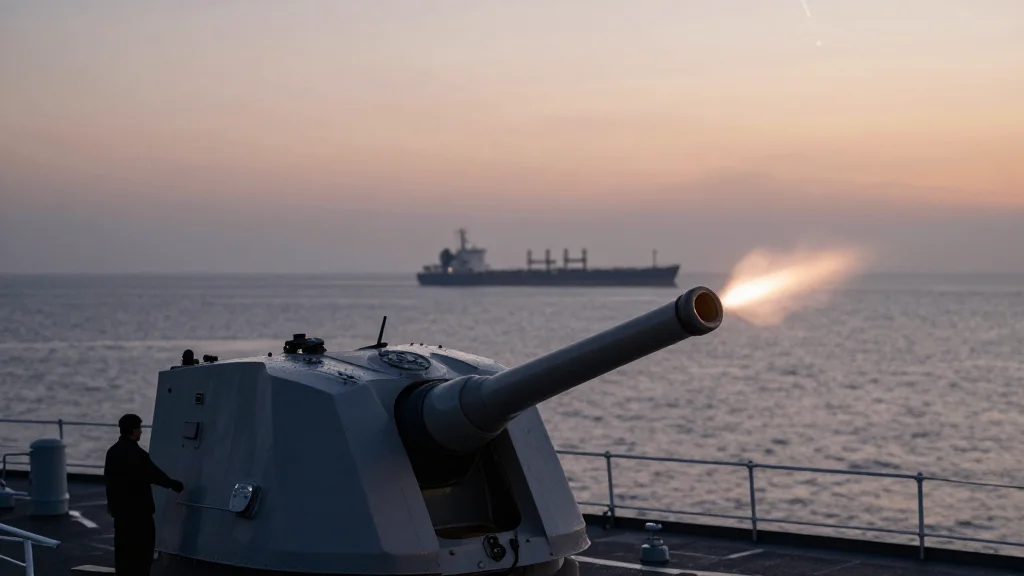
US, Iran Again Exchange Fire in Hormuz
Why It Matters
The incident underscores escalating maritime tensions in a chokepoint that handles roughly a fifth of global oil shipments, raising risks for energy markets and shipping insurers.
Key Takeaways
- •US destroyers faced missiles, drones, and boat attacks in Hormuz.
- •Iran claimed damage; US says no assets were hit.
- •US retaliation hit Iranian launch sites and surveillance nodes.
- •Tensions rise despite April ceasefire and halted Project Freedom mission.
Pulse Analysis
The Strait of Hormuz remains one of the world’s most critical maritime arteries, funneling about 20% of daily global oil flow. Since the 2023‑24 escalation between Washington and Tehran, both sides have tested the limits of the April ceasefire, using naval maneuvers to signal resolve while avoiding a full‑scale confrontation. The recent exchange on May 7 highlights how quickly a routine transit can morph into a flashpoint, especially when US warships pursue missions like Project Freedom to free stranded commercial vessels.
During the May 7 incident, Iranian forces employed a layered attack—missiles, unmanned aerial drones, and fast‑attack boats—against three US destroyers en route to the Gulf of Oman. US Central Command confirmed a swift retaliation, striking missile launch pads, command‑and‑control nodes, and surveillance installations along Iran’s coastline. While Iranian state media reported explosions and alleged damage to the US ships, Pentagon officials maintained that none of the vessels sustained hits, and the destroyers aborted the passage. The divergent narratives illustrate the information warfare that accompanies kinetic actions in the region.
The broader implications extend beyond the immediate military skirmish. Any disruption in Hormuz can reverberate through global energy markets, prompting price spikes and prompting insurers to raise premiums for vessels transiting the area. Moreover, the clash tests diplomatic channels, as both Washington and Tehran balance domestic political pressures with the desire to avoid an uncontrolled escalation. Analysts warn that repeated incidents could erode the fragile ceasefire, compelling regional powers and multinational corporations to reassess risk mitigation strategies and contingency plans for oil transport.
US, Iran again exchange fire in Hormuz
Comments
Want to join the conversation?
Loading comments...