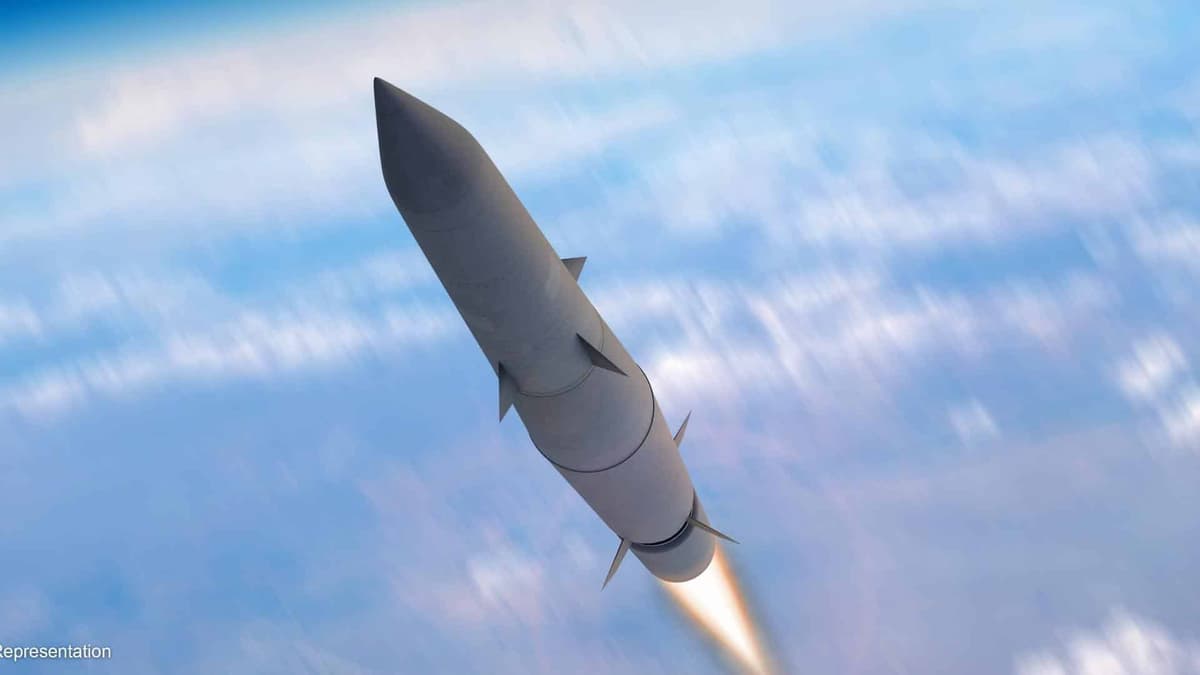
U.S.-Japan GPI Workshare Revealed: Northrop Details 50-50 Split in Hypersonic Interceptor Program
Why It Matters
The balanced partnership accelerates joint capability against hypersonic threats, reinforcing U.S.–Japan security ties and setting a template for future allied defense projects.
Key Takeaways
- •U.S. builds first-stage booster and kill‑vehicle sensors
- •Japan supplies second-stage motor, attitude control, and fin actuators
- •Program reflects a 50‑50 content share across missile stages
- •Mitsubishi contract worth ¥56 bn (~$350 m) targets 2029 delivery
- •GPI will launch from JMSDF Aegis destroyers and future ASEVs
Pulse Analysis
The emergence of hypersonic glide vehicles has forced traditional missile‑defense architectures to evolve, and the U.S.–Japan Glide Phase Interceptor (GPI) is a direct response to that pressure. By targeting the high‑speed, low‑altitude window where existing interceptors struggle, GPI aims to protect critical Indo‑Pacific assets and preserve deterrence stability. The program builds on the successful SM‑3 Block IIA collaboration, but pushes the envelope with a three‑stage propulsion system and a sophisticated kill‑vehicle suite capable of autonomous target discrimination.
Northrop Grumman’s recent briefing clarified how the workshare is split, underscoring a true 50‑50 partnership rather than a token contribution. The United States supplies the first‑stage booster, third‑stage solid motor, and the sensor‑rich kill‑vehicle core, while Japan delivers the second‑stage motor, attitude‑control hardware, and fin actuators that shape the interceptor’s terminal maneuverability. Mitsubishi Heavy Industries’ ¥56 billion contract secures Japan’s industrial stake and aligns the timeline with the planned 2028‑2029 fielding of Aegis System Equipped Vessels (ASEVs). This joint industrial effort not only spreads development risk but also deepens supply‑chain interdependence, creating a model for future allied programs.
Strategically, the GPI’s deployment on JMSDF Aegis destroyers and upcoming ASEVs will give Japan a credible shield against regional hypersonic threats, reinforcing its forward‑deployed posture. For the United States, the program strengthens interoperability and demonstrates a commitment to shared defense burdens, a key message to allies and adversaries alike. The collaboration also opens market opportunities for defense firms that can supply high‑precision propulsion and guidance components, signaling a shift toward more integrated, multinational missile‑defense solutions.
U.S.-Japan GPI Workshare Revealed: Northrop Details 50-50 Split in Hypersonic Interceptor Program
Comments
Want to join the conversation?
Loading comments...