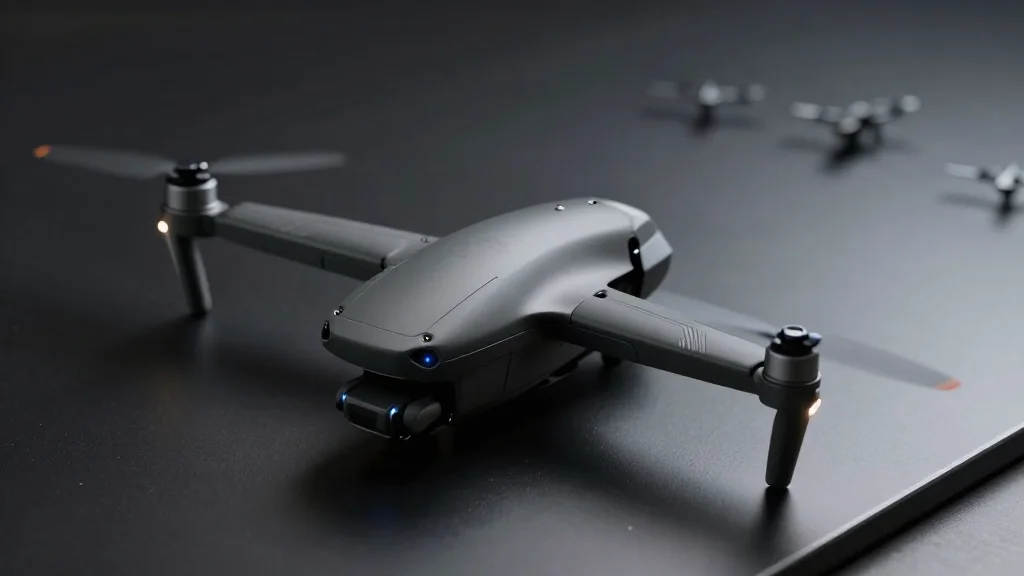
U.S. LUCAS Drone Gets Shield AI Hivemind Swarming Software

Companies Mentioned
Why It Matters
The integration of Hivemind into LUCAS marks a tangible step toward AI‑driven swarm warfare, a capability long discussed in defense circles but rarely demonstrated at scale. By marrying a sub‑$35,000 airframe with advanced collaborative autonomy, the U.S. can field numerically superior strike packages that dilute enemy air defenses and preserve high‑value assets. The development also raises strategic questions about escalation, as adversaries may accelerate their own swarm programs to counter or mimic the capability. Beyond the tactical edge, the project illustrates how the Pentagon is leveraging commercial AI firms to accelerate innovation. Shield AI’s involvement reflects a growing reliance on private‑sector software expertise to retrofit existing platforms, potentially shortening acquisition timelines and lowering development costs. The success—or failure—of this demonstration will influence future funding decisions for AI‑enabled munitions across the services.
Key Takeaways
- •Shield AI selected to embed Hivemind swarming software in LUCAS drone
- •Each LUCAS unit costs about $35,000, far cheaper than comparable missiles
- •LUCAS first used in Operation Epic Fury against Iranian targets in Feb. 2026
- •Fall 2026 demonstration will showcase a single operator controlling a swarm
- •Integration overseen by OUSW R&E, signaling broader AI‑teaming push in the DoD
Pulse Analysis
The LUCAS‑Hivemind partnership is more than a technology upgrade; it is a strategic inflection point for how the United States approaches low‑cost lethality. Historically, loitering munitions have been single‑shot weapons, but swarming transforms them into a force multiplier, allowing a handful of operators to command hundreds of autonomous attackers. This shift could compress the decision‑making loop on the battlefield, forcing adversaries to defend against a flood of inexpensive, coordinated threats rather than a few high‑value missiles.
From a procurement perspective, the program could reshape the defense industrial base. By proving that a commercial AI stack can be safely integrated into a weapon system, the Pentagon may open the door for more rapid, modular upgrades across legacy platforms. This could erode the traditional dominance of large defense contractors in favor of agile software firms, reshaping the competitive landscape and potentially driving down costs through market dynamics.
Looking ahead, the key risk lies in operational validation. Swarm autonomy must demonstrate reliability under contested electromagnetic environments and against sophisticated electronic warfare. If the October test proves successful, we can expect an accelerated rollout, likely prompting NATO allies to seek similar capabilities. Conversely, any failure could stall the broader AI‑swarm agenda, reinforcing caution among policymakers wary of unintended escalation. Either outcome will reverberate through defense budgeting, acquisition strategy, and the future of autonomous warfare.
U.S. LUCAS Drone Gets Shield AI Hivemind Swarming Software
Comments
Want to join the conversation?
Loading comments...