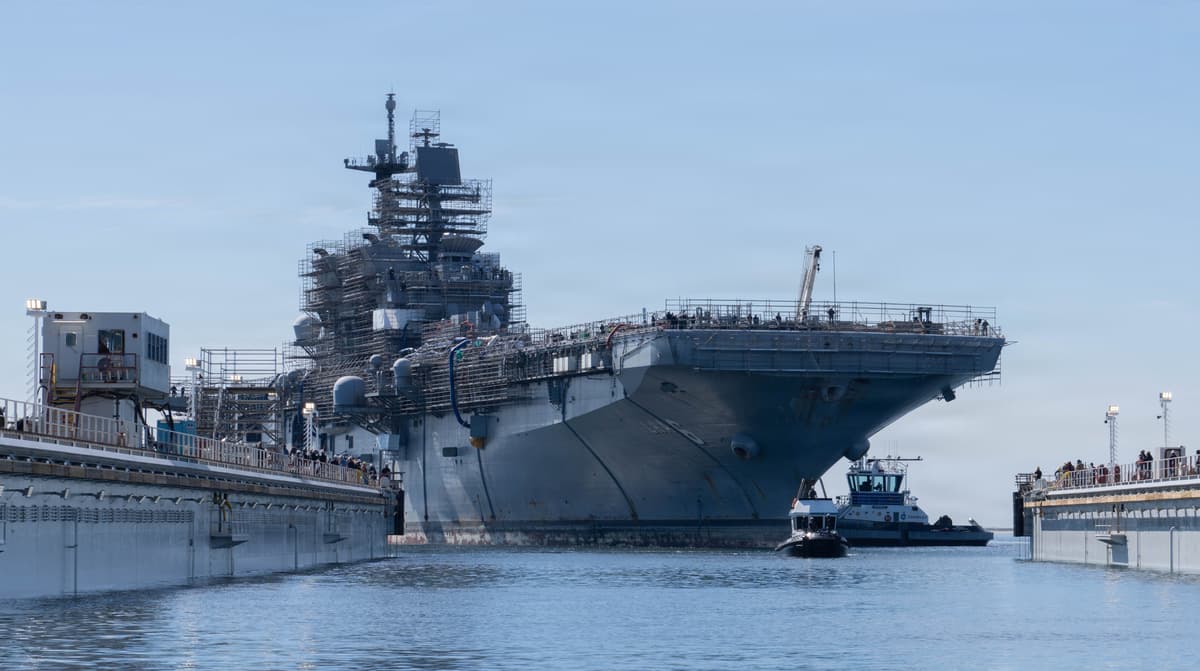
US Marine Corps, Navy Join Forces to Combat Insufficient Amphibious Fleet Size
Why It Matters
An expanded, more reliable amphibious fleet is critical for U.S. power projection in the Indo‑Pacific and for rapid response to crises, directly affecting national security and defense industry contracts.
Key Takeaways
- •Current amphibious fleet totals 31 ships, deemed insufficient.
- •Readiness dropped to 41% in 2025, causing deployment delays.
- •Plan adds maintenance optimization, life extensions, and new ship procurement.
- •FY2027 budget provides initial funding for amphibious fleet expansion.
- •Damen LST‑100 chosen as medium landing ship with game‑changing capability.
Pulse Analysis
The United States’ amphibious capability underpins its ability to project force from sea to shore, a cornerstone of Marine operations. With only 31 ships in service, the fleet falls short of the scale demanded by combatant commanders, especially as the Indo‑Pacific theater grows in strategic importance. Low readiness—down to 41% in 2025—has already delayed Marine Expeditionary Unit deployments, exposing a vulnerability that could hamper rapid response to regional contingencies.
Operational tempo has surged, driven by heightened activity in the Middle East, the Caribbean, and the Pacific. The Navy’s current deployment of USS Tripoli and USS Boxer illustrates the strain on limited assets. Moreover, littoral mobility—maneuvering in shallow coastal waters—has become a priority as potential flashpoints emerge across the vast Pacific littorals. These pressures have forced the services to reassess maintenance cycles and extend the service life of the most viable hulls, aiming to extract more availability from existing platforms.
To close the gap, the Marine Corps and Navy are pursuing a coordinated strategy that blends short‑term fixes with long‑term investment. Optimized maintenance schedules and fourth‑generation runs will improve ship uptime, while targeted life‑extension programs will keep the best‑in‑class vessels operational. The FY2027 budget, championed by President Trump, earmarks initial funds for new construction, notably the Dutch‑designed Damen LST‑100 medium landing ship, which promises game‑changing self‑sustainability. Congressional support will be pivotal, as sustained funding will drive a modernized amphibious fleet capable of meeting future security challenges.
US Marine Corps, Navy join forces to combat insufficient amphibious fleet size
Comments
Want to join the conversation?
Loading comments...