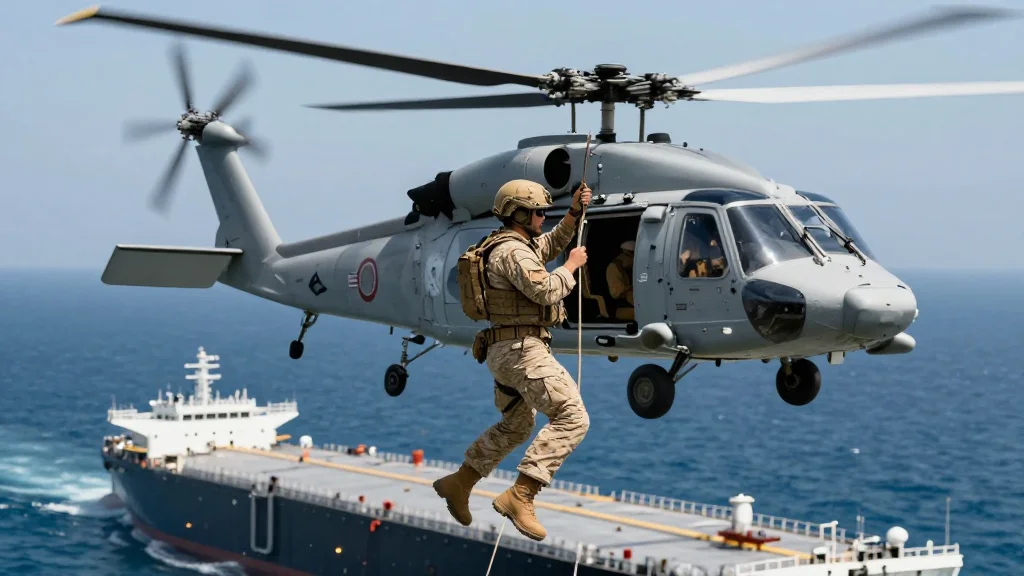
U.S. Marines Board Fourth Vessel in Hormuz Blockade as Trump Warns Iran

Why It Matters
The boardings signal a shift in how the United States is willing to enforce maritime sanctions, extending the reach of its naval power beyond traditional combat zones. By demonstrating the ability to interdict commercial traffic without seizing vessels, Washington is testing the limits of international law and the tolerance of allied shipping firms. Economically, the blockade and accompanying sanctions threaten to destabilize global oil markets, already volatile from the Iran‑Israel conflict and OPEC realignments. A prolonged disruption of the Strait of Hormuz—a conduit for roughly a fifth of the world’s oil—could force price spikes, supply shortages, and compel other nations to reassess their energy security strategies, potentially accelerating a shift toward alternative fuels or strategic petroleum reserves.
Key Takeaways
- •U.S. Marines boarded the merchant ship Blue Star III on Tuesday, searched it and released it after confirming no Iranian port call.
- •President Trump warned Iran on Truth Social to "better get smart soon" and called the regime's leadership situation a "state of collapse."
- •The blockade has raised U.S. gasoline prices to $4.23 per gallon and Brent crude to nearly $115 a barrel.
- •Treasury Secretary Scott Bessent said Iran's shadow banking system funds its armed forces and fuels regional violence.
- •Secretary of State Marco Rubio clarified that the blockade targets Iranian shipping, not neutral commercial traffic.
Pulse Analysis
The latest boarding underscores a broader U.S. strategy of using limited, high‑visibility naval actions to maintain pressure without provoking a full‑scale maritime war. Historically, blockades have been a tool of coercive diplomacy, but the modern context—where commercial shipping is tightly interwoven with global supply chains—means each interdiction carries outsized economic and political costs. By releasing the Blue Star III, the Pentagon signals restraint, yet the very act of boarding reaffirms the message that any vessel suspected of aiding Iran will be scrutinized.
Trump’s rhetoric adds a layer of unpredictability. His public admonitions, combined with the opaque decision‑making process in the Situation Room, create a volatile mix that could embolden hardliners on both sides. If the administration leans toward a more aggressive posture, regional actors such as Saudi Arabia, the UAE, and Israel may feel compelled to adjust their own force postures, potentially widening the conflict. Conversely, a diplomatic pivot could hinge on Iran’s willingness to separate its nuclear negotiations from the maritime dispute—a separation that Tehran has historically resisted.
From a defense industry perspective, the heightened focus on maritime interdiction could spur demand for specialized platforms—unmanned surface vessels, advanced ISR drones, and rapid‑deployment boarding teams. Contractors that can deliver integrated solutions for low‑visibility, high‑speed operations stand to benefit. Moreover, the oil price surge may accelerate investment in alternative energy and strategic reserve capacity, reshaping long‑term procurement priorities for both civilian and military stakeholders. The coming weeks will test whether the current pressure tactics achieve their intended diplomatic outcomes or simply deepen the strategic stalemate in the Gulf.
U.S. Marines Board Fourth Vessel in Hormuz Blockade as Trump Warns Iran
Comments
Want to join the conversation?
Loading comments...