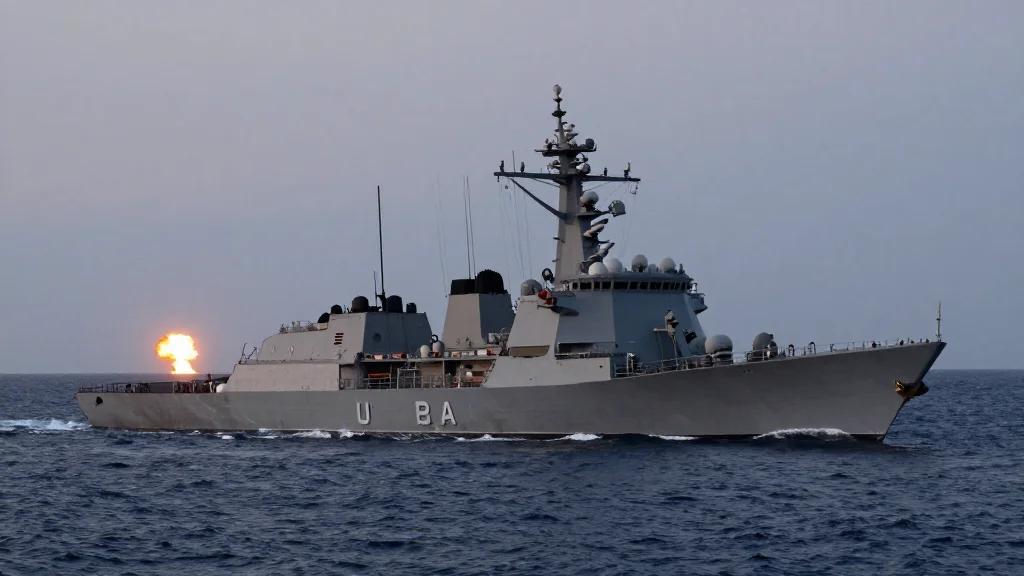
U.S. Military Strike Kills Three Suspected Narco‑Terrorists in Eastern Pacific

Why It Matters
The strike highlights a growing willingness by the U.S. defense establishment to employ kinetic force against non‑state actors in the maritime domain, expanding the traditional scope of counter‑terrorism operations. By treating drug cartels as "terrorist" entities, the administration is invoking a higher level of authority that could justify more aggressive actions, potentially reshaping how future conflicts are defined and authorized. Regionally, the campaign risks eroding trust between Washington and its Latin American partners. While some governments may welcome a hard line against cartels, others view the unilateral use of force as a violation of sovereignty and international law. The legal debates sparked by the strikes could influence future congressional authorizations and set precedents for how the U.S. engages in extraterritorial counter‑narcotics missions.
Key Takeaways
- •Three suspected narco‑terrorists killed in Eastern Pacific strike ordered by Gen. Francis L. Donovan
- •U.S. Southern Command posted unclassified video of the kinetic strike
- •Campaign has killed at least 191 suspected traffickers since September 2025
- •President Trump describes the effort as an "armed conflict" with Latin American cartels
- •Legal and diplomatic concerns raised over use of lethal force in international waters
Pulse Analysis
The Eastern Pacific strike reflects a broader doctrinal shift in U.S. defense policy: treating transnational criminal networks as quasi‑military adversaries. Historically, counter‑narcotics operations relied on interdiction, intelligence sharing, and law‑enforcement partnerships. By deploying kinetic strikes without presenting cargo evidence, the Pentagon is moving toward a war‑fighting paradigm that leverages unmanned platforms and rapid decision cycles. This approach offers speed and deterrence but sacrifices transparency, which fuels legal challenges and diplomatic friction.
From a strategic perspective, the campaign serves two purposes. First, it signals to cartels that the U.S. will not tolerate maritime smuggling routes, potentially disrupting supply chains and forcing traffickers to adopt more covert methods. Second, it provides the administration with a tangible metric—body counts—to justify continued funding for Southern Command’s expanded presence. However, the lack of verifiable outcomes (e.g., seized narcotics, disrupted shipments) makes it difficult to assess the true efficacy of the strikes.
Looking forward, Congress is likely to scrutinize the legal basis for these operations, especially as the number of casualties climbs. If the administration cannot produce concrete evidence of drug carriage, it may face pressure to adopt stricter rules of engagement or shift back to intelligence‑driven interdiction. Meanwhile, Latin American allies could push back, demanding clearer coordination and respect for sovereignty. The next phase of the campaign will test whether kinetic force can be integrated into a sustainable, multilateral counter‑narcotics strategy or whether it will become a flashpoint for broader geopolitical tension.
U.S. Military Strike Kills Three Suspected Narco‑Terrorists in Eastern Pacific
Comments
Want to join the conversation?
Loading comments...