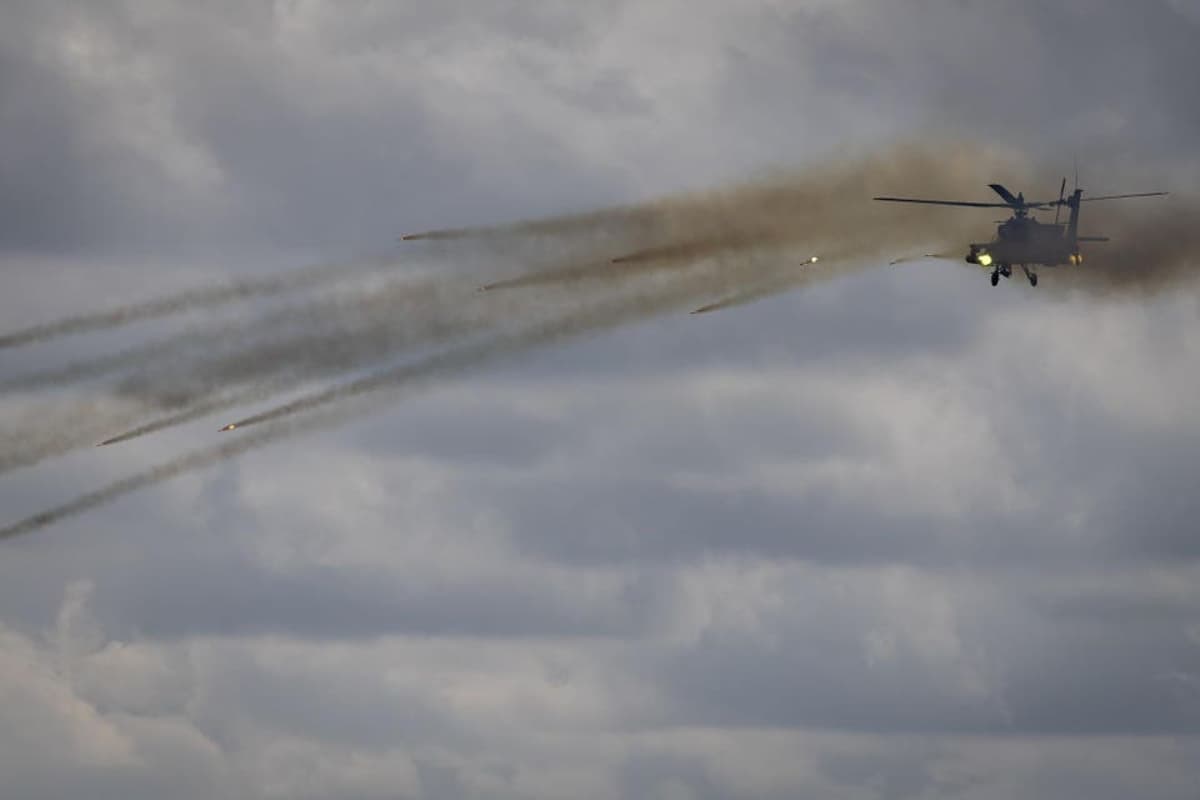
U.S. Military Using Drones As Rocket Launchers And Helicopter Escorts
Why It Matters
Integrating precision‑guided rockets and loitering‑munition drones with helicopters expands U.S. strike capability while reducing risk to pilots, signaling a shift toward unmanned wingmen in future combat doctrine.
Key Takeaways
- •Army fired triple 70 mm APKWS rockets from TRV‑150 drone.
- •Cargo drone now delivers precision strikes once limited to helicopters.
- •Marines launched FPV drones from UH‑1Y and controlled them via Viper.
- •Drones act as loitering‑munition escorts, adding eyes and firepower.
- •Integration creates unmanned wingmen, reducing pilot exposure and expanding reach.
Pulse Analysis
The recent Fort Rucker test marks a watershed moment for U.S. armed forces, proving that a modestly sized cargo drone can carry a triple‑pack of laser‑guided APKWS rockets. By leveraging the TRV‑150’s vertical‑takeoff capability, the Army can project precision fire from platforms that are cheaper to operate and can be deployed from austere locations, effectively extending the reach of existing rocket inventories without additional aircraft.
Equally transformative is the Marine Corps’ experiment using attack helicopters as mobile launch pads for first‑person‑view drones. By dropping an FPV drone from a UH‑1Y Venom and handing control to an AH‑1Z Viper miles away, the service demonstrated a seamless hand‑off that grants pilots real‑time aerial reconnaissance and an extra weaponized sensor. This partnership creates a layered sensor‑to‑shooter loop, allowing crews to identify, track, and engage targets while staying clear of direct fire.
Together, these developments point to a broader doctrinal shift toward unmanned wingmen that complement manned platforms. The ability to field precision rockets from drones reduces the need for high‑risk helicopter sorties, cuts operational costs, and enhances survivability in contested airspaces. As the Army, Marines, and Air Force continue to integrate loitering munitions and loyal‑wingman drones, the U.S. military is poised to field a more flexible, networked strike architecture that can adapt to evolving threats across multiple domains.
U.S. Military Using Drones As Rocket Launchers And Helicopter Escorts
Comments
Want to join the conversation?
Loading comments...