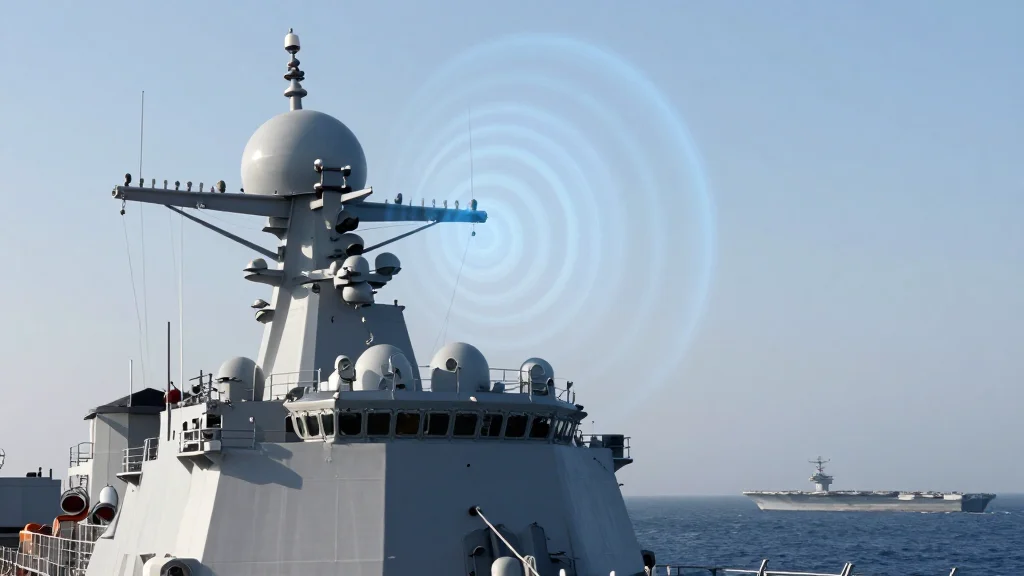
US Navy Bets on Radio Frequency to Increase Vessel Protection Against Aerial Threats
Companies Mentioned
Why It Matters
By adding RF‑based electronic warfare, the Navy dramatically improves ship survivability against evolving missile and drone attacks, preserving combat effectiveness in contested seas.
Key Takeaways
- •Northrop Grumman's SEWIP Block 3 installed on DDG‑91, first operational unit
- •RF-based system detects, jams missiles and drones before impact
- •Fits Arleigh Burke Flight II and III destroyers, future carriers
- •Enhances fleet survivability amid rising hypersonic and swarm threats
- •Planned integration into next‑generation Golden Fleet carriers
Pulse Analysis
The Surface Electronic Warfare Improvement Programme (SEWIP) Block 3 represents a shift toward radio‑frequency (RF) defensive architectures that go beyond traditional hard‑kill interceptors. As adversaries field faster, lower‑observable missiles and swarming drone attacks, the Navy needs a layered shield that can engage threats at the electronic level. SEWIP Block 3 leverages sophisticated signal‑processing and adaptive jamming to disrupt guidance systems, buying critical seconds for ship‑board weapons or maneuvering to avoid impact.
The first installation on the DDG‑91, an Arleigh Burke‑class Flight II destroyer, validates the system’s integration pathway across the fleet. Designed to retrofit existing vessels, the RF suite slots into the ship’s combat system, sharing data with radar and missile defense sensors. Its modular nature also allows future upgrades, ensuring compatibility with the Navy’s evolving Aegis Combat System. By covering both Flight II and Flight III destroyers, the Navy creates a uniform defensive baseline that can be extended to aircraft carriers once the architecture is finalized.
Strategically, SEWIP Block 3 bolsters the United States’ maritime dominance as peer competitors accelerate hypersonic missile programs and autonomous drone swarms. The technology not only protects high‑value assets but also signals to allies and rivals that the U.S. is investing in next‑generation electronic warfare. Looking ahead, the program’s inclusion in the upcoming Golden Fleet—America’s next class of carriers—ensures that the Navy’s capital ships will inherit this electronic shield, maintaining a decisive edge in contested littorals and open ocean engagements.
US Navy bets on radio frequency to increase vessel protection against aerial threats
Comments
Want to join the conversation?
Loading comments...