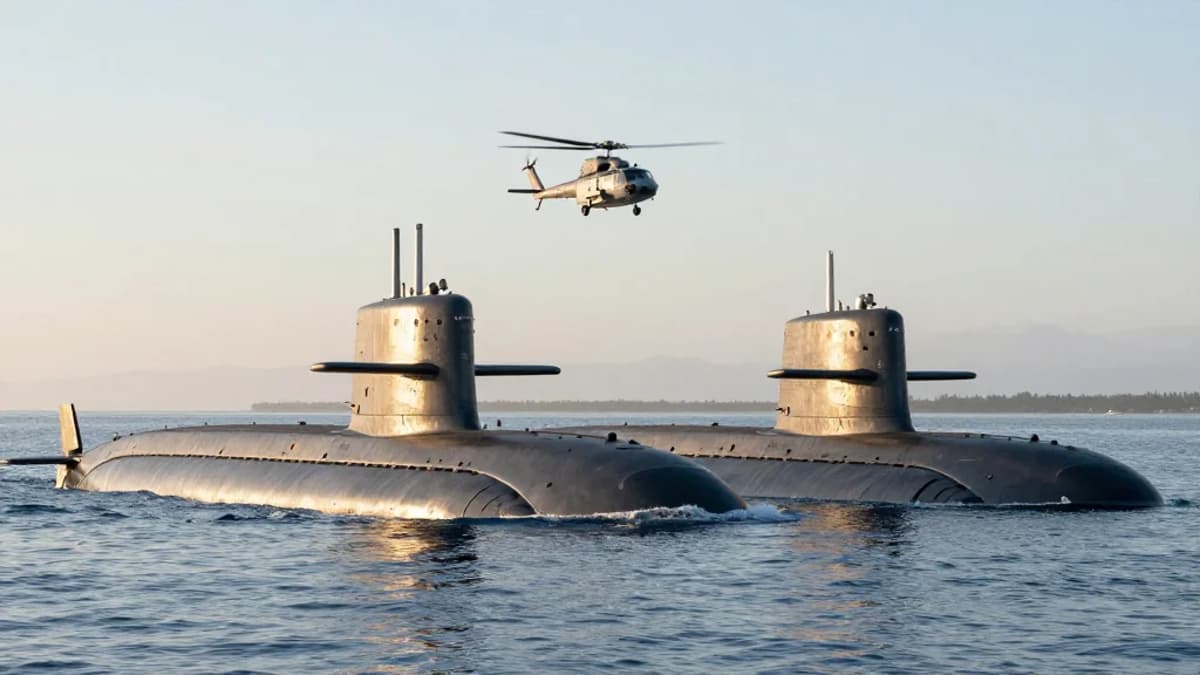
U.S. Navy Deploys Two Nuclear Attack Submarines Near Guam
Why It Matters
The deployment signals heightened U.S. undersea deterrence and readiness, reinforcing security commitments in a contested Indo‑Pacific arena.
Key Takeaways
- •Two Los Angeles‑class subs surfaced near Guam
- •Exercise demonstrated coordinated undersea formation
- •Supported by naval aviation assets
- •Training addresses shrinking Indo‑Pacific warning times
- •Signals U.S. commitment to regional security
Pulse Analysis
The appearance of two Los Angeles‑class nuclear attack submarines off Guam marks a strategic shift in how the U.S. Navy projects power in the Indo‑Pacific. Historically, such coordinated surfacing events are rare, but they serve as a visible reminder of the United States’ forward‑deployed undersea capabilities. By integrating naval aviation support, the Navy showcases a multi‑domain approach that enhances situational awareness and accelerates decision‑making cycles, crucial in an environment where adversaries are investing heavily in anti‑access/area‑denial (A2/AD) systems.
Beyond the optics, the exercise addresses a core operational challenge: shrinking warning times. Advances in missile technology and the proliferation of hypersonic weapons compress the window for detection and response. Joint training that emphasizes rapid coordination between submarines and surface or air assets helps mitigate this risk, ensuring that the fleet can execute swift, decisive actions when required. The drill also provides valuable data on communication protocols, sensor integration, and tactical maneuvering under realistic conditions.
For regional allies and partners, the maneuver reinforces U.S. commitment to collective security. It sends a clear message that the United States is prepared to defend maritime routes and uphold international norms against coercive behavior. As China expands its submarine fleet and refines its own undersea warfare doctrine, the U.S. Navy’s emphasis on coordinated, forward‑deployed training will likely intensify, shaping future force posture and procurement priorities across the Pacific theater.
U.S. Navy Deploys Two Nuclear Attack Submarines Near Guam


Comments
Want to join the conversation?
Loading comments...