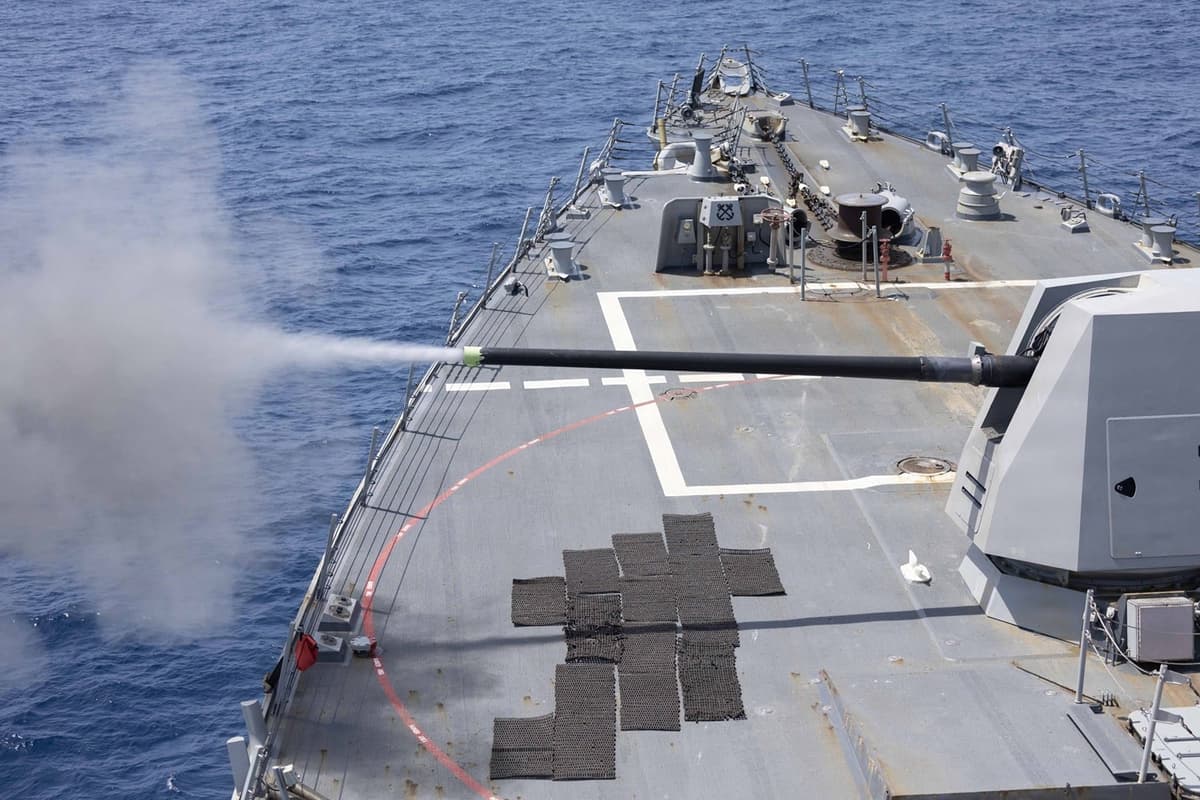
U.S. Navy Destroyer Disables Iranian-Flagged Cargo Vessel
Why It Matters
The decisive action reinforces U.S. resolve to curb illicit shipments to Iran, signaling that non‑compliant vessels will face direct interdiction, which could reshape regional shipping routes and pressure Iran’s supply chains.
Key Takeaways
- •USS Spruance used 5‑inch gun to disable Touska’s engine.
- •Six‑hour warning period preceded the vessel’s forced boarding.
- •25 commercial ships have been turned back since blockade began.
- •Marines from 31st MEU seized the cargo ship in Arabian Sea.
- •Incident underscores U.S. resolve to enforce maritime sanctions on Iran.
Pulse Analysis
The United States has maintained a naval blockade in the northern Arabian Sea since early 2026, aiming to curtail the flow of goods that could support Iran’s missile and drone programs. Operating under United Nations Security Council resolutions and its own executive orders, CENTCOM has warned commercial vessels that any attempt to deliver cargo to Iranian ports will be intercepted. The blockade reflects Washington’s broader strategy of applying economic pressure while avoiding direct military confrontation, a delicate balance that relies on credible enforcement actions to deter illicit shipments.
The recent interception of the Iranian‑flagged M/V Touska illustrates how the U.S. Navy translates policy into kinetic action. After a six‑hour series of radio warnings, the guided‑missile destroyer USS Spruance fired its 5‑inch MK 45 gun into the ship’s engine room, disabling propulsion without causing crew casualties. Marines from the 31st Marine Expeditionary Unit then boarded and secured the vessel, demonstrating a coordinated surface‑to‑shore operation. By employing a proportional use of force, the Navy signaled that it will enforce the blockade while minimizing collateral damage, preserving the legitimacy of its maritime security mission.
The seizure sends a clear message to Tehran and to regional shippers that U.S. enforcement will not waver. Iran has condemned the action as an unlawful act of aggression, but its naval capabilities remain limited in the open sea, making further confrontations risky. For global trade, the incident raises insurance premiums for vessels transiting near Iranian waters and may prompt rerouting through longer, costlier passages. Looking ahead, Washington is likely to sustain the blockade, integrating unmanned surface vessels and advanced surveillance to increase coverage while avoiding escalation.
U.S. Navy Destroyer Disables Iranian-Flagged Cargo Vessel
Comments
Want to join the conversation?
Loading comments...