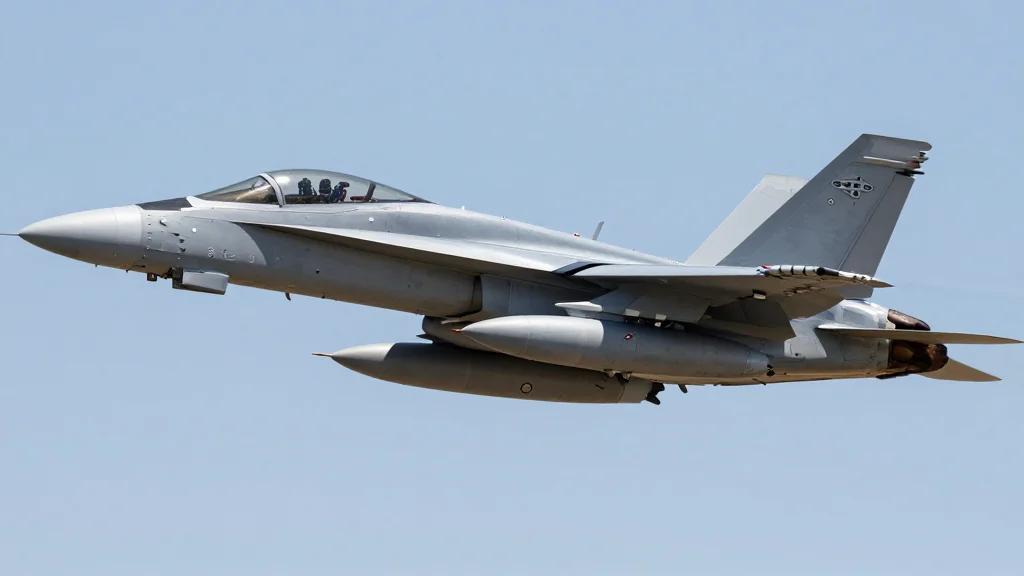
U.S. Navy Hits 200‑Mile Target in JDAM‑LR Flight Test, Boosting Long‑Range Strike

Companies Mentioned
Why It Matters
The JDAM‑LR test signals a shift toward affordable, long‑range precision weapons that can be fielded quickly and integrated onto existing platforms. By extending the standoff distance of carrier‑based aircraft, the Navy can engage defended targets while reducing exposure to sophisticated air‑defense networks, enhancing deterrence and operational flexibility. The program also offers a cost‑effective alternative to expensive cruise missiles, potentially reshaping the defense budget allocation for strike weapons and influencing allied procurement strategies. Beyond the Navy, the JDAM‑LR concept could be adopted by the Air Force and Army, creating a common, low‑cost long‑range munition across services. This interoperability would streamline logistics, training, and sustainment, while providing a scalable response to evolving threats in the Indo‑Pacific and European theaters.
Key Takeaways
- •JDAM‑LR flew ~200 miles in 34 minutes during the April 1 test
- •Weapon struck within meters of the intended target, proving high accuracy
- •Test conducted from F/A‑18 Super Hornets, leveraging existing carrier‑based aircraft
- •Projected unit cost is far lower than dedicated cruise missiles, filling a mid‑range capability gap
- •Further testing and low‑rate production planned for 2026‑2027
Pulse Analysis
The JDAM‑LR represents a pragmatic evolution of the U.S. military’s strike doctrine, marrying the low‑cost, high‑volume nature of gravity‑based bombs with the range and survivability of cruise missiles. Historically, the Navy has relied on a tiered approach: short‑range guided bombs, medium‑range cruise missiles, and long‑range hypersonics. The JDAM‑LR blurs these lines, offering a middle tier that can be fielded without the extensive acquisition cycles that accompany new missile programs. This could accelerate the Navy’s ability to counter anti‑access/area‑denial (A2/AD) systems that are proliferating among near‑peer competitors.
From an industrial perspective, the program leverages existing supply chains for JDAM components while introducing a new propulsion segment. Companies like Boeing, which already produces the JDAM kit, stand to capture additional revenue streams, but they will also need to partner with turbine manufacturers to meet performance specifications. The modest cost profile may also attract foreign customers seeking a cost‑effective long‑range strike option, potentially expanding U.S. export markets.
Strategically, the JDAM‑LR could alter the calculus of carrier strike group deployments. By enabling strikes from beyond the reach of many integrated air‑defense systems, the Navy can maintain a credible deterrent posture without escalating to higher‑cost, higher‑risk missile deployments. However, the weapon’s effectiveness will hinge on integration speed, reliability under combat conditions, and the ability to sustain a robust logistics pipeline. If these hurdles are cleared, the JDAM‑LR could become a cornerstone of the next generation of distributed lethality, reinforcing the United States’ ability to project power across contested maritime domains.
U.S. Navy Hits 200‑Mile Target in JDAM‑LR Flight Test, Boosting Long‑Range Strike
Comments
Want to join the conversation?
Loading comments...