U.S. Navy Is Buying More Ship-Killer Missiles than Ever Before
Companies Mentioned
Why It Matters
The investment secures the Navy’s ability to counter a rapidly expanding Chinese surface fleet, preserving U.S. maritime dominance, while bolstering the industrial base for next‑generation cruise‑missile technology.
Key Takeaways
- •FY2027 request: 177 LRASMs for $907 million.
- •FY2026 procurement: 200 LRASMs costing $1 billion.
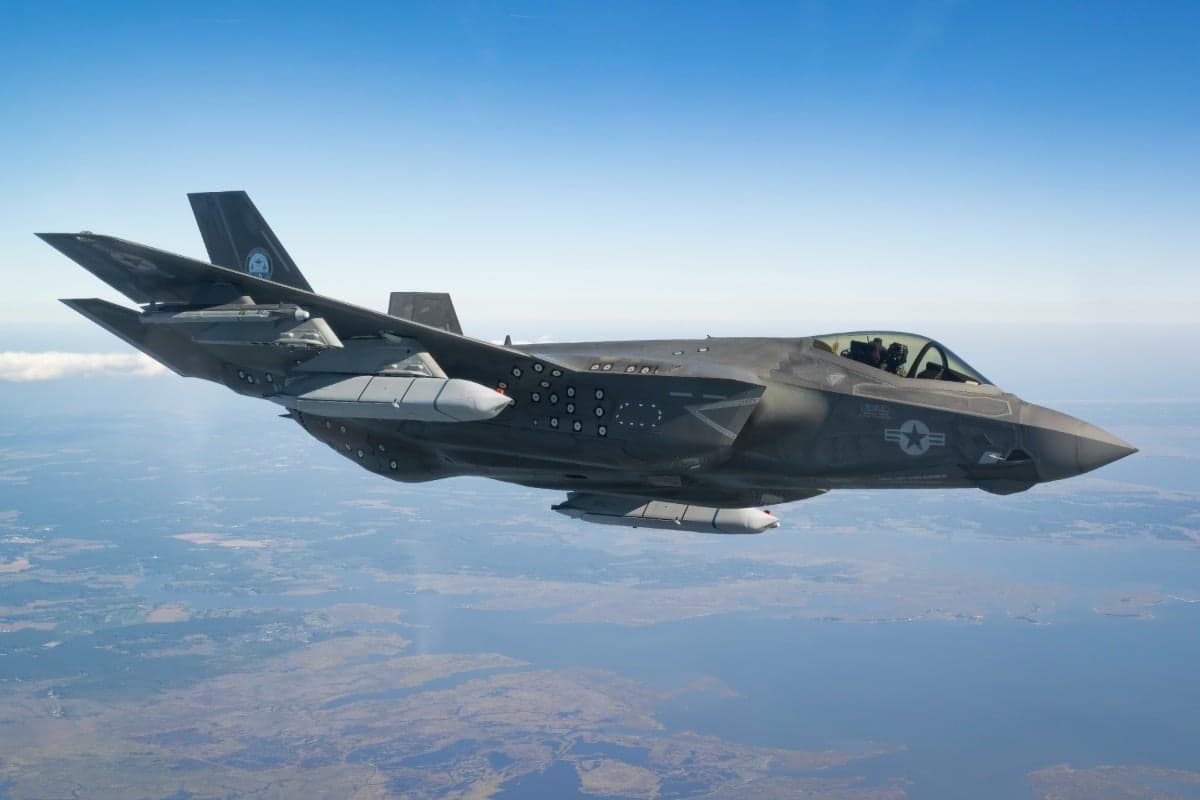
- •LRASM integrates with F‑35C, expanding carrier strike capabilities.
- •Multi‑year funding secures Lockheed Martin production capacity.
- •LRASM counters advanced Chinese naval air‑defence systems.
Pulse Analysis
The Navy’s FY2027 budget request underscores a three‑year trend of escalating LRASM purchases, with $907 million earmarked for 177 missiles following a $1 billion FY2026 spend on 200 units. This sustained funding cadence signals that senior defense officials view the autonomous ship‑killer as a cornerstone of future sea‑control strategy, especially as China’s surface fleet multiplies at unprecedented rates.
Technically, LRASM leverages a low‑observable airframe derived from the JASSM‑ER and combines infrared and radio‑frequency sensors for autonomous terminal guidance. Its integration onto legacy F/A‑18E/F Super Hornets and the newer carrier‑based F‑35C expands the strike envelope of every carrier strike group, allowing stealthy, precision attacks from platforms that can operate beyond the range of traditional anti‑ship missiles. The missile’s ability to fly under radar and self‑navigate through dense air‑defence nets makes it a potent counter to modern naval threats.
Strategically, the multi‑year mandatory‑funding mechanism gives Lockheed Martin the production certainty needed to scale factories, reinforcing the U.S. defense industrial base. By locking in capacity now, the Pentagon ensures a ready supply of LRASMs as geopolitical tensions rise in the Indo‑Pacific. The program’s bipartisan backing suggests it will remain a priority in future appropriations, cementing LRASM’s role in deterring or, if necessary, defeating a high‑tech adversary at sea.
U.S. Navy is buying more ship-killer missiles than ever before
Comments
Want to join the conversation?
Loading comments...